The first time I had couscous salad, it felt like a light bulb went off in my head. How could something so simple-just grains, veggies, and a few spices-taste so vibrant and satisfying? It’s like one of those dishes that feels universally comforting but also versatile enough to be tailored for any occasion. I’ve made this vegetarian couscous salad a handful of times, and it never gets old. It’s always a hit at gatherings, and even when I’m just making it for myself, it’s a wonderful reminder that simple ingredients can be both nourishing and exciting.
The beauty of this salad is its balance. The couscous offers a soft, slightly nutty base, while fresh vegetables like cucumber and bell pepper add a crisp, refreshing crunch. Toss in some raisins for a sweet surprise and top it all off with a tangy lemon dressing, and you’ve got a dish that’s as light as it is flavorful. Whether you’re looking for a quick lunch, a potluck dish, or a side to complement your main course, this vegetarian couscous salad ticks all the boxes.
But what makes this recipe even better? It’s the versatility. You can easily switch up ingredients depending on what you have on hand or what’s in season. Think of it as your canvas, with couscous as the base and you as the artist.
Vegetarian Couscous Salad Recipe
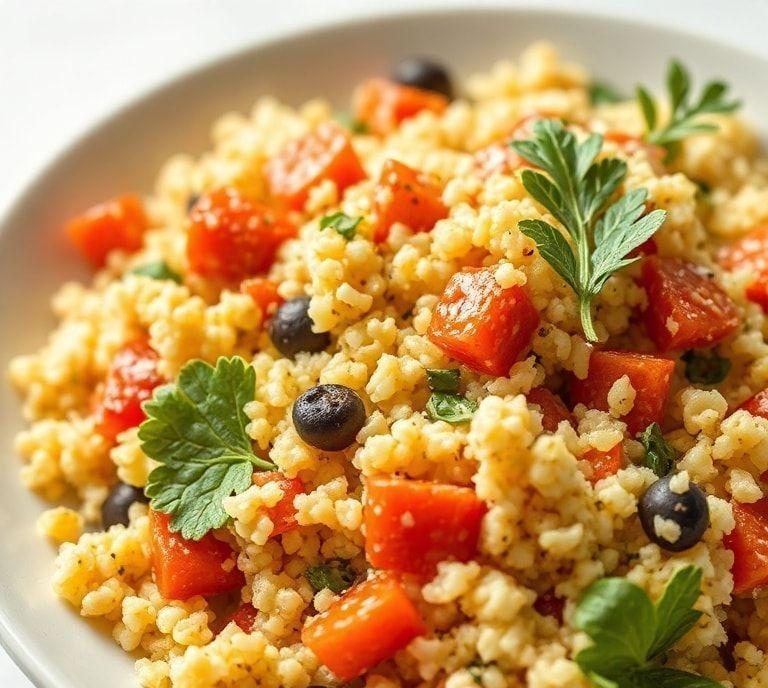
Let’s dive into the recipe. If you’re like me, you probably love dishes that don’t require a ton of time in the kitchen, and this couscous salad certainly fits the bill. It’s straightforward but packed with layers of flavor.
Ingredients Needed
- 1 cup couscous (preferably whole wheat for added nutrition)
- 1 medium cucumber, diced
- 1 red bell pepper, diced
- 1/2 cup red onion, finely chopped
- 1/4 cup raisins (or dried cranberries for a tart twist)
- 1/4 cup fresh parsley, chopped
- 1/4 cup feta cheese (optional for extra creaminess)
- 1/4 cup olive oil
- Juice of 1 lemon
- 1 tablespoon balsamic vinegar (or apple cider vinegar)
- 1 teaspoon honey or maple syrup
- Salt and pepper to taste
Cooking Instructions
- Prepare the Couscous: In a medium saucepan, bring 1 1/4 cups of water to a boil. Once boiling, stir in the couscous, remove from heat, and cover. Let it sit for about 5 minutes, or until all the water is absorbed. Fluff it with a fork to separate the grains, and let it cool slightly.
- Chop the Vegetables: While the couscous is cooling, chop up the cucumber, bell pepper, and onion. Make sure the pieces are small enough to blend well with the couscous. The cucumber adds a cool, refreshing crunch, while the bell pepper brings a bit of sweetness and color.
- Prepare the Dressing: In a small bowl, whisk together the olive oil, lemon juice, balsamic vinegar, honey, salt, and pepper. The honey gives the dressing a hint of sweetness that balances the acidity of the lemon and vinegar. Taste it and adjust the seasoning if needed.
- Assemble the Salad: Once the couscous has cooled, transfer it to a large mixing bowl. Add the chopped vegetables, raisins, and fresh parsley. Toss everything together gently.
- Dress and Serve: Pour the dressing over the salad and toss again to coat all the ingredients. If you’re using feta cheese, sprinkle it on top. Let the salad sit for a few minutes to allow the flavors to meld together.
And that’s it! Your vegetarian couscous salad is ready to enjoy.
Ingredient Science Spotlight
Let’s take a quick detour and explore some of the ingredients that make this salad not only tasty but also nutritious.
- Couscous: Couscous is a tiny, round semolina pasta, and while it might look like a grain, it’s actually made from durum wheat. It’s a great source of complex carbohydrates, which provide long-lasting energy. Whole wheat couscous, which I highly recommend, packs a bit more fiber, which is great for digestive health. The mild flavor and fluffy texture are ideal for absorbing the other ingredients in the salad.
- Cucumber: Cucumbers are mostly water (about 95%), which makes them incredibly hydrating. They also contain antioxidants and compounds like cucurbitacins that have anti-inflammatory properties. The fresh crunch they provide makes a perfect contrast to the softness of the couscous.
- Raisins: While raisins are naturally sweet, they also bring a surprising depth of flavor. They’re packed with iron and potassium, which is great for maintaining healthy blood pressure. Their sweetness in this salad balances out the tanginess of the lemon and vinegar dressing.
- Olive Oil: Olive oil is the cornerstone of the Mediterranean diet, and for good reason. It’s rich in monounsaturated fats, which can help reduce inflammation and lower cholesterol. Plus, the healthy fats in olive oil help the body absorb fat-soluble vitamins like A, D, E, and K.
Expert Tips
- Make Ahead: This couscous salad actually gets better after a few hours as the flavors have more time to meld together. If you’re planning to serve it at a gathering, I suggest making it the night before.
- Adjust the Texture: If you prefer a softer texture, you can add a bit more water when cooking the couscous. If you like it with more bite, reduce the water slightly.
- Herb Variations: While parsley is a classic in this recipe, you can experiment with other fresh herbs. Mint would be an excellent addition, giving the salad a fresh, cooling quality. Basil or cilantro could also add an extra layer of flavor depending on your preferences.
- Toppings: If you’re looking to make the salad a bit heartier, try adding roasted chickpeas or toasted pine nuts. A scoop of hummus on the side also makes a delicious pairing!
Recipe Variations
One of the best things about this salad is its adaptability. Here are some variations you can try depending on what you have in your pantry or what flavors you’re craving:
- Add Protein: If you’re looking to turn this salad into a more substantial meal, try adding grilled chicken, roasted tofu, or chickpeas. You could even toss in a handful of toasted nuts for crunch and protein.
- Dried Fruits: Switch up the raisins for dried apricots, figs, or dates. Dried cherries would also bring a lovely tart contrast to the sweetness of the dressing.
- Spices: For a slightly different flavor profile, try adding a pinch of cumin, smoked paprika, or even a touch of cinnamon. These warm spices pair surprisingly well with the couscous and vegetables.
- Nuts and Seeds: Add texture with almonds, pumpkin seeds, or sunflower seeds. Toasting them lightly can enhance their flavor and add a satisfying crunch.
Final Words
This vegetarian couscous salad is proof that simple ingredients, when combined thoughtfully, can create something far greater than the sum of its parts. It’s light, refreshing, and a little bit indulgent-all at the same time. Whether you’re preparing it as a light lunch or bringing it to a potluck, it’s bound to be a crowd-pleaser. Plus, it’s so versatile that you can tweak it to suit your tastes or dietary preferences.
FAQs
What Ingredients Are Needed For A Vegetarian Couscous Salad?
A basic vegetarian couscous salad recipe requires couscous, fresh vegetables like cucumbers, tomatoes, bell peppers, and red onions, as well as herbs such as parsley or cilantro. Additional ingredients may include olive oil, lemon juice, garlic, salt, and pepper. Optional additions can be feta cheese, olives, chickpeas, or roasted vegetables to enhance flavor and texture.
Can I Make A Vegetarian Couscous Salad Ahead Of Time?
Yes, vegetarian couscous salad can be made ahead of time and stored in the refrigerator. In fact, the flavors tend to develop and intensify as it sits. It’s best to prepare the salad and dress it with olive oil and lemon juice a few hours or up to a day in advance. Just be sure to toss it again before serving to redistribute the dressing.
Is Vegetarian Couscous Salad Gluten-free?
Traditional couscous is made from semolina wheat, so it is not gluten-free. However, you can make a gluten-free version of couscous salad by substituting couscous with gluten-free grains like quinoa, rice, or millet. These alternatives maintain a similar texture and make the dish suitable for those following a gluten-free diet.