If you’re anything like me, there are moments when you want to cook something vibrant, healthy, and comforting all at once-something that feels a bit like home no matter where you are in the world. That’s exactly how I feel about vegetarian Asian dishes. The beauty of Asian cuisine lies in its versatility, the balance of flavors, and the fact that it can be made with simple ingredients but still taste like something special. Whether it’s a quick weeknight dinner or a more elaborate weekend feast, a vegetarian Asian recipe can tick all the boxes. Let me share one of my favorite recipes, and I promise it’ll transport you to a bustling street market, where the air is thick with the scent of garlic, ginger, and soy sauce.
Vegetarian Asian Recipe
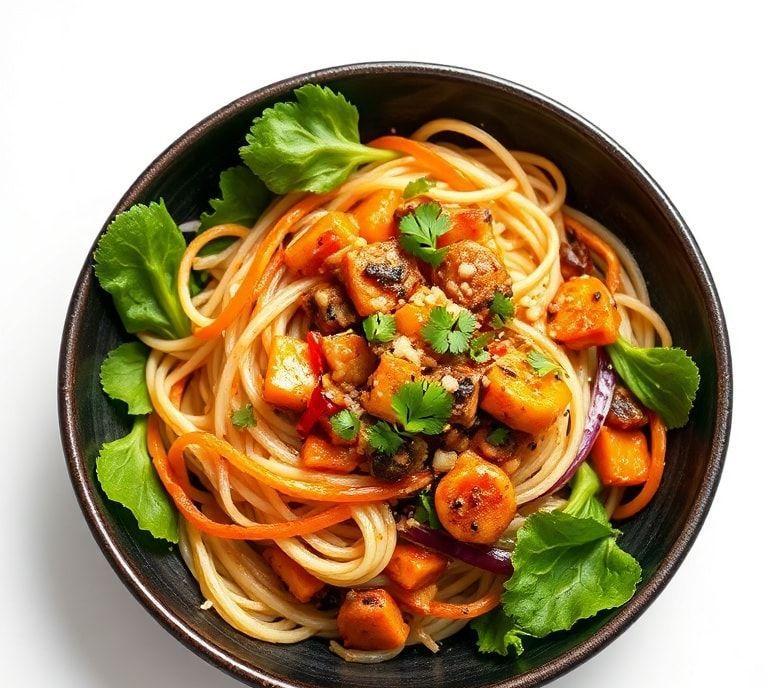
This is a recipe I’ve been making for years, and it’s one of those meals that always feels like a treat even though it’s incredibly simple to prepare. It’s a stir-fried noodle dish with a delicious mix of vegetables, tofu, and a savory sauce that has just the right amount of tang and umami. It’s one of those meals that tastes even better the next day (if there are leftovers, that is), and I’ve served it to friends countless times. Every time, someone asks for the recipe. There’s just something about it that clicks-it’s hearty, satisfying, and packed with flavor.
Ingredients Needed
Here’s what you’ll need for this vibrant stir-fried noodle dish:
- 200g of rice noodles (You can use any type, but rice noodles have a soft, chewy texture that soaks up all the sauce perfectly.)
- 200g firm tofu, cubed (Extra firm tofu works best to hold its shape when frying.)
- 1 tablespoon vegetable oil (For frying the tofu and veggies.)
- 1 medium onion, thinly sliced (I love the sweetness of onion in this dish-it caramelizes just beautifully when cooked.)
- 2 cloves garlic, minced (Because garlic makes everything better, right?)
- 1 bell pepper, julienned (Adds crunch and color.)
- 1 carrot, julienned (A bit of sweetness and crunch to balance the savory sauce.)
- 1 zucchini, julienned (I like adding zucchini for extra texture and freshness.)
- 2 tablespoons soy sauce (For that deep, savory, umami kick.)
- 1 tablespoon oyster sauce (Or a vegetarian alternative-this adds richness.)
- 1 tablespoon rice vinegar (Just a little tang to bring everything together.)
- 1 teaspoon sugar (To balance the acidity of the vinegar.)
- 1/2 teaspoon chili flakes (If you like a little heat, this adds just the right amount of spice.)
- 2 tablespoons sesame oil (For that nutty, aromatic finish.)
- A handful of fresh cilantro (For garnish, adding a refreshing, herbaceous note.)
- Lime wedges (Optional but adds a zesty burst of freshness when served.)
Cooking Instructions
Now, let’s get cooking. This part is where you can feel like a pro chef-even if you’re just whipping this up for yourself. You’ll have it all ready in under 30 minutes.
- Prepare the noodles: Cook the rice noodles according to the package instructions. Most rice noodles only need to be boiled for 3-4 minutes, so they cook up quickly. Once cooked, drain them, but save a bit of the pasta water for later. You can toss the noodles with a little bit of oil to prevent them from sticking while you prepare everything else.
- Fry the tofu: In a large frying pan or wok, heat 1 tablespoon of vegetable oil over medium-high heat. Once hot, add the cubed tofu and let it fry until all sides are golden and crisp. This takes about 5-7 minutes, depending on the size of your tofu cubes. Remove from the pan and set aside.
- Stir-fry the vegetables: In the same pan, add another tablespoon of vegetable oil if needed. Toss in the onions, garlic, bell pepper, carrot, and zucchini. Stir-fry for 4-5 minutes until the vegetables are tender-crisp. You want them to retain some of their crunch, so don’t overcook.
- Make the sauce: In a small bowl, whisk together the soy sauce, oyster sauce (or vegetarian alternative), rice vinegar, sugar, and chili flakes. Taste and adjust the seasoning as needed.
- Combine everything: Add the cooked noodles to the pan with the vegetables. Pour the sauce over the top and give everything a good toss to coat evenly. If the noodles seem a little dry, add a splash of the reserved pasta water to loosen them up.
- Finish with tofu and sesame oil: Return the crispy tofu to the pan, and drizzle in the sesame oil. Toss everything again to combine and heat through.
- Serve: Serve hot, topped with fresh cilantro and a wedge of lime on the side. You can squeeze the lime over the dish just before eating for a pop of freshness.
Ingredient Science Spotlight
Let’s take a moment to look at the science behind some of the ingredients in this recipe, especially the tofu and the noodles, both of which play key roles in the dish.
- Tofu: Tofu’s appeal goes beyond just being a vegetarian protein source. It’s made from soybeans, and its texture changes dramatically depending on how you cook it. Firm tofu holds its shape well and can absorb flavors from sauces, making it ideal for stir-fries. The magic happens when you fry it-by searing the outside, you get that golden, crispy texture that contrasts so beautifully with its soft interior. When tofu is pressed to remove excess water, it becomes denser and able to absorb more flavor, which is why it’s the perfect vehicle for a savory sauce like soy or oyster sauce.
- Rice Noodles: Rice noodles are made from rice flour, water, and sometimes salt. They’re naturally gluten-free and have a smooth, slippery texture that works wonderfully with stir-fried dishes. The noodles don’t just serve as a base-they absorb all the flavors of the sauce and vegetables, giving the whole dish a satisfying bite. When stir-frying them, the heat caramelizes the starches in the noodles, helping to lock in the flavors from the sauce.
Expert Tips
- Press the tofu: If you’re using firm tofu, it’s important to press it before cooking to remove excess moisture. This helps the tofu crisp up nicely when fried and prevents it from becoming soggy.
- Use high heat: Stir-frying is all about high heat. Make sure your pan is nice and hot before adding ingredients-this helps the vegetables retain their crunch and prevents everything from getting too mushy.
- Customize the sauce: Feel free to play with the sauce! Add a little more sugar if you like it sweet or a splash more vinegar for extra tang. You can also experiment with hoisin sauce or tamari for different flavor profiles.
- Don’t overcrowd the pan: Give your ingredients space to cook properly. If you overcrowd the pan, things can steam rather than stir-fry, and you’ll miss out on that crispiness and char that makes stir-fries so delicious.
- Garnish generously: Fresh cilantro, toasted sesame seeds, or a sprinkle of chopped peanuts can elevate the dish even more. Plus, a squeeze of lime adds an unexpected fresh zing.
Recipe Variations
This recipe is super adaptable. Here are a few variations to try:
- Vegetable variations: You can swap out the zucchini and bell pepper for other vegetables like broccoli, snow peas, or mushrooms. If you like a bit of heat, add some sliced fresh chili or a drizzle of chili oil.
- Protein options: If you’re not a fan of tofu, you can easily substitute it with tempeh, seitan, or even a plant-based meat alternative. Or, if you eat eggs, scrambled eggs would work well in this dish.
- Sauce variations: For a richer sauce, add a tablespoon of peanut butter for a Thai-inspired version. You could also add a little bit of miso paste to deepen the umami flavor.
Final Words
I can’t emphasize enough how much I love the simplicity and versatility of this dish. It’s one of those meals where you can make it your own, whether you’re sticking strictly to the recipe or adding your own twist. And the best part? It’s quick enough for a weeknight dinner, yet flavorful enough to impress guests if you’re hosting.
FAQs
What Are Some Common Vegetarian Ingredients Used In Asian Recipes?
Common vegetarian ingredients in Asian cuisine include tofu, tempeh, mushrooms, bok choy, eggplant, soy sauce, rice noodles, and a variety of fresh vegetables like cabbage, carrots, and bell peppers. These ingredients are often used to create both hearty and flavorful dishes that are satisfying without meat.
Can I Substitute Meat In Traditional Asian Dishes With Plant-based Ingredients?
Yes, many traditional Asian dishes can be easily adapted to vegetarian versions by substituting meat with plant-based alternatives like tofu, tempeh, or seitan. For example, in stir-fries or curries, you can replace chicken or beef with tofu or mushrooms. Additionally, ingredients such as soy protein or jackfruit can mimic the texture and flavor of meat in dishes like Asian-style dumplings or noodle soups.
What Are Some Popular Vegetarian Asian Dishes To Try At Home?
Popular vegetarian Asian dishes include:
1. Vegetable Stir-Fry: A colorful mix of vegetables stir-fried in soy sauce, garlic, and ginger.
2. Vegetable Sushi: Sushi rolls filled with ingredients like avocado, cucumber, pickled radish, and carrot.
3. Mapo Tofu: A Sichuan dish traditionally made with tofu and a spicy bean paste sauce (which can be adapted to a vegetarian version).
4. Thai Green Curry: A flavorful coconut milk-based curry made with tofu and a variety of vegetables.
5. Vegetarian Pho: A Vietnamese noodle soup with a rich broth made from herbs, spices, and vegetables, topped with tofu and fresh herbs.