There’s something uniquely comforting about preparing a dish that doesn’t just fill the stomach but also connects you with nature. Rosemary, with its fragrant, piney aroma, is a herb that’s often overlooked despite its ancient presence in kitchens around the world. A lot of us have memories tied to it – maybe from a Sunday roast in a family kitchen, or perhaps from a garden where its silvery-green sprigs grew wild. But today, let’s explore how this herb shines in a vegetarian recipe that isn’t just easy to make but will also have you savoring the earthy, woodsy flavor in every bite. It’s a recipe for a rosemary-infused vegetable dish that’s vibrant, aromatic, and perfect for any time of year.
As someone who’s spent countless afternoons picking fresh rosemary from a backyard garden and experimenting with its flavors in different meals, I can tell you that this herb doesn’t need meat to stand out. In fact, this recipe brings out the best of rosemary, showing just how transformative a handful of fresh sprigs can be.
Rosemary Vegetarian Recipe
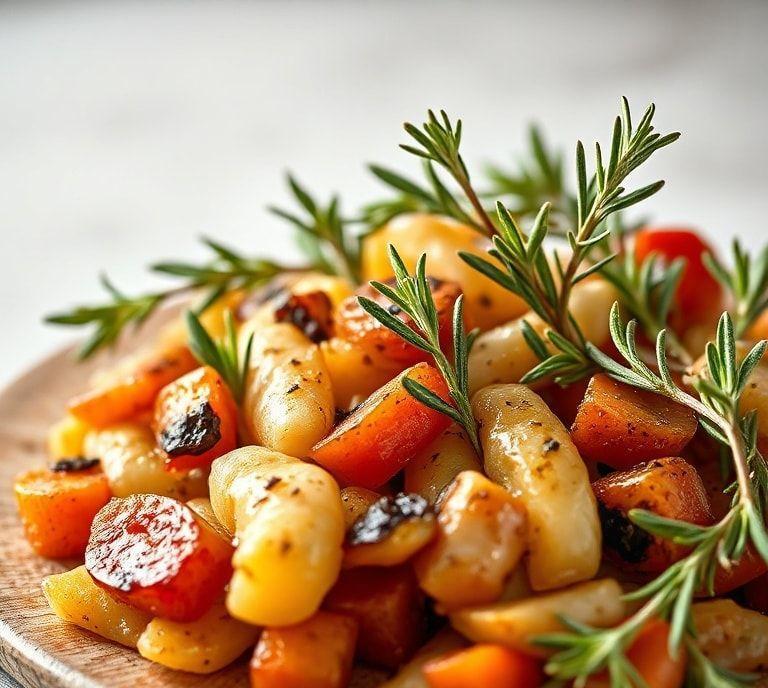
Now, let’s get into the heart of it. Picture yourself in your kitchen, the air filled with the scent of fresh rosemary. You’re about to make a simple yet hearty rosemary-infused vegetable medley that will impress both your tastebuds and anyone lucky enough to sit down for a meal with you. The great thing about this dish is its versatility. It can be served as a main dish or a side. Think of it as your gateway into a whole new world of flavor.
Ingredients Needed
For this dish, simplicity is key. The ingredients should speak for themselves, letting rosemary take center stage. Here’s what you’ll need:
- 1 medium sweet potato – cubed (it brings a sweet, soft contrast to the savory herbs)
- 1 cup of carrots – sliced into rounds (adds both sweetness and a vibrant color)
- 1 small zucchini – chopped (its mild flavor balances the more intense rosemary)
- 1 red bell pepper – sliced (adds crunch and sweetness)
- 1 small red onion – cut into wedges (for that hint of sharpness)
- 2 tablespoons of olive oil – for roasting
- 3-4 fresh sprigs of rosemary – the star of the show
- 2 cloves of garlic – minced (because garlic makes everything better)
- Salt and pepper – to taste (never underestimate the power of good seasoning)
Cooking Instructions
- Preheat the oven to 400°F (200°C). Roasting vegetables at a high temperature brings out their natural sweetness, and trust me, that’s the magic we’re after here.
- Prep your vegetables. Peel and cube the sweet potato, slice the carrots, chop the zucchini, and slice the red pepper and onion. There’s no rush here-just take your time getting everything prepped and ready to go. Sometimes, I like to get the kids involved in chopping (or at least washing the veggies), which turns it into a fun family event.
- Toss with olive oil and seasoning. In a large bowl, drizzle your olive oil over the vegetables. Add salt, pepper, and the minced garlic. Toss everything together so that each piece is lightly coated in oil and seasoning. This is where the rosemary comes into play. Take those fresh sprigs, remove the leaves from the stems, and roughly chop them before sprinkling them into the mix. Rosemary has a robust flavor, so don’t be shy about it-let it infuse every vegetable.
- Roast in the oven. Spread your seasoned vegetables evenly on a baking sheet. If you’re using a lot of veggies, don’t overcrowd the pan; you want the heat to circulate around each piece. Roast for about 30-40 minutes, stirring halfway through to ensure an even caramelization. The vegetables should be golden brown and tender when done. If you want a bit of a char on the edges, leave them in for an extra 5 minutes.
- Serve and enjoy. Once out of the oven, give everything a final seasoning touch with a sprinkle of sea salt or cracked black pepper if needed. Serve warm, either as a side dish or as a hearty main for a light dinner.
Ingredient Science Spotlight
Now let’s get into a bit of science behind some of these ingredients, especially that rosemary. Rosemary, scientifically known as Rosmarinus officinalis, is a powerhouse of flavor and health benefits. The essential oils in rosemary are known for their antibacterial and anti-inflammatory properties. But what really makes it a kitchen favorite is its unique flavor profile-earthy, slightly piney, and very aromatic. This herb is rich in antioxidants, particularly rosmarinic acid, which has been linked to improved digestion and reduced stress.
The sweet potatoes are another great example of plant-based nutrition at its finest. They’re packed with beta-carotene, which the body turns into vitamin A-vital for vision and skin health. They also have a decent amount of fiber, making them a great food for digestive health.
Carrots, with their bright orange hue, are loaded with the same antioxidant, beta-carotene. This, combined with their naturally sweet flavor, complements the slightly savory taste of rosemary and garlic beautifully.
Expert Tips
- Don’t rush the rosemary: Rosemary is a herb that needs to be handled with care. Too much of it can overpower the dish, so start small. Fresh rosemary leaves are best, but if you have dried rosemary, be cautious-its flavor is more concentrated.
- Play with roasting times: Depending on the size of your vegetable chunks, you might need to adjust the roasting time. If you like your vegetables crispy, leave them in a little longer. Just keep an eye on them to avoid burning.
- Layer flavors: If you want to take this dish up a notch, you can squeeze a little lemon juice over the veggies just before serving. The acidity cuts through the richness of the roasted vegetables and brings a fresh brightness.
- Get creative with your seasoning: If you don’t have fresh rosemary, dried rosemary works in a pinch. You could also experiment with other herbs like thyme or oregano. Experimenting with different combinations of herbs can give this dish a fresh spin every time.
Recipe Variations
The beauty of this rosemary vegetable medley is how adaptable it is. Here are a few variations:
- Add some protein: Throw in some chickpeas or lentils to make this a more filling meal. You could also toss in a handful of toasted walnuts for some crunch and extra nutrition.
- Spicy twist: If you like a bit of heat, sprinkle some red pepper flakes into the seasoning mix. A dash of chili powder or smoked paprika can also add a nice smokiness that pairs wonderfully with the rosemary.
- Root vegetable medley: Swap the zucchini for parsnips, turnips, or rutabaga. These root vegetables hold up well to roasting and can bring their own unique flavors to the dish.
- Cheese lovers: Grated Parmesan or goat cheese can be sprinkled over the vegetables right after they come out of the oven. The warmth of the veggies helps the cheese melt and adds an extra layer of indulgence.
Final Words
Food, for me, has always been about creating experiences and memories. Cooking a dish like this rosemary vegetable medley allows you to slow down and appreciate the simple ingredients that make up a meal. There’s no rush-just the satisfaction of chopping, seasoning, and roasting until everything is golden brown and bursting with flavor.
I love how this dish takes me back to my grandmother’s garden, where we’d pick herbs together and toss them into whatever we were cooking that day. The beauty of rosemary is that it’s both humble and profound-it can turn any simple meal into something that feels special. It’s not just about what you’re eating but about what you’re creating in the moment.
FAQs
What Are Some Popular Vegetarian Dishes That Use Rosemary?
Rosemary is a versatile herb that pairs well with many vegetarian ingredients. Popular dishes include roasted vegetables such as potatoes, carrots, and bell peppers, rosemary-infused pasta sauces, focaccia bread with rosemary, and savory vegetable tarts. It is also commonly used to flavor vegetarian stews and soups, providing a fragrant and earthy note.
Can I Use Fresh Rosemary Instead Of Dried In Vegetarian Recipes?
Yes, fresh rosemary can be used instead of dried, but the flavor is more potent and aromatic when fresh. A general guideline is to use three times the amount of fresh rosemary to replace dried (e.g., 1 teaspoon dried = 3 teaspoons fresh, chopped). Fresh rosemary is best added early in cooking for dishes like roasts and stews, or later for delicate dishes like salads and dressings to preserve its bright aroma.
How Can Rosemary Enhance The Flavor Of Vegetarian Meals?
Rosemary adds a distinctive pine-like, slightly peppery flavor that complements vegetables, legumes, and grains. It can elevate simple dishes like roasted potatoes, sautéed mushrooms, or grilled vegetables by imparting depth and aromatic complexity. Additionally, rosemary pairs well with garlic, olive oil, lemon, and other herbs such as thyme or oregano, allowing vegetarian meals to achieve rich, layered flavors without relying on meat-based seasonings.