Sauerkraut is one of those foods that, in its simplest form, captures the essence of fermented joy. It’s crunchy, tangy, and complex in a way that makes you want to keep coming back for more. The magic is in the fermentation-where raw cabbage turns into a powerhouse of probiotics, flavors, and nutrients. But there’s something special about creating a vegetarian version of sauerkraut at home, especially if you’ve never thought of adding a twist beyond the basic cabbage-and-salt combo.
The beauty of homemade sauerkraut is the freedom to get creative. You control the flavor balance, the spices, and the depth of tang. Plus, it’s incredibly easy to make once you get the hang of it. The best part? You don’t need a ton of fancy ingredients. All it takes is patience, a bit of attention, and the confidence to experiment.
So, let’s take a deeper dive into how you can make a delicious, vegetarian sauerkraut at home-one that not only tastes amazing but also supports gut health in ways you might not have imagined.
Vegetarian Sauerkraut Recipe
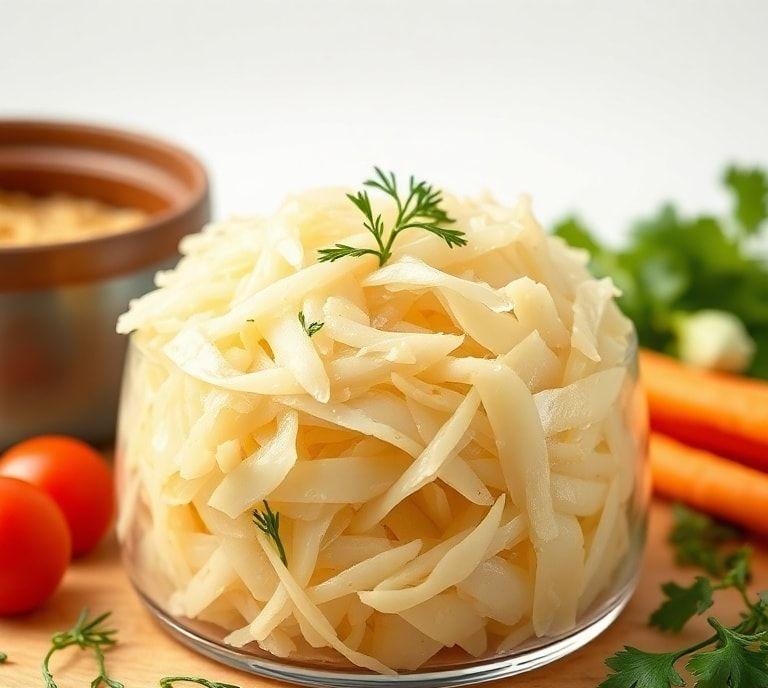
What makes this vegetarian sauerkraut so special? It’s not just about cutting cabbage and waiting for it to ferment; it’s about layering flavors in a way that enhances the natural fermentation process. With no meat, the ingredients speak for themselves, offering a fresh, light, yet satisfying experience.
Ingredients Needed
You only need a handful of ingredients to make a basic vegetarian sauerkraut, but adding a few extra herbs and spices can turn it into something extraordinary.
- 1 medium green cabbage (around 2 pounds) – This is the foundation of your sauerkraut. The cabbage will break down during fermentation, releasing its natural sugars, which the bacteria feed on to create that tangy flavor.
- 1 tablespoon kosher salt – Salt is the key to drawing moisture out of the cabbage and creating an environment where the good bacteria can thrive while preventing harmful ones from taking over.
- 1 teaspoon caraway seeds (optional) – These add a distinctive, slightly anise-like flavor. While caraway is traditional in many sauerkraut recipes, it’s entirely up to you whether you want to include it. I love how it elevates the flavor without being overwhelming.
- 1/2 teaspoon mustard seeds (optional) – A subtle, tangy kick that complements the cabbage’s natural sweetness.
- 1-2 bay leaves (optional) – Bay leaves introduce a deep, aromatic background note. You can remove them after fermentation, but they impart a layer of complexity that’s hard to miss.
- Water (filtered or distilled) – You’ll need enough water to make sure the cabbage is submerged during fermentation. Tap water can sometimes interfere with the process due to chlorine, so filtered water is recommended if possible.
- A few non-iodized salt flakes for sealing the jar – You’ll use this as a weight to help press down the cabbage and ensure it stays under the brine.
Cooking Instructions
Making sauerkraut at home is surprisingly simple, but it does require a little bit of patience. Here’s the step-by-step breakdown of how to get that perfect tangy, crunchy sauerkraut:
- Prep the cabbage: Start by slicing the cabbage thinly-think paper-thin shreds. The thinner the cabbage is, the more surface area there is for the salt to draw out moisture. You can use a sharp knife, but I personally find using a mandoline slicer gives me the most uniform slices.
- Massage with salt: Toss the cabbage into a large bowl and sprinkle it with the kosher salt. Using clean hands, massage the cabbage for about 5 to 10 minutes. At first, it will feel a bit dry, but as you massage, you’ll start to see the cabbage releasing liquid. This liquid is the brine that will ferment the cabbage.
- Add spices: Once the cabbage is tender and the brine is pooling at the bottom, sprinkle in the caraway seeds, mustard seeds, and bay leaves. Mix everything together so that the spices are evenly distributed.
- Pack the cabbage into a jar: Transfer the cabbage and brine into a clean jar or fermentation vessel. Press it down firmly with your fists or a tamper as you go, ensuring there are no air pockets. The cabbage should be completely submerged under the brine. If necessary, use a weight to hold it down.
- Fermentation: Cover the jar with a cloth or lid (but not an airtight seal-fermentation needs some air). Leave it at room temperature for about 3 to 7 days, checking once a day to make sure the cabbage stays submerged. The longer you let it ferment, the tangier it becomes. I find that about 5 days gives me the perfect balance of sour and crunchy.
- Taste and store: After a few days, start tasting your sauerkraut. When it reaches your desired flavor, transfer it to the fridge to slow down the fermentation process. It’ll continue to develop flavor even in the fridge, but at a much slower pace.
Ingredient Science Spotlight
When you think of sauerkraut, you’re likely imagining just a few ingredients-cabbage, salt, and maybe a couple of spices. But there’s a lot going on beneath the surface. The process of fermentation begins when you add salt to cabbage. The salt draws out moisture from the cabbage, and in this brine, naturally occurring bacteria start to thrive, particularly Lactobacillus bacteria. These bacteria feed on the sugars in the cabbage, producing lactic acid as a byproduct.
This lactic acid is what gives sauerkraut its tangy, sour flavor, and it also acts as a preservative. The beauty of fermentation is that it creates a rich ecosystem of probiotics, which support your gut health by promoting the growth of beneficial bacteria. Not only does this improve digestion, but it’s also believed to boost immunity and improve mental health-something you don’t often hear about with a jar of sauerkraut!
Expert Tips
- Use fresh, high-quality cabbage: The cabbage is the star of the show, so don’t skimp on this. Look for organic, in-season cabbage that’s firm and free of blemishes. Older cabbage can be tougher and less flavorful, and that will show up in your final product.
- Avoid iodized salt: Iodized salt can inhibit the fermentation process, so make sure to use kosher salt or sea salt. These salts are ideal because they’re free from additives and won’t interfere with the growth of good bacteria.
- Keep the cabbage submerged: It’s crucial that the cabbage stays below the brine. If any part of the cabbage is exposed to air, it’s more prone to mold. I’ve used a makeshift weight in a pinch-just a small glass jar filled with water works wonders to keep the cabbage pressed down.
- Check daily: Fermentation is a living process, so it’s good to check on your sauerkraut every day. Taste it, adjust the weight if necessary, and make sure the cabbage stays submerged in the brine.
Recipe Variations
- Spicy Kick: For a spicy version, add a finely chopped chili pepper or red pepper flakes to the cabbage before massaging it. The heat will complement the tanginess in a unique way.
- Ginger and Turmeric: If you want to bring a little more depth to your sauerkraut, add thinly sliced fresh ginger and a teaspoon of turmeric powder. These two ingredients add anti-inflammatory benefits and give the sauerkraut a pleasant warmth.
- Apple and Carrot Sauerkraut: For a sweeter variation, mix in shredded carrots and finely chopped apples. The sweetness of the apples contrasts beautifully with the tangy cabbage, and the carrots add a nice crunch.
- Herb-infused Sauerkraut: You can also go wild with herbs! Try dill, thyme, or even oregano for a more Mediterranean twist. These herbs infuse the brine, giving your sauerkraut an aromatic, flavorful profile.
Final Words
Making sauerkraut at home is more than just a cooking project-it’s a journey into the world of fermentation, flavor, and patience. There’s a quiet satisfaction that comes with watching the cabbage transform, knowing that you’ve created something both delicious and beneficial for your gut health. And the best part? You can always tweak the recipe to suit your own taste. Whether you’re going classic with caraway seeds or getting creative with turmeric and ginger, the possibilities are endless.
FAQs
What Ingredients Are Needed To Make Vegetarian Sauerkraut?
To make vegetarian sauerkraut, you’ll need cabbage, salt, and optionally, other vegetables or spices such as carrots, garlic, caraway seeds, or juniper berries. The key ingredients are simply cabbage and salt, as the fermentation process relies on the natural bacteria present in the cabbage to ferment the sugars.
How Long Does It Take To Ferment Vegetarian Sauerkraut?
The fermentation time for vegetarian sauerkraut typically ranges from 1 to 4 weeks, depending on the ambient temperature and your desired flavor. In warmer temperatures, the fermentation process will be faster, while cooler temperatures will slow it down. You can start tasting the sauerkraut after a week and stop the fermentation when it reaches your preferred level of tanginess.
Can I Add Other Vegetables To My Vegetarian Sauerkraut Recipe?
Yes, you can customize your vegetarian sauerkraut by adding other vegetables like carrots, radishes, or beets. These vegetables not only enhance the flavor and color but can also contribute to the probiotic content. Just make sure to maintain the correct salt-to-vegetable ratio to ensure proper fermentation.