If you’re like me, you’ve probably been on a quest for that perfect vegetarian dish that gives you the satisfaction of a meaty, comforting meal but without the heaviness of traditional meat. And that’s where these eggplant meatballs come in. Picture it: crispy on the outside, soft and flavorful on the inside, with that satisfying bite that’s the perfect marriage of savory, herby, and a bit of smokiness. These meatballs don’t just make a great plant-based meal; they’ve got enough depth and personality to make even the most committed carnivores raise an eyebrow.
I first stumbled upon the idea of using eggplant in meatballs out of sheer curiosity. My sister-who, unlike me, was fully committed to vegetarianism-insisted that eggplant could do some wonders in the kitchen, and she was right. It’s one of those vegetables that’s super versatile but often underappreciated. So, I got my hands on a couple of big, purple beauties, and after a few experimental rounds, I came up with a recipe I felt was worth sharing.
Now, I’m ready to share these with you, along with the reasons why eggplant is a kitchen hero and how you can tweak the recipe to your heart’s content.
Vegetarian Eggplant Meatballs Recipe
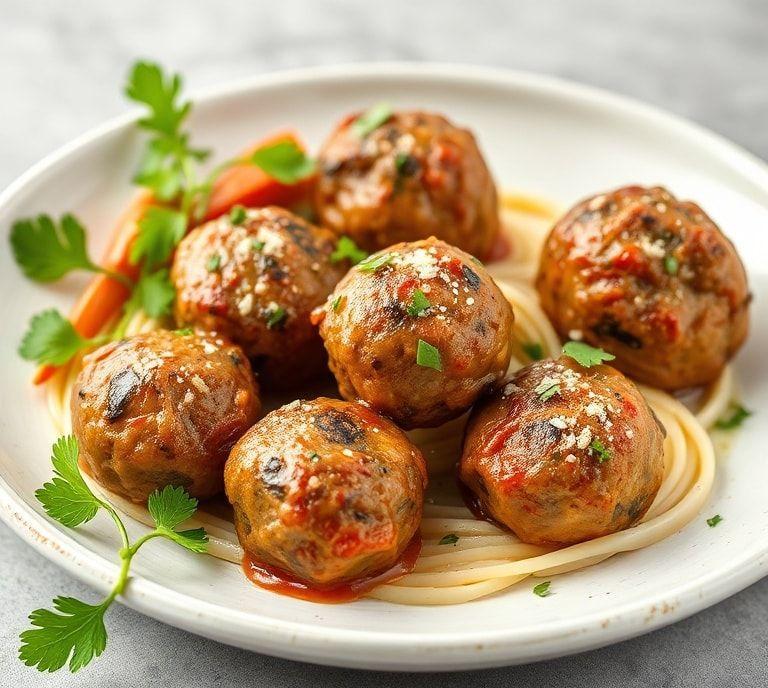
If I could describe these eggplant meatballs in one word, it would be "comforting." They are hearty enough to replace any meatball, and the texture is just divine. Plus, they’re packed with flavor thanks to the eggplant’s natural absorption abilities and the umami kick from garlic, onions, and a touch of miso paste.
These meatballs pair well with your favorite marinara sauce or even a homemade pesto if you’re in the mood for something different. If you have guests coming over for dinner, trust me when I say they won’t believe there’s no meat involved.
Ingredients Needed
Here’s what you’ll need to make these tasty eggplant meatballs. If you’re anything like me, you may already have most of these items in your pantry.
- 2 medium eggplants – The star of the show. Make sure they’re firm and not too squishy.
- 1 cup breadcrumbs – I prefer using whole wheat or gluten-free breadcrumbs, but any will work.
- 1/4 cup grated Parmesan cheese – This adds a subtle nuttiness and depth to the meatballs.
- 1/4 cup fresh basil, chopped – A burst of freshness is always welcome.
- 1/2 medium onion, finely chopped – For that savory undertone.
- 2 cloves garlic, minced – Garlic is like the best friend to eggplant; they just belong together.
- 1 tablespoon miso paste – It adds that rich, fermented umami flavor that gives the meatballs a meaty vibe.
- 1 egg – To bind everything together.
- Salt and pepper to taste – Season to your liking.
- Olive oil – For pan-frying, though you could also bake the meatballs if you’re aiming for less oil.
Cooking Instructions
I won’t lie: making these meatballs is a bit of a labor of love, but it’s totally worth it. Here’s how I do it:
- Prepare the eggplant: Cut the eggplants in half lengthwise, score the flesh with a criss-cross pattern, and sprinkle a little salt on them. Let them sit for about 10-15 minutes to release some of their moisture. Then, scoop out the soft flesh and set it aside. You’ll want to discard the skin.
- Cook the eggplant: In a large skillet, heat a tablespoon of olive oil over medium heat. Add the chopped onions and garlic, and sauté until they’re soft and golden, about 5 minutes. Add the eggplant flesh and cook for another 5-7 minutes, until it becomes soft and slightly caramelized. If you want extra flavor, a splash of soy sauce or balsamic vinegar works wonders here.
- Mash the eggplant: Once the eggplant mixture has cooled slightly, mash it with a fork or potato masher until smooth. Don’t worry about perfection; a few lumps are fine.
- Mix the meatball ingredients: In a large bowl, combine the mashed eggplant, breadcrumbs, Parmesan, chopped basil, miso paste, egg, and salt and pepper. Stir it all together until it’s well combined. You should be able to form the mixture into balls without it falling apart. If it feels too wet, add more breadcrumbs; if it’s too dry, a little splash of water or olive oil can help.
- Form the meatballs: Take a small amount of the mixture and roll it between your hands to form small balls, about the size of a golf ball. You can make them larger or smaller depending on your preference.
- Cook the meatballs: Heat a little more olive oil in the same skillet over medium heat. Once it’s hot, gently add the meatballs and cook for about 2-3 minutes on each side until they are golden and crispy on the outside. Alternatively, you could bake them at 375°F for 20 minutes, flipping halfway through.
- Serve: Serve your eggplant meatballs with marinara sauce, pesto, or on a sandwich with some fresh mozzarella. And don’t forget the side of garlic bread!
Ingredient Science Spotlight
Eggplants are often overlooked in the culinary world, but they bring so much to the table, especially in plant-based dishes. They’re naturally spongy, which means they soak up flavors like a sponge-making them perfect for dishes that require a little depth.
The key to making these meatballs work lies in understanding the texture and moisture of the eggplant. Eggplants have a lot of water in them, which is why it’s so important to salt them before cooking. This process helps to draw out the moisture, preventing your meatballs from becoming soggy. The mashed eggplant is then combined with breadcrumbs and egg to create a cohesive mixture that’s firm enough to hold together when fried.
Miso paste is another ingredient that elevates the dish. It’s made by fermenting soybeans with salt and a koji culture, and it’s packed with umami-one of the five basic tastes. Adding it to the eggplant mixture gives these meatballs that meaty, savory flavor that would otherwise be hard to achieve in a vegetarian recipe.
Expert Tips
- Texture control: If your eggplant mixture is too wet, you can squeeze out any excess moisture with a clean kitchen towel. This will help ensure the meatballs hold their shape better when frying.
- Flavor boosters: Want to kick up the flavor even more? Add a teaspoon of smoked paprika or a dash of cayenne pepper for some heat. You could also throw in a little nutritional yeast if you’re looking for that cheesy, umami flavor.
- Don’t skip the miso: It might seem like a minor ingredient, but trust me, it’s what takes these meatballs from good to great. It’s the secret sauce, so to speak, in making these taste unexpectedly “meaty”.
- Bake them for a healthier version: If you want to cut back on the oil, baking the meatballs is a great option. Just make sure to spray the baking sheet with some cooking oil so they don’t stick.
Recipe Variations
One of the best things about these meatballs is how adaptable they are. Here are some variations you can try:
- Gluten-free: Swap out the breadcrumbs for gluten-free breadcrumbs or even crushed gluten-free crackers for a crispier texture.
- Add some heat: If you like spice, throw in some red pepper flakes or finely chopped chili peppers when you sauté the onions and garlic.
- Vegan version: Skip the egg and use a flax egg (1 tablespoon ground flaxseed + 3 tablespoons water) to help bind the mixture. You could also replace the Parmesan with nutritional yeast for a cheesy flavor.
Final Words
These vegetarian eggplant meatballs are perfect for any occasion, whether you’re meal prepping for the week, hosting a family dinner, or just craving something comforting and filling. The fact that they’re easy to make, incredibly flavorful, and versatile enough to serve with any number of sauces or sides makes them a winner in my book.
They bring all the satisfaction of a classic meatball but with none of the heaviness, making them perfect for anyone looking to reduce their meat consumption without sacrificing flavor. And as with any good recipe, feel free to experiment and make it your own.
FAQs
What Are The Main Ingredients In A Vegetarian Eggplant Meatballs Recipe?
The main ingredients for vegetarian eggplant meatballs typically include eggplant, breadcrumbs, grated Parmesan cheese (or a plant-based substitute), garlic, onion, herbs like basil or oregano, and eggs (or a vegan egg replacement). These ingredients are combined to form a mixture that can be shaped into meatball-sized portions and baked or fried.
How Do You Ensure Vegetarian Eggplant Meatballs Hold Together Without Falling Apart?
To ensure the eggplant meatballs hold together, it is crucial to properly drain the eggplant after roasting or sautéing it, as excess moisture can cause the mixture to become too wet. Additionally, using breadcrumbs and binding agents like eggs (or a flax egg for a vegan version) helps provide structure. If the mixture feels too loose, you can add a little more breadcrumbs or flour until it achieves the desired consistency.
Can I Make Vegetarian Eggplant Meatballs Ahead Of Time And Freeze Them?
Yes, vegetarian eggplant meatballs can be made ahead of time and frozen. Once shaped into meatballs, you can freeze them on a baking sheet until firm, then transfer them to an airtight container or freezer bag. When ready to cook, you can bake or pan-fry them directly from the freezer or thaw them overnight in the fridge before reheating.