There’s something undeniably comforting about a plate of hearty, flavorful food that just feels like home. For many, especially those of us who are vegetarian or plant-based, the quest for rich, savory flavors is constant. Enter vegetarian au jus – a recipe that will change how you think about plant-based gravies and sauces. This version of au jus maintains all the deep umami flavors of the classic, without any meat involved. It’s perfect for veggie-based roasts, sandwiches, or just as a flavorful dip. I’ve made this vegetarian au jus so many times that it feels like second nature now, but every time I pour it over a dish, I’m reminded of just how much depth and warmth it brings to the table. Whether you’re preparing a Sunday roast or simply looking to add some sophistication to a weekday meal, this is a recipe you’ll want to keep in your back pocket.
Vegetarian Au Jus Recipe
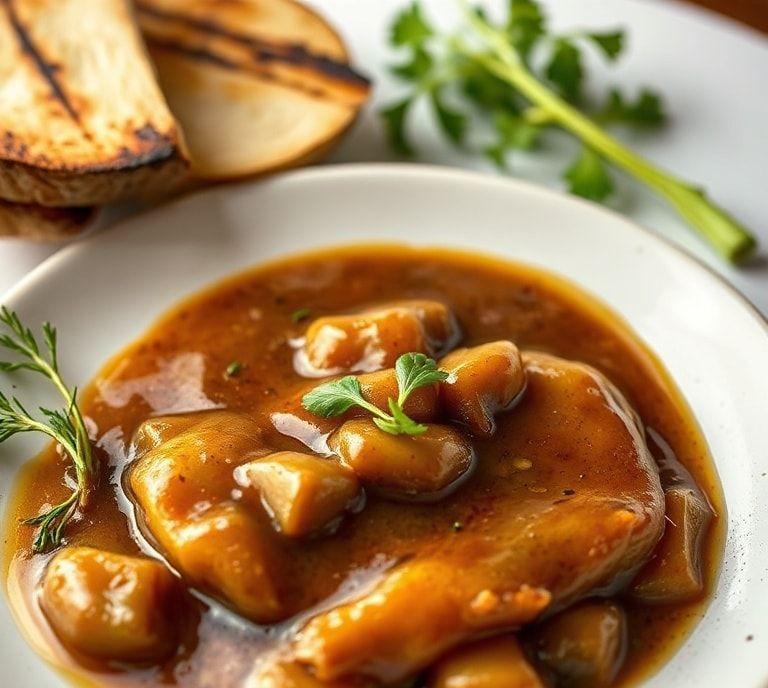
This vegetarian au jus is a brilliant marriage of savory, herby goodness and umami-packed ingredients. It’s not a thick gravy-it’s a broth-like sauce with just enough body to coat a bite of food without overwhelming it. It can be poured over just about anything: roasted veggies, mashed potatoes, veggie sandwiches, or even grilled portobello mushrooms. It brings the richness and flavor of meat-based au jus, but with the finesse and nuance of plant-based ingredients.
Here’s how I make it:
Ingredients Needed
For this recipe, you’ll want to have a few core ingredients on hand that build the foundation of flavor. The great thing is that these are simple pantry items you probably already have!
- Mushrooms (cremini or button) – These provide that deep umami flavor that will mimic the meaty essence of traditional au jus.
- Vegetable broth – A high-quality broth is crucial. Homemade is always best, but if you’re using store-bought, opt for one that’s low-sodium to control the seasoning.
- Soy sauce (or tamari for gluten-free) – This adds saltiness and that deep, savory richness that is the heart of au jus.
- Olive oil or vegan butter – You’ll need fat for sautéing the vegetables and adding richness to the final product.
- Onion – For a touch of sweetness and depth. I tend to use yellow onions, but you could go for shallots or red onions if you prefer a milder taste.
- Garlic – Because what’s a savory sauce without garlic? It adds a punch of flavor that complements the other ingredients perfectly.
- Thyme and rosemary – Fresh herbs make all the difference here. The rosemary brings earthiness, and the thyme provides a slightly citrusy note.
- Worcestershire sauce (vegetarian version) – This ingredient is crucial for mimicking the complexity of traditional au jus, adding acidity and a bit of tang.
Cooking Instructions
- Sauté the Mushrooms: Start by heating the olive oil or vegan butter in a large pot over medium heat. Add your chopped mushrooms and sauté them until they’re softened and browned, about 8-10 minutes. This step is essential for building the base flavor, so don’t rush it. The mushrooms should release their moisture and develop a deep, caramelized flavor.
- Caramelize the Onions: Add your diced onions to the pot. Stir occasionally, letting them soften and turn golden brown-this will take another 5-7 minutes. You want them to get sweet and caramelized because this sweetness balances the savory depth of the mushrooms.
- Add Garlic and Herbs: Once the onions are softened, toss in the minced garlic, thyme, and rosemary. Cook for another 2-3 minutes, until the garlic becomes fragrant and the herbs start to release their oils.
- Deglaze with Soy Sauce and Worcestershire Sauce: Pour in the soy sauce (or tamari) and Worcestershire sauce, scraping the bottom of the pot to lift up all those beautiful browned bits. This deglazing step adds even more flavor to the broth.
- Simmer the Broth: Pour in your vegetable broth, bring the mixture to a boil, then reduce the heat to a simmer. Let the broth simmer for about 20-30 minutes, uncovered, to allow the flavors to meld together. Taste and adjust the seasoning by adding salt, pepper, or a splash more soy sauce if needed.
- Strain (Optional): If you want a perfectly smooth au jus, you can strain it through a fine-mesh sieve. This will remove any mushroom pieces and herbs, leaving you with a clean, silky broth. If you prefer a chunkier texture, feel free to skip this step and serve the sauce as is.
- Serve: Pour the hot au jus over your favorite dish-roasted vegetables, a veggie sandwich, or mashed potatoes. It’s especially great as a dipping sauce for a crispy vegan roast or for soaking into soft rolls.
Ingredient Science Spotlight
Every ingredient in this au jus plays a critical role in creating the perfect balance of flavors. Let’s break down why each one matters:
- Mushrooms: These little guys are packed with glutamates, which are naturally occurring compounds responsible for that savory ’umami’ flavor. This is why mushrooms are often used to mimic the richness of meat-based dishes. They provide depth without being overpowering.
- Vegetable Broth: The foundation of any good soup or sauce is the broth. In this recipe, vegetable broth adds not just liquid, but also a savory backbone that ties everything together. A good vegetable broth should be well-seasoned with herbs, roasted vegetables, and a touch of salt.
- Soy Sauce: This is where the saltiness comes from, but it also adds a bit of fermented complexity. Soy sauce has that deeply savory character that gives the au jus the right kind of richness.
- Worcestershire Sauce: Traditionally made with anchovies, a vegetarian version uses plant-based ingredients but still maintains that tangy, slightly sweet, and acidic punch. It’s an essential ingredient to balance the umami flavors and add depth.
Expert Tips
- Brown the Mushrooms Well: Don’t skip the browning step for your mushrooms. The more caramelized they are, the deeper the flavor in the final sauce. Don’t rush this process; give them time to cook down and develop their natural sweetness.
- Adjust the Seasoning to Your Taste: Taste the au jus throughout the simmering process and adjust the seasonings accordingly. Add a little more soy sauce for saltiness, or a touch of balsamic vinegar if you want to bring in more tang.
- Use Fresh Herbs: While dried herbs can work in a pinch, fresh herbs truly elevate the flavor of this dish. They offer brighter, more aromatic notes that dry herbs simply can’t match.
- Serve it Immediately: While au jus can sit on the stovetop for a bit before serving, it’s best served fresh and hot, ideally right when it’s made. If you’re planning to store leftovers, keep the au jus in the fridge for 2-3 days, or freeze it for longer storage.
Recipe Variations
While this vegetarian au jus is already fantastic on its own, you can switch it up depending on your preferences or the dish you’re serving it with. Here are a few ideas:
- Mushroom Medley: Try using a mix of mushrooms like shiitake, portobello, and oyster for even more complexity. Each variety has its own flavor profile, so blending them will result in a richer au jus.
- Smoky Twist: For a smoky kick, add a few drops of liquid smoke or smoked paprika. This works especially well if you’re serving the au jus with grilled vegetables or a smoky veggie roast.
- Spicy Kick: If you like heat, add a pinch of red pepper flakes or a few dashes of hot sauce. This version is particularly great for spicing up veggie sandwiches or wraps.
Final Words
This vegetarian au jus has quickly become one of my go-to recipes for adding richness and depth to any plant-based dish. Its versatility makes it perfect for so many occasions-whether you’re having a cozy dinner at home or impressing guests with a sophisticated vegetarian main course. It’s easy to make, full of flavor, and a great way to elevate simple meals.
FAQs
What Ingredients Are Typically Used In A Vegetarian Au Jus?
A vegetarian au jus usually relies on plant-based ingredients to replicate the rich, savory flavor of traditional au jus. Common ingredients include vegetable broth, soy sauce or tamari, garlic, onion, mushrooms, fresh herbs such as thyme or rosemary, and sometimes nutritional yeast for added umami. Some recipes also use a small amount of tomato paste or balsamic vinegar to deepen the flavor.
How Do You Make Vegetarian Au Jus Without Using Meat Or Meat-based Broths?
To make vegetarian au jus, start by sautéing onions, garlic, and mushrooms in a small amount of oil until they are caramelized. Add vegetable broth, soy sauce, and any desired herbs, then simmer for 15-20 minutes to allow the flavors to meld. Strain the mixture to remove solids, if desired, and adjust seasoning with salt, pepper, or a splash of balsamic vinegar. This method provides a flavorful, savory sauce without any meat products.
What Are Some Common Uses For Vegetarian Au Jus?
Vegetarian au jus can be used as a dipping sauce for plant-based roasts, sandwiches, or seitan and mushroom-based dishes. It also works well as a flavorful base for gravies or to drizzle over roasted vegetables. Because it is lighter than traditional gravy, it is particularly suitable for enhancing the natural flavors of roasted or grilled vegetables and vegetarian proteins.