Cooking with a slow cooker is one of those things that makes life easier while making the house smell incredible. You can toss everything in, forget about it for hours, and then come back to a delicious meal waiting for you. And when you’re craving something comforting yet packed with nutrients, a vegetarian curry fits the bill perfectly.
I’ve always been drawn to curries, not just because they’re warming and flavorful, but also because they offer so much flexibility in ingredients. You can mix and match vegetables, beans, and spices to create a new variation every time. There’s something wonderfully meditative about the slow cooking process too, especially when you know a hearty, healthy meal is going to greet you at the end of a busy day.
This slow-cooked vegetarian curry is one of my go-to recipes when I need something filling but don’t have a lot of time to cook. It’s versatile enough to suit all tastes, whether you’re a spice lover or someone who prefers a milder dish. The key to making this dish work is allowing the flavors to meld together over time, creating a richness that only slow cooking can deliver.
Vegetarian Curry Slow Cooker Recipe
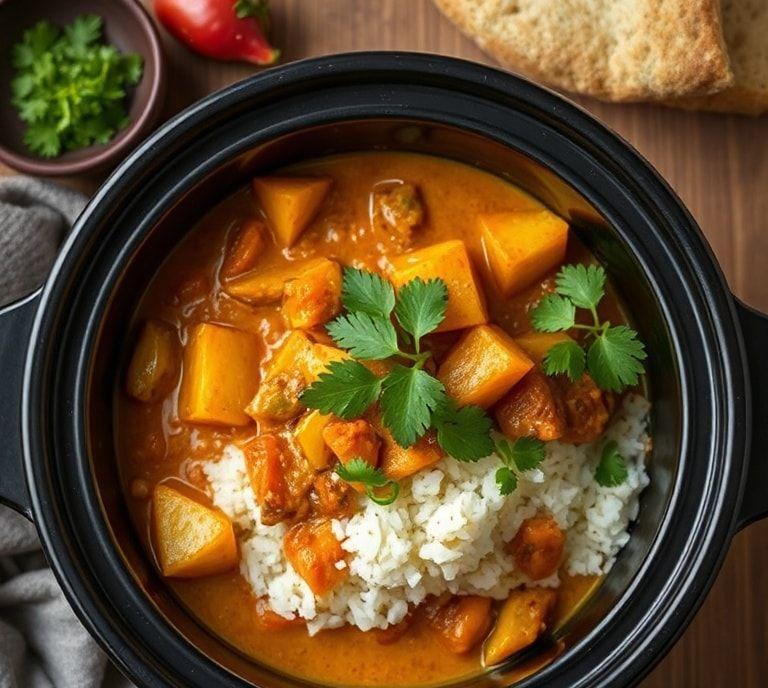
Let’s dive straight into this easy, comforting, and satisfying curry. This recipe is an excellent way to explore the world of vegetarian cooking without feeling like you’re missing out on depth of flavor or substance. It’s got everything-creamy coconut milk, hearty vegetables, and a spice mix that will have your tastebuds dancing.
Ingredients Needed
To make this recipe truly shine, you don’t need any fancy ingredients-just a selection of fresh, pantry staples, and a few pantry spices that I guarantee you already have. Here’s what you’ll need:
- 1 can (14 oz) coconut milk – The base of your curry. It gives it that velvety smooth texture and subtle sweetness that balances the spices perfectly.
- 1 large onion, diced – This adds a layer of sweetness and depth to the dish.
- 3 garlic cloves, minced – Because garlic. Need I say more?
- 1 tablespoon ginger, grated – Adds that zingy warmth and a little bit of bite.
- 2 carrots, peeled and sliced – They bring in sweetness and texture.
- 2 medium potatoes, diced – For heartiness and comfort.
- 1 bell pepper, chopped – Adds a fresh crunch and a pop of color.
- 1 can (14 oz) chickpeas, drained and rinsed – A plant-based protein that makes this dish feel substantial.
- 1 cup vegetable broth – Helps loosen the curry, and adds more flavor without being too rich.
- 2 teaspoons ground cumin – For an earthy, aromatic base flavor.
- 1 teaspoon ground turmeric – That warm, golden color and anti-inflammatory kick.
- 1 teaspoon ground coriander – Brightens up the curry with a citrusy note.
- 1 teaspoon garam masala – Adds a complex, aromatic punch with cinnamon, cardamom, and clove.
- 1/2 teaspoon ground cinnamon – A little sweet warmth to round out the spices.
- 1/2 teaspoon red chili flakes (optional) – For heat, or omit for a milder curry.
- Salt and pepper to taste – To enhance and balance the flavors.
- Fresh cilantro (for garnish) – Adds a burst of freshness to the dish.
- 1 tablespoon lime juice – The final squeeze that ties everything together.
Cooking Instructions
- Prep the Veggies: Start by prepping all your ingredients. Dice the onions, chop the carrots and potatoes, and slice the bell pepper. The beauty of this recipe is that it’s super forgiving-if you want to toss in a zucchini or throw in some sweet potatoes instead of regular ones, go for it. This is a base recipe, and it’s really about what you have and love.
- Sauté Aromatics (Optional): If you’re feeling fancy and want to take the flavor to the next level, you can sauté the onions, garlic, and ginger in a bit of oil for about 5 minutes until softened. This step isn’t essential for the slow cooker, but it does enhance the depth of flavor. If you’re in a rush, just skip it-everything still turns out delicious!
- Slow Cooker Setup: Once your veggies are prepped, throw everything into the slow cooker: the coconut milk, vegetable broth, carrots, potatoes, chickpeas, bell pepper, and all the spices. Stir everything together until it’s evenly combined. You’ll notice the coconut milk blending with the broth and spices, creating a beautiful base for the curry.
- Slow Cook: Set your slow cooker on low for about 6-8 hours. If you’re in a rush, you can set it to high for 3-4 hours, but the low setting allows the flavors to meld together beautifully. The longer the curry simmers, the more the spices infuse and the vegetables soften.
- Finish and Serve: About 15 minutes before serving, taste the curry. Adjust the seasoning with salt, pepper, and a bit of lime juice for brightness. When you’re ready to serve, sprinkle some fresh cilantro over the top for that fresh herbal kick. You can also serve it over rice, couscous, or with a side of warm naan bread.
Ingredient Science Spotlight
One of the most beautiful things about a vegetarian curry is how the ingredients work together to create such depth. Let’s take a quick look at why these ingredients are so magical:
- Coconut Milk: It’s not just for the creamy texture. Coconut milk is rich in fats that help carry the spices throughout the dish, and those fats are what create the curry’s signature silky mouthfeel.
- Ginger and Garlic: These two work together like a dynamic duo-ginger brings heat and a bit of zest, while garlic provides its signature rich, savory notes. They’re both also known for their immune-boosting properties.
- Turmeric: This bright yellow spice is more than just a pretty color. It’s packed with curcumin, a powerful antioxidant that’s been linked to various health benefits, including anti-inflammatory effects.
- Chickpeas: Packed with fiber and plant-based protein, chickpeas add substance to this dish. They absorb the flavors of the curry as they cook, turning them into little flavor bombs.
Expert Tips
- Adjust the Spice: If you’re cautious about spice levels, start with half the amount of chili flakes and gradually add more. You can always adjust heat later, but it’s harder to take it down once it’s in there.
- Make it a Meal: To turn this into a complete meal, serve it with rice, quinoa, or a hearty grain like farro. The grain will help absorb all the delicious curry sauce.
- Make it Ahead: Curries taste even better the next day once the flavors have had time to settle in. If you’ve got leftovers (lucky you!), store them in the fridge for up to 3 days, or freeze them for up to 3 months.
Recipe Variations
- Substitute Vegetables: You can swap out the carrots, potatoes, or bell peppers for other vegetables you love. Try adding spinach or kale near the end of cooking for some leafy greens. Sweet potatoes would work wonderfully in place of regular potatoes for a slightly sweeter, more vibrant dish.
- Protein Boost: Add some cubed tofu or tempeh to make it even more protein-rich, or if you’re not strictly vegetarian, you can throw in some cooked chicken or beef for a heartier meal.
- Curry Style: Feeling experimental? Play with different curry bases. For a more Thai-style curry, use red or green curry paste, lime leaves, and lemongrass. For an Indian-inspired version, you could use a tad more garam masala and even a bit of yogurt to thicken it.
Final Words
There’s something deeply comforting about a bowl of curry, especially when it’s made in the slow cooker. The convenience is unmatched, and the flavors build up slowly, allowing everything to harmonize perfectly. It’s the kind of dish that’s easy to make for a weeknight dinner, but it’s also impressive enough to serve to friends or family. Plus, there’s the added bonus of leftovers that only get better.
If you haven’t yet explored the wonders of slow cooker curries, now’s your chance. You’re in for a treat, and you might just find that this becomes your new go-to weeknight dinner.
FAQs
Can I Make A Vegetarian Curry In A Slow Cooker Without Pre-cooking The Vegetables?
Yes, you can prepare a vegetarian curry in a slow cooker without pre-cooking the vegetables. However, the cooking time may need to be slightly longer to ensure all vegetables become tender. Root vegetables such as carrots, potatoes, and sweet potatoes benefit from being cut into smaller, uniform pieces to cook evenly. Softer vegetables like zucchini, bell peppers, or spinach should be added later in the cooking process to prevent overcooking.
What Are Some Protein Options To Add To A Vegetarian Slow Cooker Curry?
Vegetarian protein sources work well in slow cooker curries. Common options include chickpeas, lentils, tofu, tempeh, or paneer. Canned beans can be added directly, while dried beans should be soaked or pre-cooked. Tofu or paneer can be added in the last 30-60 minutes of cooking to absorb the curry flavors without breaking apart. Combining legumes and dairy or soy-based proteins ensures a nutritionally balanced dish.
How Can I Make A Slow Cooker Vegetarian Curry More Flavorful?
To enhance the flavor of a vegetarian slow cooker curry, layer spices and aromatics thoughtfully. Begin with sautéing onions, garlic, and ginger before adding them to the slow cooker. Use a combination of ground spices like cumin, coriander, turmeric, garam masala, and chili powder, and consider adding a splash of coconut milk or tomato puree for depth. Fresh herbs such as cilantro added at the end, or a squeeze of lemon or lime juice before serving, can brighten the dish. Slow cooking naturally melds flavors, so avoid excessive water, which can dilute the taste.