It’s funny how food has a way of telling a story, isn’t it? The most unassuming ingredients can transform into something that feels both comforting and a little bit magical. That’s exactly what happens with this Irish Cabbage Vegetarian recipe. It’s a dish that carries the heart of tradition, yet it’s entirely adaptable to modern sensibilities. If you’ve ever found yourself wondering if you can enjoy a healthy twist on the classic Irish cabbage recipes that don’t rely on meat, I’m here to tell you that yes, you absolutely can.
I’ve always had a soft spot for dishes that feel like they’ve been passed down through generations-food that’s steeped in history, comfort, and soul. And when it comes to Irish food, cabbage is one of those ingredients that has made its mark. Whether in hearty stews or as a side dish, cabbage plays a starring role in Irish cuisine. But let’s face it, a traditional Irish cabbage dish often involves bacon or ham. So, let’s make a vegetarian version that honors the dish’s roots, while providing a lighter, plant-based twist!
Irish Cabbage Vegetarian Recipe
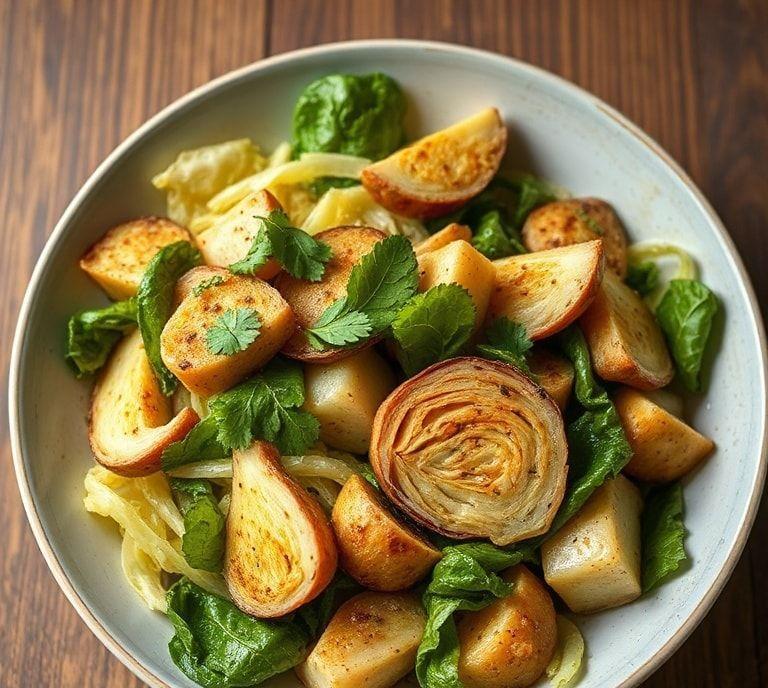
This recipe takes the heart of a classic Irish cabbage dish and removes the meat, but not the flavor. The cabbage remains the star-sweet, hearty, and slightly earthy. It’s cooked in a combination of olive oil, garlic, and onion, with a few other fresh ingredients to add complexity. But even if you’re making it for the first time, I promise you it’s surprisingly simple to prepare.
There’s something about the marriage of cabbage with garlic and a touch of vinegar that makes this dish feel both rich and fresh at the same time. And it gets even better when served with roasted potatoes or a slice of crusty bread to soak up the juices. The result is a dish that’s not only packed with nutrients but also brings a touch of Irish tradition into your kitchen, without needing to depend on animal products.
Ingredients Needed
Let’s break down the ingredients for this dish. Nothing too complicated, I promise.
- 1 medium head of cabbage: You’ll want a nice, fresh cabbage for this. I tend to go for green cabbage, as it has the perfect balance of texture and flavor.
- 2 tablespoons of olive oil: A good quality extra virgin olive oil will elevate the dish, adding a smooth richness.
- 1 medium onion, finely chopped: Onions add that sweet, aromatic layer of flavor that’s essential in this dish.
- 2 cloves of garlic, minced: Garlic is a must. It gives the cabbage a fragrant warmth that makes the whole thing pop.
- 1/2 cup vegetable broth: You’ll need this to cook down the cabbage and give it a little extra depth.
- 1 tablespoon apple cider vinegar: This is my secret ingredient. The vinegar adds a touch of acidity to balance the sweetness of the cabbage.
- 1 teaspoon of dried thyme: Thyme is perfect with cabbage, giving it a subtle earthy aroma.
- Salt and pepper to taste: You can’t forget seasoning; a generous pinch of salt and a few cracks of black pepper will bring it all together.
Cooking Instructions
Alright, let’s get to the fun part: cooking. This is where the magic happens.
- Prepare the cabbage: Begin by removing the outer leaves of the cabbage. Cut it in half and then into quarters. Slice out the core, and then chop the cabbage into thin strips, aiming for roughly 1-inch pieces.
- Sauté the onions and garlic: Heat the olive oil over medium heat in a large skillet. Once hot, add the chopped onion and cook for about 5 minutes until it softens and turns translucent. Add the garlic and cook for another minute until it becomes fragrant. You’ll start to smell it, and that’s when you know it’s time to move on.
- Add the cabbage: Stir in the cabbage strips and let it wilt down for a few minutes. Don’t worry if it seems like a lot of cabbage at first-it will shrink as it cooks.
- Add the liquids: Pour in the vegetable broth and apple cider vinegar, stirring to combine. Then sprinkle in the thyme, salt, and pepper. Reduce the heat to low and cover the skillet. Let the cabbage cook, stirring occasionally, for about 15-20 minutes, until it’s tender and nicely caramelized. If you prefer your cabbage with a bit of bite, you can cook it for less time.
- Final touches: Once the cabbage is cooked to your liking, remove from heat and give it a taste. Add more salt or pepper if needed, and for an extra touch, drizzle a little more olive oil on top before serving.
Ingredient Science Spotlight
Cabbage is an interesting vegetable when it comes to its nutritional benefits. It’s packed with fiber, vitamin C, and even vitamin K, which makes it excellent for heart health and digestion. But what I find most intriguing is how cabbage interacts with heat. As cabbage cooks, its natural sugars are brought to the surface, and when caramelized, it gives off that lovely, slightly sweet flavor. The high amounts of antioxidants in cabbage, like flavonoids and polyphenols, also have anti-inflammatory properties, which makes it not just delicious, but also great for your health.
The combination of apple cider vinegar with cabbage is a classic pairing. The acidity of the vinegar balances out the cabbage’s slight bitterness, while enhancing its natural sweetness. It’s the perfect yin and yang for this dish.
Expert Tips
Here are a few insider tricks I’ve picked up over the years to make this dish even better:
- Don’t overcook the cabbage: It might be tempting to cook it until it’s completely wilted and mushy, but cabbage tastes best when it still has a little bite left to it. Think al dente-not too soft!
- Use a heavy-bottomed skillet: A sturdy skillet or Dutch oven will help distribute heat more evenly and prevent burning. I personally love using a cast-iron skillet for its even cooking and rustic aesthetic.
- Season in layers: Don’t just season at the end! A pinch of salt in the beginning when you add the cabbage helps draw out its moisture and brings out the natural flavors. Then, adjust the seasoning at the end as needed.
- Garnish with something fresh: If you’ve got fresh parsley, dill, or chives, chop up a bit and sprinkle it over the finished dish. It’ll brighten the flavors and add a pop of color.
Recipe Variations
One of the joys of cooking is how you can tweak a recipe to your liking. Here are a few ideas if you’re looking to change things up:
- Add potatoes: For a more filling meal, add some roasted or boiled potatoes to the dish. They pair beautifully with the cabbage and make it even more comforting.
- Spice it up: Add a pinch of red pepper flakes or a small diced chili for a bit of heat. It’s a nice contrast to the mellow sweetness of the cabbage.
- Add other vegetables: Carrots, parsnips, or leeks would all be wonderful additions to this dish. They’ll bring in new textures and flavors, while still letting the cabbage be the star.
- For a creamy version: Stir in a spoonful of vegan sour cream or a drizzle of coconut cream at the end for a richer, creamier version of this dish. It adds an extra layer of indulgence.
Final Words
This Irish Cabbage Vegetarian recipe is more than just a dish; it’s a celebration of simplicity and flavor. By stripping away the meat and focusing on the natural goodness of cabbage, you create something that feels both satisfying and light. It’s also one of those recipes that gets better the next day, making it perfect for leftovers.
The best part is that it’s incredibly versatile. Whether you’re enjoying it on a lazy Sunday afternoon or serving it as part of a larger meal, this dish will always be the kind of comforting, flavorful food that feels like home.
FAQs
What Ingredients Are Needed For An Irish Cabbage Vegetarian Recipe?
An Irish cabbage vegetarian recipe typically requires cabbage, potatoes, onions, vegetable broth, olive oil or butter, garlic, salt, and pepper. You can also include optional ingredients like carrots, peas, or herbs like thyme and parsley to enhance flavor.
Can I Make An Irish Cabbage Vegetarian Recipe Without Potatoes?
Yes, you can make an Irish cabbage vegetarian recipe without potatoes. While potatoes are a traditional ingredient, you can replace them with other root vegetables like turnips or parsnips for a different texture and flavor. Alternatively, you could skip the root vegetables entirely for a lighter dish.
Is It Possible To Make Irish Cabbage Vegetarian Recipe Vegan-friendly?
Yes, you can make the Irish cabbage vegetarian recipe vegan-friendly by substituting butter with olive oil or a plant-based butter alternative. Additionally, if the recipe calls for vegetable broth with any animal-derived ingredients, ensure to use a completely vegan vegetable broth.