There’s something about a warm bowl of pea soup that just feels like home. For me, pea soup has always been a comfort food that’s as simple as it is satisfying. My earliest memories of it are from my grandmother’s kitchen, where I’d sit at the counter and watch as she stirred a big pot of green goodness, the aroma filling the air. What made it even more special was how she’d make it from scratch-no shortcuts, just slow-cooked love. The recipe she passed down was humble, yet packed with flavor and nutrition.
Fast-forward to today, and I’ve adapted that old recipe to create a delicious vegetarian version. It’s light yet hearty, perfect for a cozy meal on a chilly evening or when you just need a nourishing dish to reset after a busy week. This vegetarian pea soup has all the earthy depth of the traditional recipe, but without any meat, making it an ideal choice for those looking to eat more plant-based or simply trying to incorporate more vegetables into their diet.
So, let’s dive in. I’ll share everything you need to know to make a comforting, rich, and flavorful pea soup that’s sure to become a staple in your kitchen.
Peas Soup Vegetarian Recipe
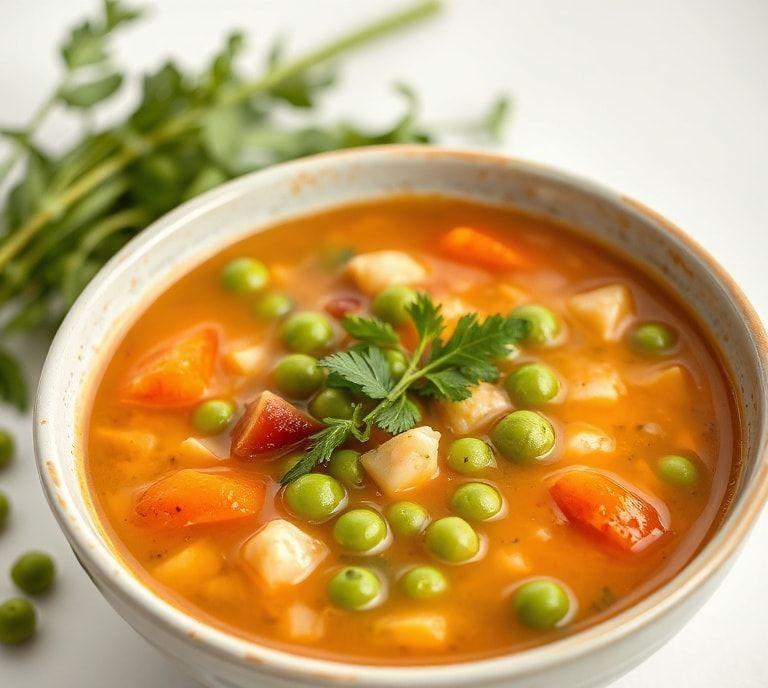
This recipe is incredibly simple but offers a depth of flavor that can only come from using fresh, quality ingredients and letting them shine. The peas bring a mild, sweet flavor, while the herbs and spices give it that cozy warmth we all crave in a soup. And because there’s no meat involved, the flavor complexity comes from simmering the peas slowly to release their natural sweetness.
Ingredients Needed
Before diving into the cooking process, it’s good to know exactly what you’ll need. I love how straightforward this list is-it’s not cluttered with complicated ingredients that are hard to find or require special trips to the store.
- 1 pound dried green peas: You can use yellow peas, too, but green peas offer that classic pea soup flavor.
- 8 cups vegetable broth: I prefer using vegetable broth for its lighter, more delicate flavor compared to chicken stock. It lets the peas do all the talking.
- 1 medium onion: A small onion adds a subtle sweetness that balances the earthy peas.
- 2 large carrots: Carrots bring sweetness and color to the dish, making it more visually appealing as well as delicious.
- 3 cloves garlic: Garlic adds a savory depth that brings the flavors together.
- 1 bay leaf: A bay leaf is essential for that herbal note that’s common in pea soup, rounding out the flavor.
- 2 teaspoons dried thyme: This herb is a classic in many soups. It adds an aromatic, slightly earthy taste.
- Salt and pepper to taste: These basic seasonings are all you need to bring out the full flavor of the ingredients.
- 1 tablespoon olive oil: A bit of olive oil is all you need to sauté the vegetables and bring out their flavors.
- 1 tablespoon lemon juice (optional): This can be added at the end to bring a bright, fresh note to the soup.
Cooking Instructions
I always say the best recipes are those where you can set it and forget it, and this pea soup is just that. Here’s how to make it:
- Rinse the Peas: Start by rinsing your dried peas under cold water. There’s no need to soak them ahead of time, but it’s always good to remove any dirt or small stones.
- Sauté the Vegetables: In a large pot, heat the olive oil over medium heat. Add the onion, carrots, and garlic, and sauté for about 5-7 minutes, or until the onions are translucent and the carrots start to soften. This step brings out the natural sweetness of the vegetables.
- Add the Peas and Broth: Once the vegetables are ready, toss in the rinsed peas, bay leaf, and thyme. Pour in the vegetable broth and bring the mixture to a boil.
- Simmer: Once it reaches a boil, lower the heat to a simmer. Let the soup cook, uncovered, for 45 minutes to an hour, or until the peas have broken down and the soup thickens. If you prefer a smoother texture, you can blend a portion of the soup with an immersion blender.
- Season: Add salt and pepper to taste, and if you want that extra touch of freshness, squeeze in a bit of lemon juice right before serving.
- Serve: Ladle the soup into bowls, and if you like, top with a dollop of sour cream or a sprinkle of fresh herbs for added flavor. It pairs beautifully with a slice of crusty bread.
Ingredient Science Spotlight
It’s easy to take for granted the individual ingredients that make up a recipe, but each one brings something important to the table. Let’s take a moment to appreciate what goes into this pea soup and why it works so well:
- Green Peas: These tiny powerhouses are loaded with protein, fiber, and essential nutrients like vitamins A, C, and K. They provide the soup’s base, offering a subtle sweetness and earthiness when cooked slowly.
- Vegetable Broth: Broth is the canvas for the soup’s flavor. Choosing a high-quality vegetable broth (or making your own) ensures a rich, satisfying base. The flavors from onions, carrots, and celery that simmer in the broth add layers of depth.
- Carrots: Carrots bring a natural sweetness to balance out the savory flavors in the soup. But they also contain beta-carotene, which the body converts into vitamin A-a crucial nutrient for eye health and immune function.
- Thyme and Bay Leaf: These two herbs are often found together in many soup recipes for a reason. Thyme provides a woody, earthy note, while the bay leaf adds a gentle floral fragrance that complements the peas and veggies.
- Olive Oil: Not just for sautéing, olive oil is a healthy fat that helps extract and carry the flavors of your ingredients. Plus, it adds richness without overpowering the soup’s natural taste.
Expert Tips
- Use Fresh or Frozen Peas: While dried peas are traditional, you can use frozen peas for a quicker version of this soup. Just be sure to reduce the cooking time since frozen peas cook faster than dried ones.
- Blend for Smoothness: If you prefer a silky, creamy texture, blend the soup in a blender or with an immersion blender until smooth. If you like a chunkier texture, blend just half of the soup.
- Add Depth with Herbs: Experiment with different herbs. A little rosemary, basil, or even a sprig of fresh parsley can elevate the flavor and add a unique twist.
- Make It a Meal: This soup is hearty enough to stand on its own, but if you want to make it a full meal, add some crusty bread or a side salad for a complete, balanced plate.
Recipe Variations
While this recipe is perfect as is, sometimes it’s fun to switch things up. Here are a few variations you can try:
- Add Potatoes: For an extra creamy texture, throw in a couple of peeled potatoes. They’ll break down and thicken the soup while adding a rich, velvety mouthfeel.
- Spicy Kick: If you’re a fan of heat, consider adding a dash of cayenne pepper, red pepper flakes, or even a finely chopped chili. It’s a great way to balance the sweetness of the peas with some heat.
- Herb Infusion: Swap out the thyme for a sprig of fresh rosemary or tarragon. Both herbs offer a distinct flavor profile that will transform the soup in interesting ways.
- Vegan Creaminess: If you’re looking for a creamy texture without dairy, try adding a dollop of coconut milk or a few tablespoons of cashew cream to the soup once it’s done cooking.
Final Words
Soup is a beautiful thing-it’s simple, yet incredibly nourishing. And what I love about pea soup is how adaptable it is. Whether you’re making it for a cozy night in, preparing a meal for a crowd, or wanting to add more plant-based options to your weekly meals, this recipe hits all the right notes.
Plus, the best part? It’s super forgiving. Don’t have a specific ingredient? No problem. Swap it out and make it your own. You can’t go wrong when the ingredients are fresh, and you give them the time they need to cook and develop flavor.
FAQs
What Are The Key Ingredients For A Basic Vegetarian Pea Soup?
A basic vegetarian pea soup typically includes split peas, vegetable broth, onions, garlic, carrots, celery, and seasonings like salt, pepper, and herbs such as thyme or bay leaves. Optional ingredients might include potatoes for creaminess or a splash of lemon juice for added freshness.
How Long Does It Take To Cook Vegetarian Pea Soup?
Cooking time for vegetarian pea soup varies depending on the method used. On the stovetop, it usually takes about 45 minutes to an hour, with an additional 15-20 minutes for preparation. If using a slow cooker, the soup may take 4-6 hours on low. For pressure cookers, it can be ready in 20-25 minutes.
Can I Make Vegetarian Pea Soup Ahead Of Time And Store It?
Yes, vegetarian pea soup can be made ahead of time and stored in the refrigerator for up to 3-4 days. The flavors often improve as it sits. You can also freeze it for up to 3 months. When reheating, you may need to add a bit of broth or water if the soup has thickened too much.