There’s something about a simple bowl of spaghetti that feels like home. It’s comforting, satisfying, and somehow always feels just right. Now, imagine that same dish with a sauce made from fresh, juicy tomatoes picked at their peak. That’s the magic of a vegetarian spaghetti sauce made from scratch with fresh tomatoes. It’s not just about cooking; it’s about connecting with the ingredients and creating a sauce that is rich in flavor, vibrant in color, and deeply nourishing.
The joy of making this sauce comes not only from the final product but from the process itself-transforming ripe tomatoes into a simmering, aromatic sauce that envelops every noodle. Whether you’re cooking for one or feeding a family, this fresh tomato-based vegetarian spaghetti sauce is bound to become a staple in your kitchen. And trust me, it’s worth the effort.
I’ve made this sauce countless times over the years, and I can tell you that there’s something deeply satisfying about watching those tomatoes break down and meld into a savory, herb-infused sauce. It’s like you’re in the kitchen with your ancestors, all those hands that have turned fresh produce into something beautiful. If you’ve never tried making your own tomato sauce before, this is the recipe to start with. Let’s dive in.
Vegetarian Spaghetti Sauce Fresh Tomatoes Recipe
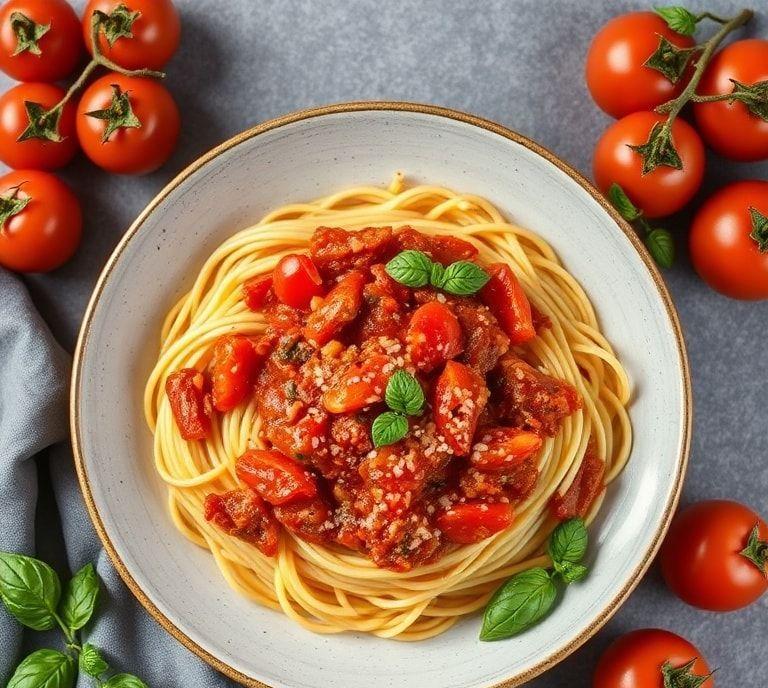
Ingredients Needed
Here’s what you’ll need to create this fresh, vegetarian spaghetti sauce. These ingredients are simple, but their combination makes all the difference.
- Fresh Ripe Tomatoes (about 6 large) – The foundation of this sauce. You want them to be bursting with flavor, so go for vine-ripened tomatoes when you can. Roma, beefsteak, or heirloom all work wonderfully, but the key is freshness.
- Olive Oil (2 tablespoons) – I always prefer extra virgin olive oil because it brings that deep, fruity flavor. It helps to sauté the garlic and onions and forms the base of your sauce.
- Onion (1 medium, finely chopped) – Onion adds that essential sweetness and depth to the sauce. You’ll sauté it until it’s translucent and soft, forming the backbone of the sauce’s flavor profile.
- Garlic (4 cloves, minced) – Garlic is where the magic happens. It adds that aromatic, savory quality to the sauce.
- Dried Oregano (1 teaspoon) – A classic herb for Italian sauces. Oregano’s earthy, slightly bitter flavor is the perfect counterpoint to the sweetness of the tomatoes.
- Dried Basil (1 teaspoon) – Basil is the perfect companion for tomatoes. It’s bright, aromatic, and slightly peppery.
- Red Pepper Flakes (1/4 teaspoon, optional) – For a subtle kick, add red pepper flakes. They won’t make it spicy but will give a little zing to the sauce.
- Salt (to taste) – Always salt to taste. Salt is a flavor enhancer, so adjust as you go.
- Sugar (1 teaspoon, optional) – Sometimes fresh tomatoes can be a little too acidic. A pinch of sugar can balance that out, but don’t overdo it-just enough to round out the flavor.
- Fresh Basil or Parsley (a few leaves, chopped for garnish) – This is for garnish, adding a pop of fresh, herbal flavor to finish off the dish.
Cooking Instructions
The key to making this sauce is patience. It doesn’t take a lot of ingredients, but the slow cooking process allows the flavors to deepen and meld.
- Prep the Tomatoes: Start by blanching the tomatoes. To do this, score an X on the bottom of each tomato with a sharp knife. Bring a pot of water to a boil, and gently drop the tomatoes in for about 30 seconds or until the skins start to peel away. Remove them from the water and set them aside to cool for a minute. Once cool enough to handle, peel off the skins, remove the seeds if you prefer, and chop the tomatoes into small chunks. Set them aside.
- Sauté the Aromatics: In a large pot, heat the olive oil over medium heat. Add the chopped onion and sauté for about 5 minutes until soft and translucent. Add the minced garlic and cook for another minute, until fragrant. You want to take your time here-the more you let these soften, the richer the flavor.
- Build the Sauce: Add the chopped tomatoes to the pot and stir to combine. The tomatoes will release their juices, and that’s when you’ll want to stir in the oregano, basil, salt, and red pepper flakes. Let this simmer gently over low heat, uncovered, for 30 to 45 minutes, stirring occasionally. The sauce should thicken and the flavors should deepen.
- Finishing Touches: Taste the sauce and adjust the seasoning. You may want to add a little sugar to balance the acidity of the tomatoes. If the sauce becomes too thick, you can add a bit of water to thin it out. Once you’re happy with the flavor, remove it from the heat.
- Serve: Toss the sauce with your favorite pasta, garnish with fresh basil or parsley, and enjoy.
Ingredient Science Spotlight
There’s a bit of science behind why this sauce works so beautifully. Tomatoes, as most people know, are acidic, and that acidity gives them a bright, tangy flavor. But when you cook them down slowly, as you do in this recipe, the natural sugars in the tomatoes start to caramelize. This process transforms the acidity into a deeper, more rounded flavor that makes the sauce both savory and slightly sweet.
Garlic and onions, when sautéed, go through the Maillard reaction (the same process that gives grilled meats their delicious crust). This creates new, rich compounds that add depth and complexity to the sauce. Olive oil, rich in monounsaturated fats, helps carry the flavors of the aromatics while also giving the sauce a smooth, silky texture.
The dried herbs bring their essential oils to the forefront when they’re exposed to heat, making the sauce taste authentically Italian. And, of course, salt is essential-it pulls out the natural sweetness in tomatoes and balances out the flavors, making everything taste more vibrant.
Expert Tips
- Don’t rush the simmering process: The beauty of this sauce is in the slow cooking. The longer you let it simmer, the more the flavors meld and deepen. If you can, let it simmer for an hour.
- Use the best tomatoes you can find: If you’re lucky enough to have a farmers’ market nearby, go for fresh, in-season tomatoes. The better the tomato, the better your sauce will be. During the off-season, canned San Marzano tomatoes are a great substitute.
- Adjust the texture: If you like your sauce a bit smoother, use an immersion blender directly in the pot. Just pulse a few times for a velvety, more refined texture.
- Fresh herbs at the end: If you have fresh basil, toss a few leaves into the sauce at the very end of cooking. It gives the sauce a fresh, aromatic lift that dried basil just can’t match.
Recipe Variations
While this is a simple and traditional version of vegetarian spaghetti sauce, there’s room to play.
- Add Veggies: For more depth, toss in some finely chopped bell peppers, zucchini, or mushrooms. These can be sautéed with the onions and garlic before adding the tomatoes.
- Roasted Garlic: If you love garlic, roasting it ahead of time and adding it to the sauce will give it a mellow, sweet flavor that can really change the dynamic of the dish.
- Add Red Wine: A splash of red wine in the simmering sauce can bring a whole new level of richness. Add it just after the tomatoes and let it cook down before adding the herbs.
- Make It Chunky: If you prefer a chunkier sauce, don’t break the tomatoes down too much. You can leave some large chunks for texture, or even add in some whole cherry tomatoes to burst open during cooking.
Final Words
Making spaghetti sauce from scratch is an act of love. It’s the kind of dish that makes the house smell like home and brings people around the table. There’s a deep satisfaction in turning fresh, simple ingredients into something so flavorful and comforting. And once you’ve made it yourself, it’s hard to go back to store-bought versions. You have control over the flavor, the texture, and the quality of the ingredients-it’s just a different level of enjoyment.
FAQs
What Are The Key Ingredients For A Vegetarian Spaghetti Sauce Using Fresh Tomatoes?
To make a vegetarian spaghetti sauce with fresh tomatoes, you will need ripe tomatoes, olive oil, garlic, onions, basil, oregano, salt, pepper, and optionally, other vegetables like bell peppers or carrots. You can also include a splash of balsamic vinegar or a pinch of sugar to balance the acidity of the tomatoes.
How Do You Prepare Fresh Tomatoes For A Spaghetti Sauce?
Start by blanching the tomatoes to easily peel off their skins. Make small ’X’ incisions at the bottom of each tomato, then submerge them in boiling water for 30 seconds before transferring them to ice water. Once cooled, peel off the skins, remove the seeds (optional), and chop the flesh into small pieces for the sauce.
Can I Make Vegetarian Spaghetti Sauce Ahead Of Time And Store It?
Yes, vegetarian spaghetti sauce can be made in advance and stored for later use. After cooking, let the sauce cool to room temperature, then transfer it to an airtight container. It can be stored in the refrigerator for up to 5 days or frozen for up to 3 months. Just reheat before serving.