There’s something deeply satisfying about a bowl of warm, hearty stew. It’s the kind of dish that brings a sense of comfort no matter the time of year, but it feels especially fitting when the weather starts to turn cooler. When the days are shorter, and you crave something cozy, a rich, flavorful stew can be a source of real joy. Today, I want to share a recipe that’s become a bit of a personal favorite of mine over the years-Vegetarian Pumpkin Stew.
I first made this stew a few autumns ago. I was looking for a way to use up the pumpkins I had bought for decoration, but instead of turning them into pies or desserts (which, don’t get me wrong, I love), I thought, why not make something savory? I wasn’t sure how the flavor would turn out, but once I had a taste, I realized I’d stumbled onto something magical. The pumpkin provides such a perfect base-its sweetness balances beautifully with the savory spices, creating a depth of flavor that is both comforting and unique.
In this stew, you won’t find meat, but you’ll find an incredibly satisfying and flavorful combination of vegetables and legumes, all cooked to tender perfection. Plus, it’s one of those recipes that gets better the longer it sits, so it’s ideal for meal prep.
Let’s dive into how you can make this soul-warming stew in your own kitchen!
Vegetarian Pumpkin Stew Recipe
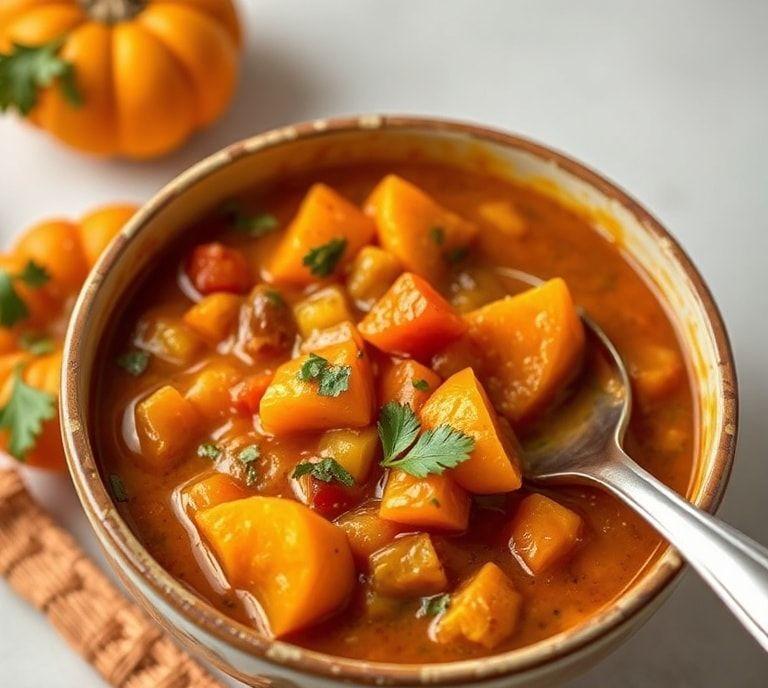
This vegetarian pumpkin stew is incredibly simple to make yet packed with layers of flavor. The pumpkin’s natural sweetness complements savory vegetables, beans, and spices in a way that feels both nourishing and indulgent. Whether you’re serving it for a weeknight dinner or a casual weekend gathering, it’s guaranteed to be a hit.
Ingredients Needed
Let’s talk about the ingredients. The beauty of this stew lies in its simplicity. You won’t need a ton of hard-to-find items. Here’s what you’ll need:
- 1 medium pumpkin (about 3-4 pounds, peeled, seeded, and cut into cubes)
- 1 tablespoon olive oil (or any oil of your choice)
- 1 large onion, diced
- 2 cloves garlic, minced
- 2 medium carrots, peeled and chopped
- 2 medium potatoes, peeled and chopped
- 1 can (15 oz) of chickpeas, drained and rinsed
- 1 can (15 oz) of diced tomatoes, undrained
- 1 can (15 oz) of vegetable broth (or homemade if you have it!)
- 1 teaspoon ground cumin
- 1 teaspoon ground coriander
- ½ teaspoon turmeric
- Salt and pepper to taste
- Fresh cilantro, for garnish (optional, but adds a nice touch)
- A squeeze of lime or lemon (optional, for brightness)
Cooking Instructions
Alright, let’s get cooking. Don’t be intimidated; it’s all about layering the flavors and letting everything simmer together until magic happens.
- Prep your pumpkin: Start by peeling your pumpkin (I like to use a sturdy vegetable peeler or even a small knife). Slice it in half, scoop out the seeds, and then cut it into cubes. Be careful with the knife-pumpkins can be tough, but once you get the hang of it, you’ll fly through this step. Set the cubes aside.
- Sauté the base: In a large pot or Dutch oven, heat the olive oil over medium heat. Add the diced onion and sauté for about 5 minutes, or until softened. Then, add the garlic and cook for another 1-2 minutes until fragrant.
- Add the veggies: Toss in the carrots and potatoes. Stir them around for about 5 minutes, letting them absorb all those wonderful aromatics.
- Spices and pumpkin: Sprinkle in the cumin, coriander, turmeric, salt, and pepper. Stir until the spices coat the vegetables, and then add in your cubed pumpkin. You want the pumpkin to mingle with the spices so it can soak up those flavors.
- Simmer it down: Pour in the canned tomatoes (with their juices) and vegetable broth. Give it a good stir, making sure everything is nicely combined. Bring the stew to a boil, then reduce the heat to low. Cover the pot and let it simmer for 25-30 minutes, or until the pumpkin and potatoes are tender.
- Add the beans: Once the vegetables are soft, stir in the chickpeas. Let the stew simmer for an additional 10 minutes to heat everything through and allow the flavors to meld together.
- Finish with a squeeze: When it’s done, taste the stew and adjust the seasoning if needed. A squeeze of fresh lime or lemon juice can really elevate the flavor and bring some brightness to the dish.
- Serve and garnish: Ladle the stew into bowls and garnish with fresh cilantro if you’re using it. Serve it hot, maybe with a piece of crusty bread on the side to soak up all the goodness.
Ingredient Science Spotlight
When it comes to cooking, I find that understanding the science behind the ingredients can add a whole new level of appreciation. Let’s take a moment to look at some of the key ingredients in this recipe.
- Pumpkin: Pumpkin is a rich source of beta-carotene, an antioxidant that our bodies convert into vitamin A. This nutrient is important for eye health, skin health, and immune function. But beyond that, pumpkin’s natural sweetness and hearty texture make it the perfect vehicle for spices like cumin and coriander. It holds its shape during cooking, which is why it works so well in stews.
- Chickpeas: These little legumes are a powerhouse of protein and fiber. They help to balance the stew’s flavors by adding a savory depth while keeping the dish filling. Chickpeas also have a mild, nutty flavor, which complements the earthiness of the pumpkin.
- Cumin and Coriander: These two spices are a match made in heaven. Cumin adds a warm, smoky element, while coriander brings a citrusy, slightly sweet flavor. Together, they create a beautifully balanced spice profile that really elevates the sweetness of the pumpkin.
- Turmeric: Not only is turmeric known for its anti-inflammatory properties, but it also adds a vibrant golden color to the stew. Its slightly peppery, mustard-like flavor deepens the savory notes of the other ingredients.
Expert Tips
- Roast the pumpkin first: If you want to deepen the flavor of the pumpkin even more, try roasting it before adding it to the stew. Toss the cubes in a little olive oil, salt, and pepper, and roast at 400°F (200°C) for about 25-30 minutes. This caramelization process brings out the natural sugars and adds another layer of complexity.
- Double up the beans: If you’re a fan of beans, don’t be afraid to add more chickpeas or experiment with other beans like white beans or lentils. It’ll only make the stew more hearty and filling.
- Make it ahead: This stew actually gets better the longer it sits, so if you’re making it for dinner, consider making it a day or two in advance. The flavors have more time to meld together, and it’s one of those dishes that’s even more comforting the next day.
- Adjust the heat: If you like a bit of heat, toss in a chopped chili or sprinkle in some red pepper flakes. The subtle heat works so well with the natural sweetness of the pumpkin.
Recipe Variations
This stew is wonderfully adaptable depending on what you have on hand or your personal preferences. Here are some ideas:
- Add greens: Throw in a few handfuls of spinach, kale, or Swiss chard in the last 5 minutes of cooking. The greens will wilt down and add an extra layer of nutrients.
- Add coconut milk: For a creamier, more decadent version, stir in a can of coconut milk along with the vegetable broth. It adds a rich, silky texture and a slightly sweet undertone that pairs beautifully with the pumpkin.
- Top it off: If you want to make this a more substantial meal, serve it over quinoa, brown rice, or couscous. It makes for a hearty bowl that will keep you full for hours.
Final Words
This vegetarian pumpkin stew is truly one of those recipes you can come back to again and again, not just because it’s easy and healthy, but because it has a way of warming you from the inside out. It’s the kind of food that feels like a hug in a bowl. It’s also endlessly versatile, so you can make it your own based on what’s in season or what you have in your pantry.
FAQs
What Vegetables Are Commonly Included In A Vegetarian Pumpkin Stew?
A vegetarian pumpkin stew typically includes a variety of vegetables such as carrots, onions, celery, and potatoes. Other common additions might include bell peppers, garlic, and greens like spinach or kale. The key is to use vegetables that complement the pumpkin’s natural sweetness and provide a hearty, nourishing base for the stew.
Can I Use Canned Pumpkin For This Stew, Or Should I Use Fresh Pumpkin?
You can use either canned or fresh pumpkin for a vegetarian pumpkin stew. Canned pumpkin is a convenient option and works well in terms of flavor and texture. If using fresh pumpkin, it will need to be peeled, cubed, and cooked before adding it to the stew, but it can offer a more robust, natural flavor. The choice depends on convenience and personal preference.
How Can I Make The Vegetarian Pumpkin Stew Spicier If I Prefer More Heat?
To add spice to your vegetarian pumpkin stew, you can include ingredients like fresh chili peppers, cayenne pepper, or red pepper flakes. Adding curry powder or smoked paprika can also contribute a warming spice without overwhelming the flavor. Adjust the spice levels to your taste by starting with small amounts and tasting as you go, adding more if necessary.