As autumn rolls in and the moon begins to rise fuller in the sky, there’s something magical about the mooncake. It’s not just a dessert, but a cultural symbol, an edible tradition that has been celebrated for centuries, particularly during the Mid-Autumn Festival. Growing up, my family would gather every year to share stories, enjoy the moon’s glow, and, of course, indulge in mooncakes. They were a little more than sweet treats to us. They were vessels of memory, wrapped in golden pastry and filled with a rich array of flavors that only made sense when shared with loved ones.
But there’s a small twist to the mooncake story in my case: I’m vegetarian. So, while the traditional mooncakes were often filled with lotus seed paste and salted egg yolk (which I did love), I began to crave something that aligned better with my lifestyle. Thus, the search for a vegetarian mooncake recipe began-a recipe that captures the essence of the season without compromising on the delightful textures and flavors that make mooncakes so beloved.
So, if you’ve been looking for a vegetarian take on the classic mooncake, this recipe might just be the one. Think of it as a blend of tradition with a modern, plant-based twist.
Vegetarian Mooncake Recipe
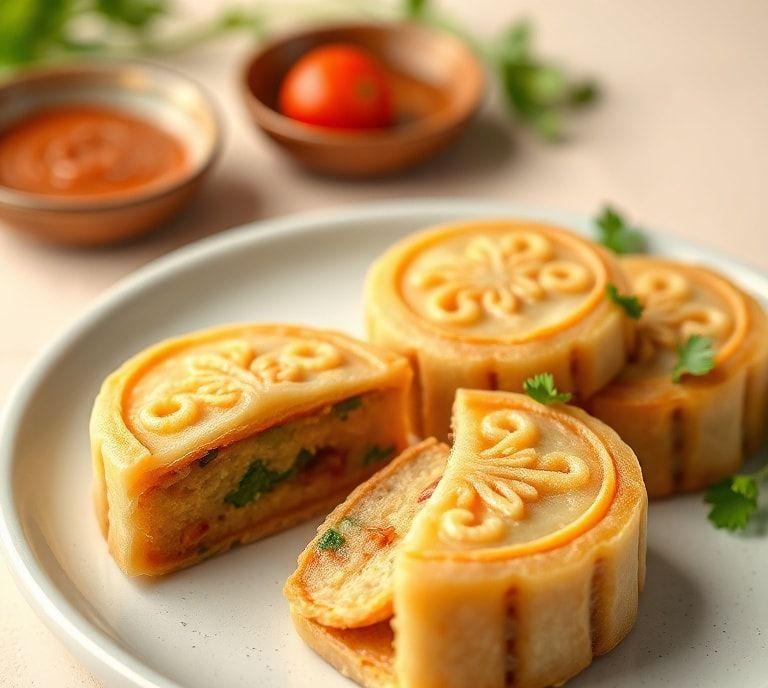
This recipe for vegetarian mooncakes is simple yet deeply satisfying. The dough is soft, slightly sweet, and golden, while the filling is rich with flavors of sweet lotus paste, complemented by a delicate fragrance from a bit of orange peel and a dash of vanilla. The end result is a treat that’s as beautiful as it is tasty, perfect for those celebrating the Mid-Autumn Festival, or any time you want a bite of something special.
Ingredients Needed
Let’s break down the ingredients for the dough and filling:
For The Dough
- All-purpose flour (250g): The base of your dough. It’s light enough to give the mooncake its soft, slightly flaky texture.
- Golden syrup (100g): This is a key ingredient in traditional mooncake dough. It gives the dough its characteristic sweetness and golden hue. If you can’t find golden syrup, you can substitute with corn syrup, though golden syrup does have a slightly richer, more unique flavor.
- Lye water (1 tablespoon): Often used in Chinese baking, it gives the dough a special texture that helps it hold together but still remain tender. It also aids in achieving that smooth, golden sheen on the mooncakes.
- Vegetable oil (50g): To make the dough smooth and pliable, oil is essential.
For The Filling
- Lotus seed paste (300g): This is the traditional filling for mooncakes. It’s smooth, rich, and slightly sweet, with a subtle, floral flavor. While you can buy pre-made lotus seed paste, it’s also possible to make your own at home by boiling dried lotus seeds and blending them into a smooth paste.
- Red bean paste (optional, 100g): Some people like to mix red bean paste with lotus paste for a little contrast in flavor and color. But, this is optional.
- Chopped candied winter melon (50g): It adds a sweet, slightly chewy texture that complements the soft paste.
- Salted or unsalted pumpkin seeds (30g): These are for adding texture and a little extra crunch, a nice contrast to the smoothness of the lotus paste. You can skip this if you prefer a smoother texture.
- Orange peel (optional): A small amount of finely grated orange peel can bring a refreshing citrus zing to the filling, cutting through the richness of the lotus paste.
Cooking Instructions
Prepare The Dough
- In a bowl, mix the flour and golden syrup together.
- Slowly add the lye water, followed by the vegetable oil. Mix everything together until the dough starts to come together.
- Knead the dough for about 5 minutes, until it’s smooth and soft, and no longer sticky. Cover the dough with a damp cloth and let it rest for at least 30 minutes to allow the gluten to relax.
Prepare The Filling
- If you’re using pre-made lotus paste, it’s just a matter of mixing in your optional ingredients-red bean paste, candied winter melon, and orange peel.
- If you’re making your own lotus paste, soak the dried lotus seeds overnight, then cook them in boiling water until soft. Blend them into a smooth paste, then cook this paste with a bit of sugar until it thickens.
- Divide the filling into small portions of about 50 grams each, and roll them into balls.
Shape The Mooncakes
- Preheat your oven to 350°F (175°C).
- Take a portion of dough (about 30-35 grams) and flatten it into a disk in your hand.
- Place a ball of filling in the center of the dough disk and carefully wrap the dough around the filling, sealing the edges.
- Gently roll the filled dough ball into a smooth ball again.
- Press the ball into a mooncake mold (you can find these online or in Asian grocery stores) to form the classic mooncake pattern.
Bake The Mooncakes
- Place the shaped mooncakes on a parchment-lined baking tray.
- Bake for 10 minutes, then remove them from the oven. Brush them lightly with a little vegetable oil or syrup, then return them to the oven for another 10-15 minutes, or until they are golden brown.
Cool And Enjoy
- Let your mooncakes cool on a wire rack. They’re best when they’ve rested for a few hours, as this allows the flavors to meld together and the dough to soften.
Ingredient Science Spotlight
If you’ve ever wondered why mooncakes have that unique texture, it’s all about the science behind the ingredients.
- Golden syrup: It’s not just for sweetness-it also contributes to the dough’s chewy, golden texture. Golden syrup has a high sugar content but a slightly more complex flavor than regular sugar or corn syrup. When it interacts with the lye water, it helps create that soft, delicate texture mooncakes are known for.
- Lye water: Though it might sound a bit mysterious, lye water is an alkaline solution that helps activate the Maillard reaction, which is responsible for that beautiful golden color. It also works to balance out the sweetness in the dough, creating that signature mooncake flavor.
- Lotus seed paste: Lotus seeds themselves are high in protein, which is why they form the dense, creamy paste that’s so characteristic of mooncakes. The paste is naturally sweet, but the richness of the seeds helps cut through the sweetness, creating a balanced, satisfying filling.
Expert Tips
- Let Your Dough Rest: Don’t skip the resting period for the dough. Just like with bread, resting the dough allows the ingredients to properly combine and the gluten to relax, which results in a smoother texture.
- Use a Mold for Professional Results: If you want that perfect mooncake imprint, investing in a mooncake mold is totally worth it. Not only do they help with consistency, but they also give your mooncakes that beautiful, traditional design.
- Keep Filling Balanced: Mooncakes can get quite sweet, so balance is key. If you find the lotus paste too rich, you can add a small amount of red bean paste or even some finely chopped nuts to give the filling a more textured, less sweet profile.
- Bake at Two Temperatures: A lot of recipes recommend baking mooncakes at two different temperatures-first at a higher temperature to set the shape, and then at a lower one to brown them. This method prevents over-baking and helps keep the mooncakes tender inside.
Recipe Variations
While the traditional mooncake recipe is fantastic on its own, there’s room to play around. Here are some variations to try:
- Matcha Mooncakes: Add a tablespoon of matcha powder to your dough for a delicate, slightly bitter flavor that balances out the sweetness of the filling.
- Black Sesame Filling: Instead of lotus paste, try using black sesame paste. Its deep, nutty flavor pairs wonderfully with the sweet dough.
- Fruit Filling: If you’re feeling adventurous, add a fruit filling like durian or even mango to bring a tropical twist to your mooncakes.
Final Words
Making mooncakes at home is a wonderful way to connect with tradition while also exploring your own creativity. It’s a craft that requires patience and attention to detail, but the end result is something that will leave you proud, satisfied, and filled with the warmth of the season.
Whether you’re celebrating the Mid-Autumn Festival or just enjoying the beauty of a moonlit evening, these vegetarian mooncakes are the perfect way to mark the occasion. With a few simple ingredients and some careful crafting, you’ll have a treat that’s both delicious and meaningful, passed down through generations.
FAQs
What Ingredients Are Used In A Vegetarian Mooncake Recipe?
A vegetarian mooncake recipe typically includes lotus seed paste, red bean paste, or other plant-based fillings such as mung bean paste or sweet potato. The dough is made from a combination of flour, sugar, vegetable oil, and golden syrup. Some recipes may also include salted egg yolk substitutes made from plant-based ingredients to mimic the texture and flavor of the traditional mooncake filling.
How Do You Prepare The Dough For Vegetarian Mooncakes?
To prepare the dough for vegetarian mooncakes, mix together flour, sugar, vegetable oil, and golden syrup to form a smooth dough. The dough is then kneaded until it reaches a soft, pliable consistency. It should not be too sticky or too dry. After kneading, the dough is divided into small portions and shaped to wrap around the filling. The dough needs to rest for at least 30 minutes before use to allow it to firm up slightly for easier handling.
Can I Use A Mooncake Mold For A Vegetarian Mooncake Recipe?
Yes, a mooncake mold can be used for a vegetarian mooncake recipe. The mold helps shape the dough into the traditional mooncake shape with intricate designs. After wrapping the filling with the dough, press it into the mold, ensuring the dough is evenly distributed and the design is clear. Once molded, the mooncakes are usually baked to achieve a golden-brown color and a slightly crispy texture.