The holidays have a way of making everything feel a bit more magical-family gatherings, the festive music, and, of course, the food. For many, the Thanksgiving table isn’t complete without a hearty stuffing. But if you’re dealing with dietary restrictions, like being gluten-free or vegetarian, it can feel like the classics are out of reach. However, the beauty of stuffing is that it’s a dish that adapts well to changes-it’s about seasoning, texture, and a balance of flavors.
I’ve been in that spot, sitting down at the table surrounded by dishes I can’t quite indulge in, and it’s not the best feeling. But then I started to experiment, first by tweaking family recipes to be gluten-free, and eventually weaving in a vegetarian twist. The result? A stuffing that feels just as comforting, flavorful, and satisfying as any other. And the best part? It’s a recipe that anyone can enjoy, no matter their dietary preferences.
This gluten-free vegetarian stuffing recipe is a twist on the classic, full of hearty vegetables, herbs, and a satisfying texture that doesn’t leave you longing for anything else. It’s versatile, delicious, and easily customizable for any occasion.
Gluten-free Vegetarian Stuffing Recipe
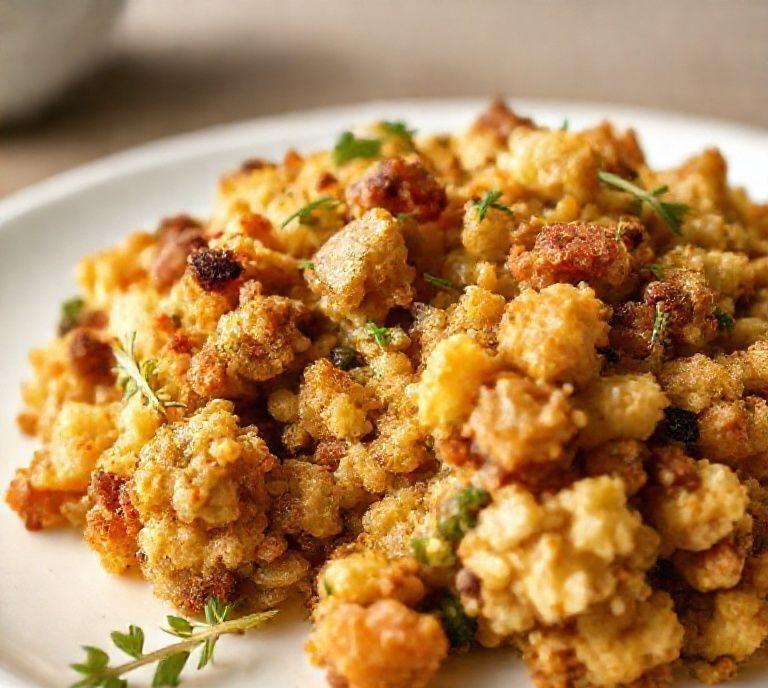
The key to making a delicious stuffing that satisfies both gluten-free and vegetarian diets is finding the right balance of ingredients. This stuffing brings in a hearty mix of gluten-free bread, savory vegetables, and a combination of herbs that give it that familiar flavor profile we all love.
Ingredients Needed
- Gluten-free bread: About 8 cups of cubed gluten-free bread (sourdough or French bread works best for texture)
- Butter: 1/2 cup (for a vegan option, substitute with olive oil or vegan butter)
- Yellow onion: 1 large, diced
- Celery: 3 stalks, finely chopped
- Carrot: 1 large, peeled and chopped
- Mushrooms: 1 cup, diced (shiitake, cremini, or button mushrooms work well)
- Vegetable broth: 2 cups (low-sodium)
- Fresh herbs: 1 tablespoon each of sage, rosemary, and thyme (or a tablespoon of poultry seasoning as a shortcut)
- Garlic: 3 cloves, minced
- Salt & Pepper: To taste
- Eggs: 2 large (optional, but helps bind the stuffing together)
- Parsley: A handful, chopped for garnish
Cooking Instructions
- Prepare the Bread: Start by cutting your gluten-free bread into cubes. Lay them out on a baking sheet and toast in a 350°F oven for 10-15 minutes until they’re crisped up and golden brown. This helps them absorb the flavors later without turning soggy.
- Sauté Vegetables: While the bread is toasting, heat the butter in a large skillet over medium heat. Add the onions, celery, and carrots, sautéing until they soften-about 5 minutes. Then, add the mushrooms and garlic, cooking for an additional 3-4 minutes. The mushrooms should release their moisture and become tender.
- Combine the Ingredients: In a large mixing bowl, combine the toasted bread cubes with the sautéed vegetable mixture. Add your herbs (fresh or dried) and season with salt and pepper to taste. If you’re using eggs, beat them in a separate bowl and add them to the mixture for binding. Pour in the vegetable broth gradually until the stuffing is moist but not soggy.
- Bake the Stuffing: Transfer the mixture to a greased 9×13 baking dish and cover with foil. Bake at 350°F for 30 minutes. After 30 minutes, remove the foil and bake for another 10 minutes, or until the top is golden brown and crispy.
- Garnish & Serve: Once your stuffing is out of the oven, sprinkle with fresh parsley for a burst of color and freshness. Serve hot alongside your favorite holiday dishes.
Ingredient Science Spotlight
The magic of stuffing lies not just in the flavor combinations, but in the science behind each ingredient. Let’s break it down:
- Gluten-Free Bread: Traditional stuffing relies on gluten in bread to hold everything together, but gluten-free bread lacks that natural binding element. Instead, it tends to crumble more easily, which is why toasting the bread first is key. The dry texture absorbs more of the broth and flavors, giving you a rich, flavorful stuffing that holds its shape without becoming mushy.
- Mushrooms: These little guys play a critical role in both flavor and texture. When mushrooms cook, they release water and shrink, adding moisture and a meaty texture that mimics the umami of meat-based stuffings. Plus, the earthy flavor from the mushrooms helps deepen the overall taste.
- Eggs: Eggs are optional but are typically used to bind the stuffing and give it structure. When beaten and mixed into the bread mixture, eggs help create a cohesive texture that makes each bite hearty without being too crumbly.
- Herbs: Fresh herbs like rosemary, thyme, and sage are staples in stuffing because they impart a warm, aromatic quality that elevates the dish. Rosemary’s piney aroma, thyme’s earthy flavor, and sage’s slightly peppery taste are the trifecta of stuffing herbs. They balance the richness of the bread and the depth of the vegetables.
Expert Tips
- Don’t Skip the Toasting Step: The key to a non-soggy gluten-free stuffing is toasting the bread first. It gives it structure and helps it absorb the broth evenly without turning into mush. If you’re in a rush, you can dry out the bread overnight in a low oven, which gives it the same effect.
- Season Generously: Gluten-free bread often lacks the flavor depth that regular bread has, so it’s important to go heavy on the seasonings. Be sure to taste as you go, especially when adding salt, herbs, and broth. The stuffing should be flavorful on its own before it even goes in the oven.
- Make It Ahead: Stuffing actually gets better if it sits for a while. You can prep it the day before, cover it tightly, and store it in the fridge. When you’re ready to cook, just pop it in the oven.
- Use Broth, Not Water: The vegetable broth is what brings the stuffing to life. Don’t skimp on it-opt for a low-sodium version if you’re sensitive to salt. The broth adds richness and flavor that water simply can’t match.
Recipe Variations
- Nuts & Fruits: Add some chopped walnuts, pecans, or dried cranberries for extra texture and sweetness. The crunch from the nuts contrasts nicely with the soft bread, while the fruits add a pop of sweetness.
- Vegan Option: For a fully vegan stuffing, replace the butter with olive oil or coconut oil, and use a vegan egg substitute like flax eggs if you’re going for a plant-based version. The vegetable broth can help carry the richness you’d normally get from animal products.
- Extra Veggies: If you’re a fan of packed stuffing, consider adding in parsnips, leeks, or even roasted butternut squash for more layers of flavor. The sweetness of the squash, for instance, pairs beautifully with the savory elements of the stuffing.
- Spicy Kick: If you like a bit of heat, add some diced jalapeños or a sprinkle of red pepper flakes to the sautéed vegetables. A bit of cayenne pepper can also add a subtle warmth.
Final Words
Stuffing is the kind of dish that tells a story. It’s the dish that evolves as it moves through generations, adapting to what we have on hand, what we like, and what our bodies need. The beauty of this gluten-free vegetarian stuffing is its ability to offer that same nostalgic comfort, while meeting the needs of various dietary preferences. Whether it’s a holiday gathering or a cozy dinner at home, this stuffing will be the heart of your meal.
FAQs
What Ingredients Are Essential For Making Gluten-free Vegetarian Stuffing?
Essential ingredients for a gluten-free vegetarian stuffing include gluten-free bread (such as rice or cornbread), vegetables like onions, celery, carrots, and mushrooms, herbs such as sage, thyme, and rosemary, vegetable broth, olive oil or butter (dairy-free options can be used), and optional add-ins like nuts, cranberries, or vegan sausage for added texture and flavor.
Can I Make Gluten-free Vegetarian Stuffing Ahead Of Time?
Yes, gluten-free vegetarian stuffing can be prepared ahead of time. You can assemble it the day before, cover it with foil, and refrigerate it. Before serving, bake it in the oven until heated through and slightly crispy on top. This saves time, especially when preparing for large gatherings or holiday meals.
How Can I Make Gluten-free Vegetarian Stuffing More Flavorful?
To enhance the flavor of your gluten-free vegetarian stuffing, focus on using aromatic vegetables like onions, garlic, and leeks. Add fresh or dried herbs such as sage, thyme, and rosemary, which complement the stuffing base. For added richness, use vegetable broth instead of water and consider incorporating sautéed mushrooms or vegan sausage for a savory depth. Toasting the gluten-free bread cubes beforehand also helps enhance the stuffing’s flavor.