Panna cotta, a simple yet indulgent Italian dessert, has a way of transforming an ordinary meal into a special occasion. It’s smooth, creamy, and with just the right touch of sweetness, making it a perfect end to almost any meal. What’s incredible about panna cotta, though, is how versatile it is. It’s a dessert you can make with just a handful of ingredients, and with the right variations, it can cater to a wide range of dietary needs, including a delicious vegetarian version.
The first time I tried panna cotta, I was a little unsure. It seemed too fancy and too delicate for someone like me, who was used to hearty, simple desserts. But when I took that first bite, it was a revelation. The creaminess, the subtle sweetness, the way it just melted in your mouth – it felt like something you could only enjoy in an upscale restaurant. But I quickly realized it was so easy to make at home. Over time, I tweaked the recipe to make it work for my vegetarian diet, and that’s the recipe I want to share with you today.
So, let’s dive into how you can recreate this elegant dessert at home, without any animal-based gelatin. Trust me, it’s just as decadent and smooth as the classic version.
Panna Cotta Vegetarian Recipe
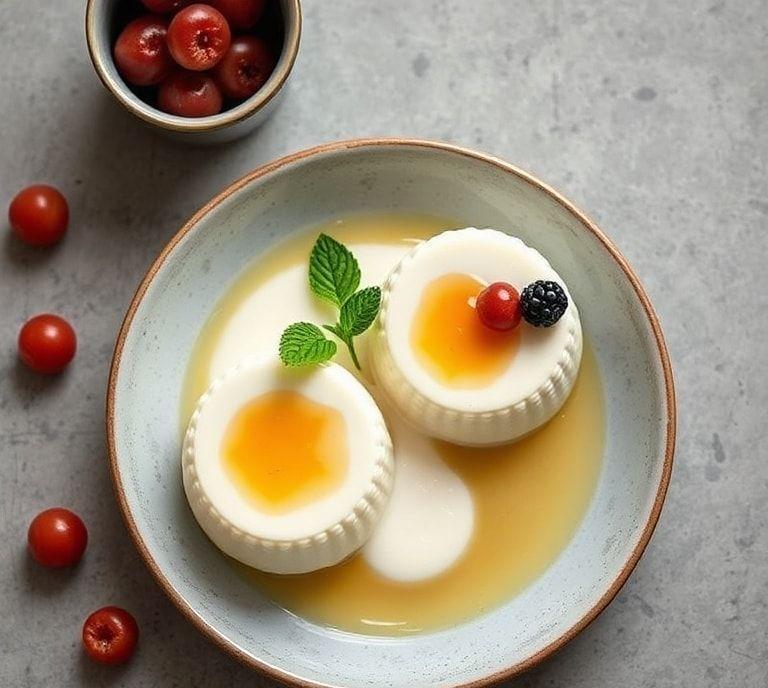
When I first transitioned to vegetarian cooking, finding replacements for ingredients like gelatin was one of my biggest challenges. Gelatin, made from animal collagen, is key in traditional panna cotta recipes. But vegetarian alternatives, like agar-agar, are equally reliable, and they deliver the same smooth, wobbly texture that makes panna cotta so iconic.
This recipe is as simple as it gets, but the magic comes from the balance of flavors and textures. The delicate sweetness of the cream and the natural vanilla notes come together to create a dessert that feels like a little luxury on a plate.
Ingredients Needed
- 2 cups heavy cream (or use coconut cream for a dairy-free option)
- 1 cup whole milk (you can also use almond milk or oat milk for a dairy-free variation)
- 1/2 cup sugar (white sugar, or you can use maple syrup for a more natural, caramelized flavor)
- 2 tsp vanilla extract (I highly recommend using a good-quality vanilla extract – it makes all the difference)
- 2 tsp agar-agar powder (this is the vegetarian gelatin substitute, and it works wonders!)
- Pinch of salt (balances out the sweetness)
- Fruit or coulis for topping (berries, citrus, or anything you love!)
You’ll notice this recipe is super flexible, allowing you to experiment with flavors. I once made a matcha-flavored panna cotta by adding a teaspoon of matcha powder, and it was a hit at dinner parties. But, we’ll start simple here with the classic vanilla panna cotta.
Cooking Instructions
- Bloom the agar-agar: Start by mixing the agar-agar powder with about 1/4 cup of the milk in a small bowl. Stir it well to dissolve the powder. This is known as ’blooming’ the agar-agar, and it’s essential to help it activate later in the process.
- Heat the cream and milk: In a medium saucepan, combine the heavy cream, remaining milk, and sugar. Heat this mixture over medium heat, stirring occasionally to dissolve the sugar. You want it warm, but not boiling. Once it’s heated through, add the agar-agar mixture and a pinch of salt.
- Bring to a simmer: Stir the mixture constantly and bring it to a gentle simmer. Keep simmering for about 2-3 minutes until you notice the agar-agar starting to thicken the mixture. You can test this by dipping a spoon into the cream mixture – it should coat the back of the spoon.
- Flavor it up: Remove the saucepan from the heat and stir in the vanilla extract. If you’re experimenting with other flavors (like matcha, coffee, or citrus zest), now’s the time to add them.
- Chill and set: Pour the panna cotta mixture into individual serving cups, bowls, or molds. Let them cool to room temperature before transferring to the fridge. Let them set for at least 4 hours, or overnight if possible.
- Serve and enjoy: Once the panna cotta has set, it’s ready to serve. You can top it with fresh fruit, berry compote, or even a drizzle of honey. If you used molds, you can run a knife around the edge of the panna cotta and carefully invert it onto a plate.
Ingredient Science Spotlight
I love taking a moment to appreciate the science behind certain ingredients, especially when they play such a crucial role in a recipe like panna cotta.
Agar-Agar is a plant-based alternative to gelatin, derived from red algae. Unlike gelatin, which needs to be dissolved in warm water, agar-agar needs to be boiled to activate its gelling properties. It forms a firmer texture than gelatin, which is great for panna cotta because it helps the dessert hold its shape while still maintaining that signature smoothness.
What’s really fascinating about agar-agar is that it doesn’t break down at room temperature, which is why panna cotta made with agar-agar stays perfectly intact even when it’s left out of the fridge for a short while. It’s a reliable option, and if you’ve ever wondered why the texture of vegetarian panna cotta feels just as silky as the traditional version, this is why!
Expert Tips
- Don’t rush the setting: The biggest mistake I see people make with panna cotta is not letting it set long enough. Patience is key. Give it enough time in the fridge to achieve that perfect wobbly texture.
- Strain the mixture: If you want your panna cotta to be perfectly smooth, you can strain the cream and milk mixture through a fine sieve before pouring it into molds. This removes any lumps or undissolved agar-agar bits.
- Serve chilled: Panna cotta is at its best when it’s nice and cold. I suggest giving it at least 4 hours in the fridge, but if you can, letting it sit overnight will yield the best results.
- Infuse flavors: You can easily change the flavor of your panna cotta by infusing the milk or cream with herbs (like rosemary or lavender) or spices (like cinnamon or cardamom). Heat the cream and milk with the herbs or spices, then strain them out before adding the agar-agar.
Recipe Variations
- Coconut Panna Cotta: Swap the heavy cream for full-fat coconut milk for a tropical twist. Pair it with mango or pineapple topping for a delightful treat.
- Berry Panna Cotta: Add a layer of mixed berry coulis or fresh berries on top for a refreshing contrast to the creamy base.
- Coffee or Mocha Panna Cotta: If you’re a coffee lover, you can infuse the milk with a shot of espresso or add a spoonful of instant coffee for a rich, café-inspired version.
- Chocolate Panna Cotta: Mix in melted dark chocolate to the cream mixture for a decadent chocolatey treat. A sprinkle of sea salt on top will take it to the next level.
- Citrus Panna Cotta: Add some lemon zest or orange zest into the milk mixture for a light, citrusy flavor. You could also use lemon curd as a topping.
Final Words
Panna cotta is one of those desserts that is as simple as it is sophisticated. It doesn’t require any fancy skills or equipment, yet it has the power to elevate your meal. It’s a reminder that sometimes the best dishes are the ones with a few, carefully chosen ingredients, each playing an essential part in creating something special.
Whether you’re cooking for a crowd or just indulging yourself, this vegetarian panna cotta is sure to impress. And because it’s so customizable, it’ll fit any occasion, whether it’s a summer dinner party, a cozy winter night, or a special celebration.
FAQs
Can Panna Cotta Be Made Vegetarian?
Yes, traditional panna cotta uses gelatin, which is derived from animal collagen. To make it vegetarian, you can substitute gelatin with plant-based alternatives such as agar-agar, carrageenan, or pectin. These ingredients can achieve a similar creamy, set texture without using animal products.
What Ingredients Are Commonly Used In A Vegetarian Panna Cotta?
A vegetarian panna cotta typically includes cream or plant-based milk (such as almond, coconut, or soy milk), sugar, vanilla extract, and a vegetarian setting agent like agar-agar. Optional flavorings can include coffee, chocolate, fruit purées, or spices to enhance taste while keeping the dessert vegetarian.
Are There Any Special Tips For Setting A Vegetarian Panna Cotta?
Yes. When using agar-agar as a substitute, it needs to be boiled to activate its gelling properties, unlike gelatin which dissolves in warm liquid. It’s important to mix it thoroughly and pour it into molds while still hot. After cooling, refrigerate the panna cotta for at least 2-4 hours to allow it to fully set and achieve the classic smooth, firm texture.