When it comes to comfort food, few things compare to a simple yet satisfying plate of pasta. But here’s the thing: pasta doesn’t need to be overly complicated or heavy to be delicious. In fact, some of the best pasta dishes I’ve ever had were built around light, fresh ingredients-perfectly balanced with flavors that leave you feeling content but not overly stuffed.
Today, I want to share with you a recipe for Linguine Pasta that’s not just vegetarian, but also bright and full of flavor. It’s a dish that leans into what’s fresh and seasonal, and it doesn’t take much time or many ingredients to make. What I love most about this recipe is how versatile it is. You can easily modify it depending on what you have in your pantry, and it works just as well for a weeknight dinner as it does for a casual weekend meal with friends. So, let’s dive in!
Linguine Pasta Vegetarian Recipe
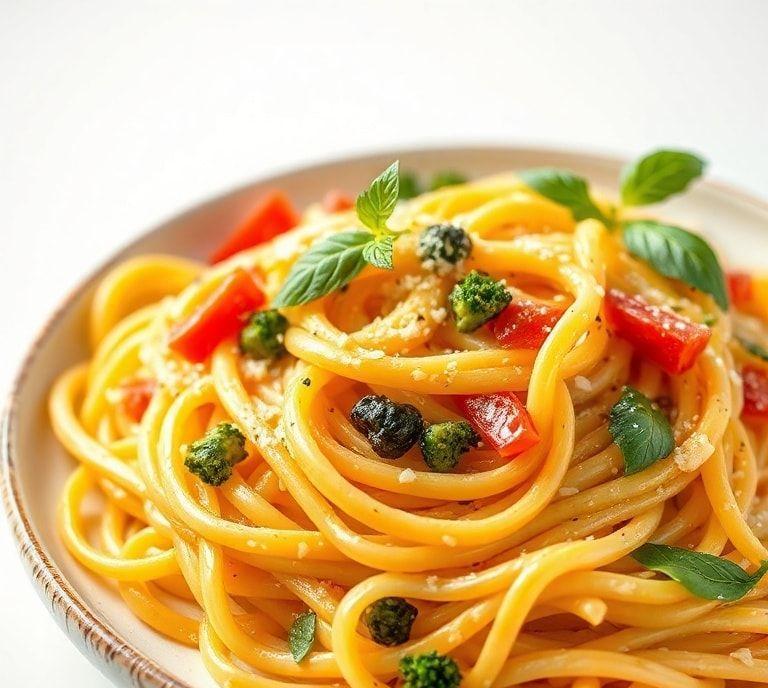
This Linguine Pasta is light yet satisfying, with a medley of flavors from fresh vegetables and aromatic herbs. There’s a delicate balance between the richness of the olive oil and the brightness from the herbs and lemon. And let’s not forget the crispy breadcrumbs, which add an irresistible crunch to each bite.
Ingredients Needed
- Linguine pasta – 8 oz (about half a package)
- Olive oil – 2 tablespoons (use a good-quality extra virgin olive oil for the best flavor)
- Garlic – 4 cloves, finely minced
- Cherry tomatoes – 1 pint, halved
- Zucchini – 1 medium, thinly sliced
- Spinach – 2 cups (fresh, but you could use arugula or kale for a different twist)
- Lemon zest – from 1 lemon
- Fresh basil – 1/4 cup, chopped
- Parmesan cheese – 1/2 cup, grated (optional for a vegan version)
- Breadcrumbs – 1/4 cup, for that crispy texture
- Salt & pepper – to taste
- Red pepper flakes – a pinch, if you like a little heat
Cooking Instructions
- Cook the pasta: Start by bringing a large pot of salted water to a boil. Add the linguine and cook according to the package instructions until al dente (usually about 9-10 minutes). Reserve about a cup of the pasta water before draining, just in case you need it to adjust the sauce later.
- Prepare the crispy breadcrumbs: While the pasta is cooking, heat a small skillet over medium heat and add a tablespoon of olive oil. Toss in the breadcrumbs and toast them, stirring occasionally, until they’re golden brown and crispy (this usually takes about 3-4 minutes). Set them aside.
- Sauté the vegetables: In the same skillet, heat another tablespoon of olive oil over medium heat. Add the garlic and sauté for about 1 minute, until fragrant. Toss in the zucchini and cherry tomatoes, and cook for 5-7 minutes, just until the vegetables soften and begin to release their juices. Add a pinch of salt, pepper, and red pepper flakes (if using).
- Toss everything together: Once the pasta is done, add it to the skillet with the veggies. Pour in a splash of the reserved pasta water to help create a light sauce. Stir in the spinach, lemon zest, and fresh basil. Toss everything together until the spinach wilts and everything is well combined.
- Serve: Divide the pasta into bowls, sprinkle with the crispy breadcrumbs and grated Parmesan (if using), and finish with a drizzle of extra olive oil for extra richness.
Ingredient Science Spotlight
Let’s talk about the role of olive oil in this dish. Olive oil is a heart-healthy fat, loaded with monounsaturated fatty acids that can help reduce bad cholesterol levels. It’s also packed with antioxidants that have anti-inflammatory effects. But more than that, olive oil is the backbone of the flavor in this recipe. When it’s heated gently, it creates a rich, savory base that allows the other ingredients to shine without overpowering them.
The garlic is another key ingredient. It’s been used for centuries not only for its flavor but for its potential health benefits. Allicin, the compound in garlic responsible for its signature aroma, has been linked to immune-boosting properties, and it pairs wonderfully with the slightly bitter taste of the zucchini and the sweetness of the tomatoes.
Expert Tips
- Use good-quality pasta: If you’ve ever had pasta that just doesn’t cook quite right-either too mushy or too tough-it’s likely due to the pasta quality. Try to opt for artisanal or bronze-cut pasta, as it holds sauces much better than regular, mass-produced varieties.
- Don’t skip the breadcrumbs: This little extra step makes a world of difference. The crispy breadcrumbs add a contrast in texture that makes every bite interesting. If you’re feeling extra, toss in a bit of garlic powder or fresh herbs into the breadcrumbs while toasting for an added layer of flavor.
- Use pasta water: The pasta water you save is golden. Not only does it help thicken the sauce, but the starch in the water binds everything together. It’s a simple trick that professional chefs swear by.
- Balance flavors: Don’t hesitate to adjust the seasoning as you go. A little more salt, a squeeze of lemon juice, or an extra sprinkle of Parmesan can elevate the dish right before serving.
Recipe Variations
- Vegan version: Skip the Parmesan cheese and top the pasta with a dollop of cashew cream or nutritional yeast for a cheesy, vegan-friendly alternative.
- Add protein: You could easily add roasted chickpeas or sautéed tofu for a boost of protein. If you eat dairy, grilled chicken or shrimp would also make a lovely addition.
- More vegetables: You could easily swap the zucchini for bell peppers, eggplant, or even mushrooms. Seasonal vegetables can be incorporated to adjust the dish to what’s fresh and available.
- Spicy twist: If you enjoy a little heat, try adding some sliced red chilies or a spoonful of harissa into the sautéed vegetables.
Final Words
This linguine recipe is one of those dishes that feels both indulgent and light at the same time. It’s a perfect representation of how vegetarian food can be flavorful, satisfying, and utterly crave-worthy. The balance between the savory olive oil, the slight sweetness of the tomatoes, and the freshness of the basil is one that never gets old.
Whether you’re cooking for yourself on a quiet evening or hosting friends for a laid-back dinner, this recipe is sure to be a hit. And the best part? You can get creative with it, tweaking the ingredients to suit your taste or what you have on hand.
FAQs
What Ingredients Are Commonly Used In A Vegetarian Linguine Pasta Recipe?
A vegetarian linguine pasta recipe typically includes linguine noodles, olive oil, garlic, onions, and a variety of fresh or roasted vegetables such as bell peppers, zucchini, spinach, or cherry tomatoes. Additional flavorings can include fresh herbs like basil or parsley, grated cheese (such as Parmesan or Pecorino), and optional ingredients like pine nuts or olives. Some recipes may also use a vegetarian-friendly sauce, such as marinara, pesto, or a light cream sauce made from plant-based ingredients.
How Can I Make A Linguine Pasta Vegetarian Recipe More Flavorful Without Using Meat?
To enhance flavor in a vegetarian linguine pasta, focus on layering tastes with aromatic vegetables, herbs, and spices. Sautéing garlic and onions in olive oil before adding vegetables helps develop a rich base. Using ingredients like sun-dried tomatoes, roasted red peppers, or mushrooms can add umami. Fresh herbs such as basil, oregano, or thyme brighten the dish, while a splash of lemon juice or a sprinkle of red pepper flakes adds complexity. Finishing with a high-quality olive oil or grated hard cheese further elevates the flavor.
Can I Make A Vegetarian Linguine Pasta Recipe Vegan?
Yes, you can easily make a vegetarian linguine pasta recipe vegan by replacing any animal-based products. For example, substitute regular pasta with egg-free pasta if needed, omit or replace cheese with vegan alternatives such as nutritional yeast or plant-based cheeses, and use plant-based cream or butter for any creamy sauces. Ensure that any store-bought sauces are free from dairy or other animal-derived ingredients. By making these adjustments, you can create a completely vegan and flavorful linguine pasta dish.