There’s something undeniably comforting about a bowl of hot, fragrant laksa, especially when the weather’s a bit dreary or you’re just in need of a little soul food. Growing up, my mom would make laksa on rainy weekends. The kitchen would fill with the scent of garlic, lemongrass, and curry, and I’d know right away that something special was coming. But this wasn’t your typical meat-heavy laksa – it was a vegetarian version, packed with fresh veggies, tofu, and all the spices, rich and creamy, yet light and vibrant.
I’ve carried this love for vegetarian laksa into my own kitchen, and every time I make it, I find myself reflecting on those cozy days. What makes vegetarian laksa stand out is how it manages to be incredibly satisfying without the need for meat, offering layers of flavor with its broth and all those fresh garnishes. It’s a dish that can be as simple or as intricate as you like, but the heart of it remains the same: bold flavors, aromatic spices, and a broth that pulls it all together. If you’re someone who enjoys balancing complex flavors with comfort, then this recipe is sure to become a favorite.
Vegetarian Laksa Recipe
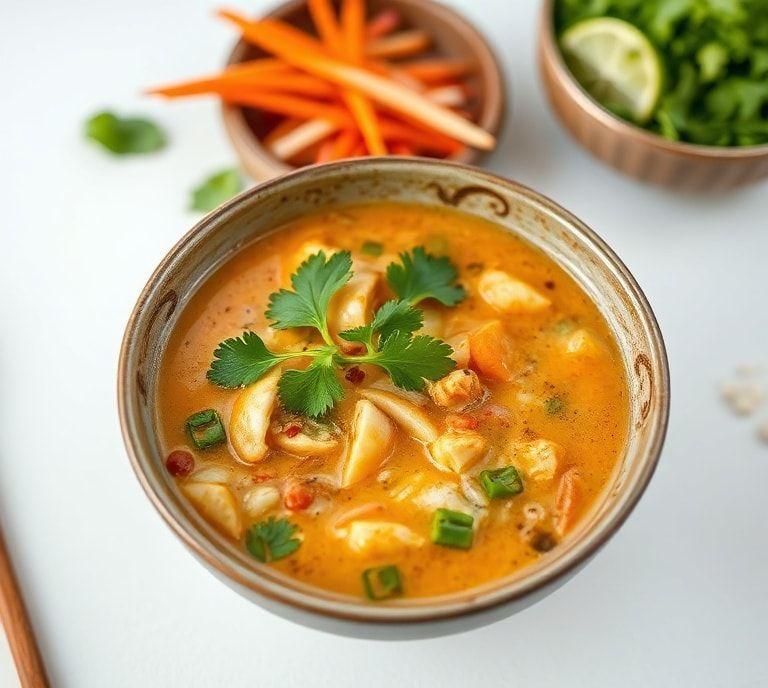
This vegetarian laksa recipe strikes that perfect balance between spicy, creamy, and fragrant. The beauty of laksa is how adaptable it is, but for this version, we’ll focus on plant-based ingredients that’ll make your taste buds dance without feeling weighed down.
Ingredients Needed
For the broth:
- 2 tablespoons vegetable oil (for sautéing)
- 2 stalks lemongrass, bruised and cut into pieces
- 3-4 kaffir lime leaves, torn (optional but adds a zesty kick)
- 3 cloves garlic, minced
- 2-inch piece ginger, minced
- 2 tablespoons red curry paste (adjust to taste)
- 1 can (400ml) coconut milk
- 3 cups vegetable broth
- 1 tablespoon soy sauce (or tamari for a gluten-free version)
- 1 tablespoon sugar (or maple syrup for a more natural sweetener)
- Salt and pepper to taste
- 1 tablespoon lime juice (freshly squeezed)
For the noodles and toppings:
- 200g dried rice noodles (or any noodle of choice)
- 1 block firm tofu, pressed and cubed
- 1 carrot, julienned
- 1 cup baby spinach
- 2 boiled eggs (optional for added protein)
- 1 handful cilantro, chopped
- 1 red chili, sliced thinly
- Bean sprouts, for garnish
- Lime wedges for serving
Cooking Instructions
- Prepare the broth: Heat the vegetable oil in a large pot over medium heat. Add the bruised lemongrass, kaffir lime leaves, garlic, and ginger. Sauté them until the kitchen fills with that fragrant aroma, about 3-4 minutes. It’s the kind of smell that makes you excited to sit down for a meal. Add the red curry paste and cook it for another minute, letting the spices bloom.
- Add the liquids: Pour in the coconut milk and vegetable broth, stirring to combine. Bring the mixture to a simmer. Once it’s simmering, stir in the soy sauce, sugar, salt, and pepper. Let the broth cook for about 15 minutes, allowing the flavors to meld together.
- Prepare the noodles and tofu: While the broth simmers, cook your rice noodles according to the package instructions. Drain them and set them aside. In a separate pan, heat a little oil and sauté the tofu cubes until golden and crispy on the edges. Set the tofu aside.
- Assemble the bowl: Once your broth is ready, remove the lemongrass and kaffir lime leaves. Add a squeeze of lime juice and taste. Adjust the seasoning if needed.
- Serve: Divide the cooked noodles between bowls. Pour the hot broth over the noodles and top with crispy tofu, fresh spinach, julienned carrots, boiled eggs, cilantro, and red chili. Garnish with bean sprouts and lime wedges.
Ingredient Science Spotlight
There’s a whole lot of magic happening in your bowl of laksa, especially when it comes to the science behind its key ingredients.
- Coconut milk: This ingredient isn’t just for richness; it brings a creaminess that balances the heat of the curry paste. The fat in the coconut milk helps dissolve and carry the spices throughout the broth, enhancing the overall flavor profile. This is why coconut milk is a staple in so many Southeast Asian dishes – it provides a neutral, creamy base that complements bold flavors.
- Lemongrass & Kaffir lime leaves: Lemongrass has a citrusy, slightly floral fragrance, and when it’s bruised, its essential oils are released into the broth. The kaffir lime leaves add a sharp, zesty flavor that cuts through the richness, providing a bright contrast to the heavier coconut milk. These two ingredients are the backbone of a good laksa broth, adding that unmistakable fresh aroma.
- Tofu: Firm tofu is a great source of plant-based protein, but it’s also a perfect vehicle for absorbing the flavors of the broth. When you sauté it until crispy, the tofu takes on a nice contrast in texture against the smooth broth and noodles, providing that essential bite that makes every spoonful satisfying.
Expert Tips
- Make it spicier: If you’re a fan of heat, add some extra chili or a dash of chili paste into the broth. The longer the chili simmers in the broth, the more the heat infuses, so feel free to adjust it according to your spice tolerance.
- Crisp the tofu well: One thing I’ve learned over the years is that the texture of the tofu can make or break the dish. Don’t rush the crisping process. Let the tofu cubes sit in the pan without moving them around too much, so they get that golden crust. It adds a satisfying crunch that balances the softness of the noodles and broth.
- Don’t skimp on fresh herbs: Fresh cilantro and lime wedges are essential in adding brightness to the dish. A squeeze of lime at the end is like a wake-up call for your taste buds, so don’t skip it!
- Customize your toppings: The beauty of laksa lies in its versatility. While I’ve listed traditional toppings, you could add sautéed mushrooms, bok choy, or even avocado for an interesting twist.
Recipe Variations
- Spicy Veggie Laksa: Add more chili or a splash of sriracha to really turn up the heat. You can also throw in some thinly sliced red peppers or extra chili paste to deepen the flavor.
- Sweet Potato Laksa: If you’re craving something heartier, swap the tofu for roasted sweet potato chunks. Their sweetness adds an amazing contrast to the spicy broth.
- Peanut Laksa: For a nutty twist, stir in a tablespoon of peanut butter or tahini into the broth. It gives the soup a rich, velvety texture and a whole new dimension of flavor.
- Vegan Laksa: To make this dish completely plant-based, just skip the boiled eggs and use tofu for all the protein. You can even add more veggies like broccoli or zucchini to amp up the nutrition.
Final Words
The beauty of vegetarian laksa is that it’s as comforting as it is vibrant. The bold spices, the creamy coconut broth, and the assortment of fresh toppings all come together to create something magical. Whether you’re looking to make a quick meal or something that’ll impress your friends at dinner, this dish never disappoints. It’s hearty, satisfying, and a reminder that you don’t need meat to create a flavorful, soul-warming meal.
FAQs
What Are The Main Ingredients Needed For A Vegetarian Laksa?
A vegetarian laksa typically requires coconut milk, vegetable broth, rice noodles, and a variety of fresh vegetables such as bean sprouts, bell peppers, and carrots. Key flavoring ingredients include lemongrass, galangal, garlic, ginger, turmeric, chili paste, and lime leaves. Tofu or tempeh can be added as a protein source, while fresh herbs like cilantro and Thai basil enhance the aromatic profile.
Can I Make Vegetarian Laksa Spicy Or Mild According To Preference?
Yes, the spice level can be easily adjusted. The heat in laksa mainly comes from chili paste or fresh chilies in the broth. To make it milder, reduce the amount of chili or remove the seeds. For a spicier version, add more fresh chilies or a pinch of chili powder. Coconut milk also helps balance and mellow the spice without compromising flavor.
How Can I Make Vegetarian Laksa More Flavorful Without Using Meat Or Seafood?
To boost flavor, focus on aromatics and umami-rich vegetarian ingredients. Use a combination of sautéed onions, garlic, ginger, and lemongrass as the base. Add soy sauce or tamari for a savory depth, and dried mushrooms such as shiitake or porcini for natural umami. Toasted coconut or ground nuts can also enhance texture and flavor. Fresh herbs and a squeeze of lime juice before serving brighten the overall taste.