I remember the first time I made okra stew. It was a rainy Saturday afternoon, the kind where you just want something hearty and comforting but also light enough that you can enjoy it without feeling sluggish. I had just come back from the local farmer’s market, and okra was in season. The vibrant green pods, fresh and plump, beckoned me to experiment. Now, years later, okra stew has become one of those dishes that feels like a warm hug – simple, nourishing, and packed with flavor.
What I love most about okra stew, especially a vegetarian version, is how it bridges the gap between hearty comfort food and something light and fresh. The subtle earthiness of the okra blends perfectly with rich tomatoes, tender onions, and spices that fill the kitchen with warmth. It’s a dish that doesn’t demand a lot of fuss but rewards you with its deep, soulful taste. And the best part? It’s vegan, so anyone can enjoy it, no matter their dietary preferences.
If you’ve never tried okra stew before or if you’ve only had it in its meat-heavy versions, then I’m excited for you. You’re about to experience a dish that’s not only flavorful but also so versatile. Let’s dive into this vegetarian okra stew recipe.
Okra Stew Vegetarian Recipe
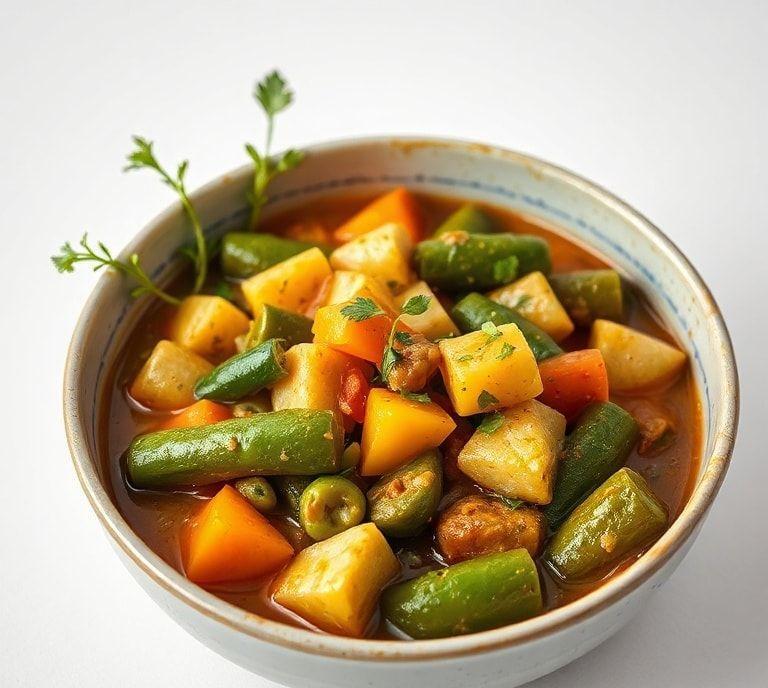
This recipe is an ode to simplicity. You don’t need fancy techniques or rare ingredients, but the result will taste like something you spent all day making. The natural richness of okra, combined with a few key vegetables and spices, creates a stew that’s both satisfying and nourishing.
Ingredients Needed
- Fresh okra: 2 cups, chopped
- Tomatoes: 4 medium, diced (or 1 can of diced tomatoes)
- Onion: 1 large, finely chopped
- Garlic: 3 cloves, minced
- Bell pepper: 1 medium, chopped (green or red)
- Vegetable broth: 3 cups (or water for a lighter option)
- Olive oil: 2 tablespoons
- Cumin: 1 teaspoon
- Paprika: 1 teaspoon (smoked or regular)
- Chili powder: ½ teaspoon (optional, for a little heat)
- Salt and pepper: to taste
- Fresh cilantro: 2 tablespoons, chopped (optional, for garnish)
- Lemon or lime juice: 1 tablespoon (to brighten the flavors)
Cooking Instructions
-
Prepare The Ingredients
Start by chopping your vegetables. Dice the tomatoes, chop the bell pepper, mince the garlic, and slice the okra. If you’re using fresh tomatoes, feel free to remove the skins by blanching them for about 30 seconds in boiling water (then quickly cool them in ice water), but if you’re using canned, skip that step.
-
Sauté The Base
In a large pot, heat the olive oil over medium heat. Add the chopped onions and bell pepper, cooking until softened, about 5 minutes. The smell here is just the beginning of the flavor symphony – onions caramelizing, bell peppers softening, creating that comforting savory base.
-
Add Garlic And Spices
Toss in the minced garlic and let it sauté for about 1 minute until fragrant. This is where the spices start to work their magic. Sprinkle in the cumin, paprika, and chili powder (if you’re using it). Stir everything together and let it cook for another minute, allowing the spices to infuse the oil and vegetables.
-
Tomatoes And Okra
Add the diced tomatoes and stir. Let them cook down for about 5 minutes, so they release their juices and form a nice, rich sauce. Then, add the chopped okra to the pot. Stir gently, making sure the okra is well-coated with the tomatoes and spices. Okra has a natural mucilaginous quality (more on that later), and as it cooks, it will start to thicken the stew.
-
Simmer And Cook
Pour in the vegetable broth and bring the stew to a gentle boil. Once it boils, reduce the heat to low and let it simmer uncovered for about 20-30 minutes. This gives the okra plenty of time to soften and release its gooey goodness, while the flavors meld together.
-
Final Seasoning
Taste your stew and adjust seasoning with salt, pepper, and a splash of lemon or lime juice. The acid will cut through the richness, making each bite more refreshing.
-
Serve
Spoon the stew into bowls, garnish with fresh cilantro, and maybe add a few extra squeezes of citrus on top for an extra burst of flavor. Serve with warm bread, rice, or a simple green salad for a complete meal.
Ingredient Science Spotlight
Okra is one of those ingredients that many either love or avoid, often because of its unique texture. But its science makes it fascinating. Okra contains a type of soluble fiber called mucilage, which is what gives it that sticky, almost gooey texture when cooked. This mucilage acts like a natural thickener in soups and stews, which is why it works so well in this recipe. Instead of adding flour or cornstarch to thicken the stew, the okra does it naturally, which is a bonus for anyone looking for a gluten-free option.
Beyond its texture, okra is packed with nutrients. It’s high in fiber, vitamin C, and folate, and it has a good amount of antioxidants, which are beneficial for overall health. Okra is also a good source of magnesium, which plays a crucial role in nerve function and muscle health. So while the texture might be polarizing for some, okra’s nutritional value is undeniable.
Expert Tips
- Don’t Overcrowd the Pan: When sautéing your vegetables, make sure not to overcrowd the pan. If the vegetables are too close together, they’ll steam rather than brown, which can affect the flavor. Give them space to cook and caramelize, and you’ll get a richer taste.
- Let the Stew Simmer: Okra stew benefits from a slow simmer. The longer you cook it, the more the flavors develop. If you’re in a hurry, it can still be good, but the deeper, richer taste comes with time.
- Adjust the Consistency: If you prefer a thinner stew, add more broth or water. If you like it thicker, let it simmer longer, or add a little more okra.
- Use Fresh Herbs: If you can, use fresh cilantro or parsley as a garnish. Fresh herbs elevate the dish and add a pop of brightness that balances the richness of the stew.
Recipe Variations
- Spicy Okra Stew: If you like a bit of heat, add a chopped jalapeño or a dash of cayenne pepper when sautéing the onions and bell peppers. You can also try adding a pinch of crushed red pepper flakes for a gentler heat.
- Add Beans for Protein: If you want to make this dish more filling, consider adding cooked chickpeas or black beans. They pair wonderfully with the okra and make this stew even heartier.
- Tomato Variations: You can experiment with different types of tomatoes. For a sweeter stew, use cherry tomatoes or heirloom varieties. For more acidity, try Roma or plum tomatoes.
- Add Greens: If you want to sneak in some extra vegetables, spinach, kale, or collard greens are great additions. Just stir them in during the last 10 minutes of cooking.
Final Words
Okra stew is more than just a dish; it’s an invitation to slow down and savor. The combination of fresh vegetables, warm spices, and okra’s unique texture creates a meal that is both satisfying and nourishing. Whether you’re new to okra or a long-time fan, this vegetarian version offers all the comfort of a traditional stew but with a lighter, plant-based twist.
FAQs
What Are The Essential Ingredients For A Vegetarian Okra Stew?
A basic vegetarian okra stew typically includes okra, tomatoes, onions, garlic, vegetable broth, and a variety of seasonings such as thyme, paprika, and bay leaves. Additional ingredients may include bell peppers, carrots, spinach, or beans for added texture and flavor. The stew is often served with rice or bread.
Can I Make Okra Stew Without Oil?
Yes, you can make okra stew without oil by sautéing the vegetables in a bit of vegetable broth or water instead of oil. This method is a great option for those following a low-fat or oil-free diet. Just make sure to cook the vegetables until they are soft and fragrant before adding the other ingredients.
How Can I Thicken My Vegetarian Okra Stew?
Okra itself is naturally mucilaginous, meaning it releases a thick, gooey substance when cooked, which helps to thicken the stew. If you prefer a thicker consistency, you can also blend part of the stew, add a cornstarch slurry, or incorporate mashed potatoes or lentils into the mix for extra thickness and heartiness.