Sometimes, a bowl of soup is more than just a meal. It’s comfort. It’s warmth. It’s a little reminder of a home-cooked meal shared at the table with family or friends. I remember the first time I had kimchi soup-it was at a tiny Korean restaurant tucked away in a corner of the city. The air was thick with the smell of fermenting vegetables, the hum of a simmering broth, and the chatter of people in a language I didn’t fully understand but somehow felt connected to. The heat from the soup warmed me from the inside out, and the sharp, tangy flavor of the kimchi brought something alive in my mouth.
Now, kimchi soup is one of my go-to comfort foods when I’m craving something with a bit of spice and loads of depth. But I wanted to make sure it’s accessible to everyone, even those who follow a vegetarian or plant-based diet. So, I decided to create this vegetarian kimchi soup recipe that retains all of the bold, satisfying flavors of the original dish but with a vegetarian twist. Whether you’re familiar with kimchi or just starting to explore its wonders, this soup will hit the spot, and who knows, it might just become your new favorite.
Kimchi Soup Vegetarian Recipe
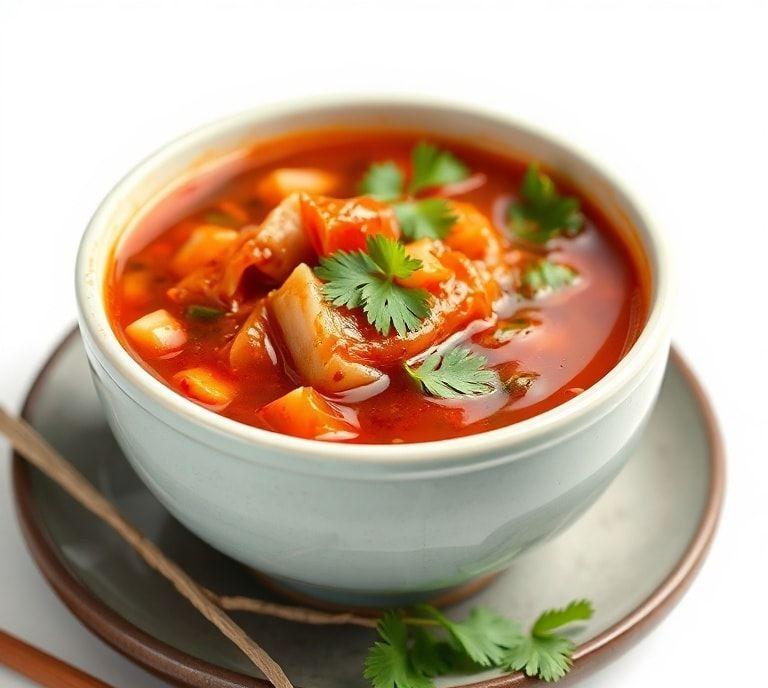
Kimchi soup (or kimchi jjigae) is a staple in Korean households. It’s a dish that’s as adaptable as it is comforting. While the traditional recipe often includes pork or tofu, I’ve created this vegetarian version using plant-based ingredients to keep it just as hearty and delicious. This soup’s foundation is simple: kimchi, tofu, vegetables, and a flavorful broth. The fermentation of the kimchi gives the soup a naturally tangy, umami-rich flavor, while the tofu adds a silky smooth texture, making every spoonful feel indulgent.
Ingredients Needed
Before we dive into cooking, let’s take a quick look at what you’ll need. The beauty of this soup is how easy it is to find these ingredients, many of which are pantry staples or easy to find at your local grocery store or Asian market. Here’s what you’ll need:
- Kimchi: The star of the dish. Ideally, you want a kimchi that’s a bit aged, as it gives a deeper, richer flavor to the soup. If you’re new to kimchi, you can find it in most grocery stores in the refrigerated section.
- Firm tofu: You want the tofu to hold up in the soup, so opt for firm tofu. It’s hearty and absorbs the flavors of the broth beautifully.
- Vegetable broth: This serves as the base for the soup, but you can also use water if you’re in a pinch. For extra flavor, add a dash of soy sauce or miso paste to enrich the broth.
- Onion: Sweet, slightly caramelized onions bring a touch of savory depth to the soup.
- Garlic: Always a necessity for that extra burst of flavor.
- Gochugaru (Korean chili flakes): These add the signature spiciness to kimchi soup, so feel free to adjust the amount based on your spice tolerance.
- Soy sauce: Adds saltiness and depth.
- Sesame oil: For a toasted, nutty finish.
- Scallions: For garnish-these add a fresh, sharp contrast to the rich, fermented flavors.
- Mushrooms: I like to use shiitake or enoki mushrooms. They have a delicate texture and earthy flavor that pairs beautifully with the kimchi.
Optional: A little gochujang (Korean chili paste) if you want to make the soup a bit thicker and more robust.
Cooking Instructions
- Prepare the tofu and vegetables: Start by draining the tofu and cutting it into bite-sized cubes. Set aside. Slice the onion thinly and mince the garlic. Slice the mushrooms and scallions as well.
- Sauté aromatics: Heat a tablespoon of sesame oil in a large pot over medium heat. Add the onions and sauté for 3-4 minutes until they’re soft and lightly browned. Toss in the garlic and cook for another minute until fragrant.
- Add the kimchi: Now for the magic! Add your kimchi to the pot, stirring it around to let the flavors mingle with the onions and garlic. Cook for 3-5 minutes, allowing the kimchi to soften and release its juices. It’s during this stage that the soup starts to smell incredible-tangy, spicy, and a little smoky.
- Simmer the broth: Pour in the vegetable broth (or water if you prefer), followed by the soy sauce, gochugaru, and gochujang (if using). Bring the soup to a boil, then reduce the heat to a simmer. Let it cook for about 15 minutes to allow the flavors to fully develop.
- Add tofu and mushrooms: Gently add the tofu cubes and mushrooms to the soup. Let everything simmer for an additional 5-7 minutes. The tofu will absorb the broth, and the mushrooms will soften and release their earthy flavor into the soup.
- Finish and serve: Once the tofu is heated through and the mushrooms are tender, taste the soup and adjust the seasoning if needed. If you like your soup saltier, add a bit more soy sauce. If you prefer more heat, sprinkle in more gochugaru.
Garnish with the sliced scallions before serving. You can also add a little sesame oil for an extra touch of nuttiness.
Ingredient Science Spotlight
Kimchi: Kimchi is a fermented food, and fermentation plays an essential role in the flavor profile of this dish. During fermentation, beneficial bacteria called lactic acid bacteria break down sugars in vegetables, producing lactic acid, which gives kimchi its signature sour tang. This process also makes kimchi rich in probiotics, which are great for gut health. The longer the kimchi sits, the more intense the flavor becomes, which is why older kimchi works best in soups.
Tofu: Tofu is made from soybeans, and its protein content makes it a fantastic meat alternative. In this soup, tofu acts as a sponge, soaking up the savory broth. It’s an excellent source of plant-based protein and is low in calories but high in iron, calcium, and magnesium-nutrients that are essential for maintaining strong bones and muscle function.
Gochugaru: These red pepper flakes provide the signature heat and color of kimchi soup. Unlike regular chili flakes, gochugaru has a mild to moderate heat level and a subtle smokiness that adds complexity to the dish. These flakes come from sun-dried chili peppers, and their antioxidants contribute to overall health, helping fight inflammation and boost metabolism.
Expert Tips
- Kimchi quality matters: When it comes to kimchi soup, the quality of the kimchi can make or break the dish. A well-fermented kimchi will provide deeper, richer flavors. If you’re making kimchi at home, be sure to let it sit for a week or more before using it in soups.
- Adjust the spice level: If you’re new to spicy food, you might want to start with less gochugaru. You can always add more heat later, but you can’t take it out once it’s in.
- Use fresh tofu: If possible, try to buy fresh tofu, which often has a creamier texture than the pre-packaged blocks. It makes a difference in terms of taste and consistency.
- Make it a one-pot meal: This soup is hearty enough to be a full meal, but if you want to add extra vegetables, feel free to throw in some spinach, bok choy, or zucchini. They’ll add a boost of freshness.
Recipe Variations
- Add more protein: While tofu is the go-to protein here, tempeh or even seitan can also be great substitutes, giving you a bit more texture and chew.
- Make it heartier: For a more filling soup, consider adding noodles, such as ramen or udon, towards the end of cooking.
- Spicy peanut kimchi soup: If you want a twist on the flavor, add a tablespoon of peanut butter or almond butter for a rich, nutty undertone that pairs well with the heat of the kimchi.
- Add a touch of sweetness: If you find the soup a bit too tangy, a spoonful of maple syrup or brown sugar can balance it out beautifully.
Final Words
Kimchi soup is the epitome of comfort food. It’s fiery, flavorful, and so satisfying. The best part is that with a few simple tweaks, you can make it fit almost any dietary preference. Whether you’re vegetarian, vegan, or just looking to try something new, this soup is guaranteed to satisfy. The fermented kimchi provides a unique depth of flavor, while the tofu and vegetables keep it wholesome and hearty. It’s a dish that will warm you up on the coldest of days and bring a little heat when you need it most.
FAQs
What Are The Key Ingredients In A Vegetarian Kimchi Soup?
A vegetarian kimchi soup typically includes kimchi (fermented vegetables, often cabbage), tofu, vegetable broth, garlic, onions, and various seasonings like soy sauce, gochujang (Korean chili paste), and sesame oil. You may also add vegetables such as mushrooms, zucchini, or spinach to enhance flavor and texture.
Can I Make Kimchi Soup Without Tofu?
Yes, you can make kimchi soup without tofu if you prefer. Some alternatives include using mushrooms, tempeh, or even just adding more vegetables to create a hearty, satisfying dish. The tofu is often used for its texture and protein content, but it’s entirely optional depending on dietary preferences.
Is It Necessary To Use Traditional Kimchi In A Vegetarian Kimchi Soup Recipe?
While traditional kimchi typically contains fish sauce or shrimp paste, a vegetarian kimchi soup can be made using vegan kimchi. Vegan kimchi substitutes the fish-based ingredients with alternatives like seaweed or fermented soy sauce to maintain the signature tangy and spicy flavors without animal products.