There’s something comforting about a bowl of soup that not only warms you up but also tantalizes your taste buds with a blend of bold, zesty flavors. Tom Yum soup, a popular Thai dish, is one of those soups that instantly transports you to a bustling street market in Bangkok, where the air is thick with the aromas of fresh herbs, spices, and sizzling street food. It’s one of those dishes that, despite its relatively simple ingredients, offers such an incredible depth of flavor.
For me, Tom Yum brings back memories of my first visit to Thailand. I was wandering through a small local market and was drawn in by the smell of lemongrass, kaffir lime leaves, and fresh chilies. I sat down at a tiny stall, the kind where you order directly from the chef, and within minutes, I was holding a steaming bowl of the most aromatic soup I had ever tasted. The experience left such an impression that it became a mission of mine to recreate it at home.
Over the years, I’ve tried many variations, but today I want to share with you a vegetarian version of Tom Yum, which captures the essence of that original experience but skips the meat. Trust me-this vegetarian version is just as bold and flavorful, offering a rich balance of sour, spicy, salty, and umami.
Vegetarian Tom Yum Soup Recipe
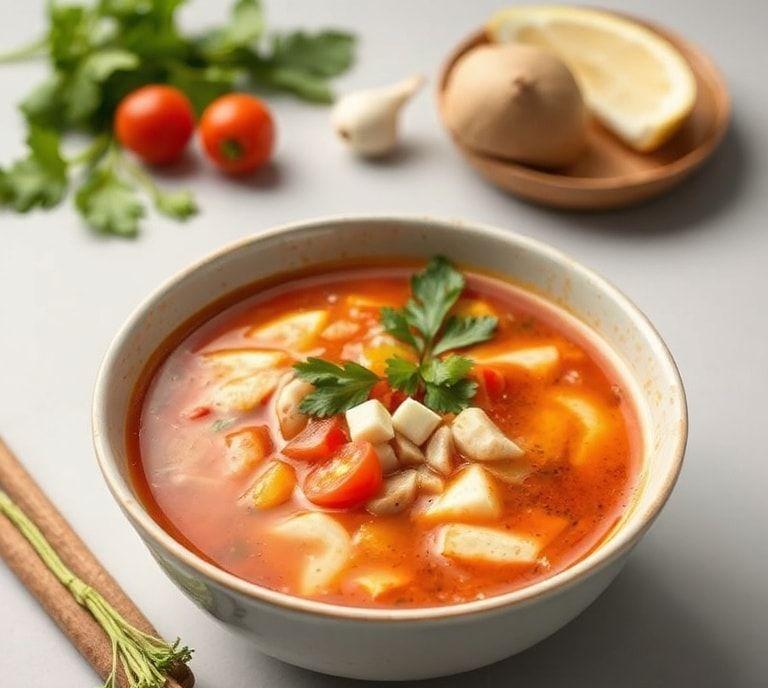
So, what makes a perfect vegetarian Tom Yum? It’s all about the balance of ingredients. The fresh herbs-like lemongrass, kaffir lime leaves, and galangal-provide that unmistakable, refreshing aroma, while the chilies give it the right amount of kick. The tamarind and lime bring the tangy sourness, and the soy sauce or mushroom stock takes care of the umami.
I love the idea of creating something that feels authentic but also personal, tailored to what’s in season or available in your local store. That’s what I enjoy most about cooking: it’s the little tweaks that make a recipe feel like your own.
Ingredients Needed
The ingredients for this vegetarian version of Tom Yum are easy to find, especially in Asian grocery stores, but you can often find them at well-stocked supermarkets too. Here’s what you’ll need:
- 4 cups vegetable broth (or water with mushroom bouillon)
- 2 stalks of lemongrass, smashed and cut into 3-inch pieces
- 3-4 kaffir lime leaves, torn into pieces
- 2-3 slices of galangal (or ginger as a substitute, though galangal is best if you can find it)
- 2-3 Thai bird’s eye chilies, smashed (adjust to your spice tolerance)
- 1 cup mushrooms, sliced (shiitake or button mushrooms work well)
- 1 small tomato, cut into wedges
- 1 small onion, sliced thinly
- 1 small carrot, sliced thinly (optional)
- 2 tablespoons soy sauce (for depth of flavor, you could also use tamari for a gluten-free version)
- 1-2 tablespoons tamarind paste (adjust to taste)
- 1 tablespoon sugar (palm sugar is best if you have it)
- Juice of 2 limes
- Fresh cilantro for garnish
- A handful of Thai basil leaves (optional, but adds a wonderful fragrance)
- Tofu cubes (optional, for added protein)
Cooking Instructions
- Prepare the aromatics: Start by smashing the lemongrass stalks with the back of a knife to release their fragrance. Tear the kaffir lime leaves to release the oils, and slice the galangal (or ginger) thinly. This step is essential as these ingredients will infuse your broth with that distinct Tom Yum flavor.
- Simmer the base: In a large pot, bring the vegetable broth to a boil. Once it’s boiling, add the lemongrass, kaffir lime leaves, galangal (or ginger), and chilies. Reduce the heat and let it simmer for about 10 minutes. The longer it simmers, the more intense the flavors will become.
- Add the vegetables: After the broth has taken on the flavors of the aromatics, add the mushrooms, tomato, and onion. If you’re using carrots, add them in at this point as well. Let everything cook for another 5-7 minutes until the mushrooms are tender.
- Season the broth: Stir in the soy sauce, tamarind paste, sugar, and lime juice. Taste and adjust as needed-if you want it a bit spicier, throw in another chili. If you like it more sour, squeeze in a little more lime juice. If you want it saltier, a touch more soy sauce will do the trick.
- Add the tofu: If you’re adding tofu, toss it in and let it heat through for a minute or two.
- Serve and garnish: Ladle the soup into bowls, and garnish with fresh cilantro and Thai basil leaves. You can also sprinkle some chili flakes on top if you like a bit of extra heat.
Ingredient Science Spotlight
Each ingredient in Tom Yum plays a key role in creating that unforgettable balance of flavors. Here’s a quick dive into why these ingredients work so well:
- Lemongrass: This stalk imparts a fresh, citrusy aroma and taste. Its fragrant oils contain compounds that give the soup a clean, almost floral note. It also has digestive properties, helping to soothe your stomach.
- Kaffir Lime Leaves: These leaves provide a unique, slightly bitter citrus flavor that’s often used in Southeast Asian cooking. They add depth and freshness, and their oils have natural antioxidants that benefit your immune system.
- Galangal: Often mistaken for ginger, galangal has a sharper, more peppery flavor. It’s key to achieving the authentic Tom Yum flavor, contributing a zesty undertone that balances the soup’s heat and sourness.
- Tamarind: The tamarind paste adds a rich sourness that’s hard to replicate. It’s the perfect counterbalance to the broth’s umami flavors, and it’s one of the reasons this soup is so addictive.
- Mushrooms: When you’re making a vegetarian version, mushrooms are the hero ingredient. They add that earthy umami flavor that simulates the richness of meat-based broths. Shiitake mushrooms, in particular, give the soup a deeper, almost smokier flavor.
Expert Tips
- Freshness matters: The fresher your herbs and aromatics, the better your soup will taste. Try to find fresh lemongrass and kaffir lime leaves instead of dried versions if possible.
- Adjust spice level: Thai bird’s eye chilies can be quite potent. If you’re not sure about the heat, start with just one and taste the broth. You can always add more as you go.
- Balance is key: Tom Yum is all about balancing the four main flavors: sour, salty, spicy, and umami. Don’t be afraid to adjust the lime juice, tamarind, and soy sauce as you go to get the perfect flavor profile.
- Make it a meal: If you want to turn this soup into a more filling meal, add noodles (vermicelli or rice noodles work great) or a protein like tofu or tempeh. This turns the soup into something more hearty without losing its vibrant, refreshing qualities.
Recipe Variations
- Coconut Milk Tom Yum: If you’re craving something richer, you can add a splash of coconut milk to the broth. This transforms the soup into a creamy, velvety dish that still maintains the bold, tangy flavor.
- Tom Yum with Rice: Sometimes, I like to serve the soup over a bed of cooked rice. It’s a simple twist that makes the dish feel more like a one-bowl meal.
- Mushroom Medley: While I love shiitake mushrooms for their depth of flavor, you can get creative with other varieties like oyster mushrooms, enoki, or even portobello.
- Herb variation: For a more fragrant variation, you could add Thai basil leaves and even a little bit of cilantro pesto for an extra burst of green.
Final Words
Tom Yum is the perfect example of a dish where simple ingredients create something extraordinary. It’s the kind of recipe that, once you’ve got the hang of it, you can adjust and tweak until it feels like it was made just for you. Whether you’re vegan, vegetarian, or simply someone who loves vibrant, flavorful food, this soup will bring you comfort and satisfaction in every spoonful.
FAQs
What Are The Main Ingredients For Vegetarian Tom Yum Soup?
Vegetarian Tom Yum soup typically includes ingredients such as vegetable broth, mushrooms (often oyster or shiitake), lemongrass, kaffir lime leaves, galangal, lime juice, soy sauce or tamari, and chili peppers. It may also include tofu for added protein, as well as herbs like cilantro for garnish.
Can I Make Vegetarian Tom Yum Soup Spicy?
Yes, you can adjust the spice level of vegetarian Tom Yum soup by varying the amount of fresh chili peppers or chili paste used in the recipe. For a milder version, you can reduce or omit the chili peppers, or replace them with a mild chili sauce or paste.
Can I Substitute Any Ingredients In A Vegetarian Tom Yum Soup Recipe?
Yes, you can substitute various ingredients depending on availability and dietary preferences. For example, if you don’t have kaffir lime leaves, you can use lime zest as a substitute. If you prefer a different vegetable, you can swap the mushrooms for other varieties like zucchini, carrots, or broccoli. Tofu can be substituted with tempeh for a firmer texture, and soy sauce can be replaced with coconut aminos for a gluten-free version.