I remember the first time I had a truly perfect crème brûlée. It was at this tiny French bistro tucked away on a side street in Paris. I was there for a solo trip, just wandering around and soaking in the city’s charm when the waiter placed the dish in front of me. The golden, caramelized top was perfectly cracked under the spoon, and the custard beneath was so velvety smooth, I could hardly believe it. It was a tiny spoonful of perfection.
Years later, I decided I needed to replicate that feeling at home. But there was one problem: I was a vegetarian, and the traditional recipe called for a fair amount of dairy, egg yolks, and vanilla beans. Instead of simply throwing in the towel, I decided to experiment with some vegetarian alternatives that would still create that smooth, decadent dessert without sacrificing flavor. And after a few trials, I had it – a creamy, delicate vegetarian crème brûlée that would make even the toughest critics (or my inner French pastry chef) proud.
Let’s dive into the details of this recipe, and along the way, I’ll share what I’ve learned about making crème brûlée without sacrificing its charm.
Vegetarian Crème Brûlée Recipe
This vegetarian crème brûlée recipe brings together the lusciousness of the classic dessert with plant-based ingredients that will have you coming back for more. It’s perfect for a special occasion, or even as a luxurious treat just for yourself when you’re in the mood for something indulgent.
Ingredients Needed
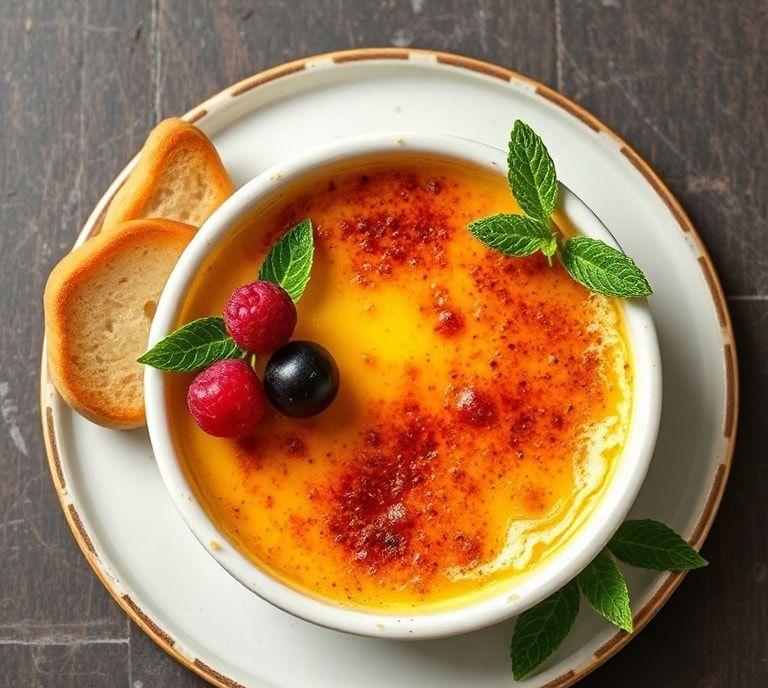
To make this version of vegetarian crème brûlée, we’re going to use a few swaps that keep the flavor rich and the texture just right. You’ll need:
- 2 cups full-fat coconut milk (or any other plant-based milk with a rich, creamy texture, but coconut is my favorite for its naturally creamy and subtly sweet flavor)
- 1/2 cup granulated sugar (for sweetness)
- 1/4 cup cornstarch (this will help thicken the custard while keeping it dairy-free)
- 1/2 tsp vanilla extract (you can use the seeds from a vanilla bean here for a more intense flavor, but I usually stick to extract for convenience)
- Pinch of salt (to balance out the sweetness)
- 1/4 cup maple syrup (for added depth of flavor)
- 1/4 cup plant-based butter (this adds richness and smoothness)
- 4 tablespoons aquafaba (the magic ingredient – the liquid from a can of chickpeas, which will help us get that perfect custard texture without egg yolks)
- Sugar for caramelizing (I recommend a coarse sugar like turbinado sugar for a nice, crunchy topping)
Cooking Instructions
- Start with the base: In a medium saucepan, whisk together the coconut milk, sugar, cornstarch, vanilla extract, salt, and maple syrup. Heat it gently over medium heat, stirring constantly to prevent it from sticking to the pan. Keep whisking until the mixture begins to thicken, which should take about 5-7 minutes.
- Incorporate the aquafaba: In a separate bowl, whisk the aquafaba (the liquid from the chickpea can) for about 2 minutes, until it becomes slightly foamy. This will add that delicate, light texture you’re after. Slowly whisk it into the coconut mixture. It’s a bit of a game changer in this recipe-providing the fluffiness and mouthfeel we crave in a classic crème brûlée.
- Add the plant-based butter: Stir in the butter, letting it melt completely into the custard. This gives the dessert its richness, making it taste as indulgent as the traditional version.
- Pour and set: Pour the mixture into individual ramekins, filling them about three-quarters full. Let them cool slightly at room temperature before placing them in the fridge. The custard needs about 4 hours to set and firm up, but overnight is even better if you can wait.
- Caramelize the top: Once your crème brûlée is fully set, sprinkle a thin layer of turbinado sugar on top of each ramekin. Using a kitchen torch, carefully melt and caramelize the sugar until it’s golden and crispy. If you don’t have a torch, you can place them under a broiler for a few minutes, but be sure to keep an eye on them – the sugar can burn quickly.
Ingredient Science Spotlight
Now, let’s talk about the science behind some of these key ingredients. I’m always fascinated by how simple substitutions can yield the same delicious results!
- Aquafaba: This humble liquid, which is usually discarded after draining canned chickpeas, is a superstar in the world of vegan cooking. It mimics egg whites in many recipes, especially when whipped, because it contains proteins and starches that can trap air and form foam. This is why aquafaba gives your crème brûlée its light texture, helping it achieve that almost cloud-like consistency without using eggs.
- Coconut milk: The beauty of coconut milk is in its fat content. It’s a plant-based milk with a naturally rich, creamy consistency, which makes it a fantastic stand-in for heavy cream. It also adds a slight coconut flavor, which I find enhances the dessert’s richness. If you prefer a neutral flavor, cashew or almond milk could work as well, though they’re less creamy.
- Maple syrup: Maple syrup doesn’t just add sweetness; it introduces a warm, deep flavor profile that pairs beautifully with vanilla. It’s also a natural sweetener, which I think adds to the authenticity of the dessert, especially when you’re trying to keep everything plant-based.
Expert Tips
- Don’t rush the setting process: The custard needs time to set properly in the fridge. If you try to speed things up, the texture won’t be as smooth and creamy. Patience really is key here!
- Adjust the sweetness: If you prefer your desserts on the less sweet side, feel free to cut back a little on the sugar. Crème brûlée is inherently sweet, and the caramelized top will add even more sweetness.
- Don’t skip the torching step: The sugar caramelization is what truly transforms this dessert. The crispy, crackly texture it creates when you tap it with your spoon is the hallmark of crème brûlée. If you don’t have a kitchen torch, don’t worry-just be careful when broiling, and keep the ramekins a few inches away from the heat source.
Recipe Variations
- Flavored crème brûlée: For a fun twist, infuse the coconut milk with flavors like lavender, orange zest, or even cinnamon. Just heat the coconut milk with the flavoring of your choice, then strain it before adding the other ingredients. The result will be a subtle variation on the classic.
- Chocolate crème brûlée: Add about 4 ounces of melted dark chocolate to the custard base for a rich, decadent chocolate version. It’s an especially indulgent treat, and the bitterness of the dark chocolate pairs beautifully with the sweetness of the caramelized top.
- Fruit topping: You could also experiment with topping the custard with fresh fruit before caramelizing. Berries, pomegranate seeds, or thinly sliced kiwi can offer a fresh contrast to the richness of the custard.
Final Words
When I made my first vegetarian crème brûlée, I had no idea it would become one of my go-to dessert recipes. It’s so much more than just a dessert; it’s a reminder that with a bit of creativity, you can replicate the classics while staying true to your preferences. Plus, there’s something so satisfying about cracking that sugar crust with your spoon and taking that first creamy bite, knowing you’ve made something indulgent without compromising on your values.
FAQs
Can I Make Crème Brûlée Completely Vegetarian?
Yes, traditional crème brûlée is often already vegetarian as it mainly contains cream, sugar, and egg yolks. However, some recipes may use gelatin for texture or certain toppings that are not vegetarian. To ensure it is fully vegetarian, avoid using gelatin and choose plant-based alternatives if necessary, or simply rely on the classic custard base made from eggs and dairy.
What Are The Best Vegetarian Alternatives For Dairy In Crème Brûlée?
For a vegetarian or plant-based version, you can substitute traditional cream with full-fat coconut milk, almond milk, or cashew cream. Coconut milk provides a rich texture and subtle sweetness that complements the caramelized sugar topping. When using non-dairy milk, it’s important to adjust the cooking temperature slightly, as plant-based creams may behave differently during baking.
How Do I Achieve The Perfect Caramelized Sugar Topping Without Burning It?
The key to a perfect crème brûlée crust is using a culinary torch or broiler carefully. Sprinkle an even layer of granulated sugar on top of the chilled custard and heat slowly until the sugar melts and turns a deep amber color. Avoid holding the torch in one spot for too long to prevent burning. Let the caramelized layer sit for a few minutes before serving to harden properly.