When you think of Korean food, there’s a good chance that bibimbap comes to mind. This vibrant, flavor-packed dish is not only a feast for the eyes but also a celebration of textures, tastes, and ingredients. I remember the first time I had bibimbap – I was in a tiny Korean restaurant tucked away in the corner of a bustling street. The bowl came to me sizzling hot, with an assortment of colorful vegetables and a perfectly fried egg on top. The moment I mixed it all together with a bit of gochujang (Korean chili paste), I realized I had discovered something magical. There was this perfect harmony of flavors – spicy, savory, and a little bit sweet – with every bite.
What I love most about bibimbap is its versatility. Traditionally, it’s made with rice, sautéed vegetables, meat (usually beef), and an egg, all served in a hot stone bowl. But today, we’re going to make a vegetarian version that doesn’t lose any of the excitement. It’s a bowl of pure satisfaction, packed with nutrients and flavor, and a great way to enjoy a comforting meal without the meat. So, let’s dive into a simple, yet delicious, vegetarian bibimbap recipe.
Bibimbap Vegetarian Recipe
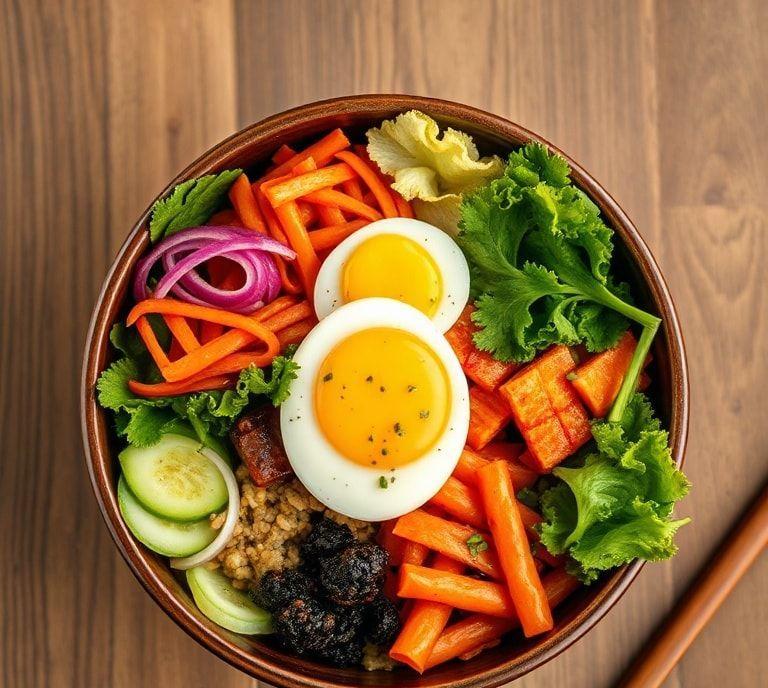
This vegetarian bibimbap is all about getting that perfect balance of textures. You have your crispy rice at the bottom of the bowl, the soft crunch of sautéed vegetables, and that rich fried egg on top. Then, of course, you mix it all with the spicy-sweet gochujang sauce, and you’ve got yourself a bowl that’s bursting with flavor in every bite.
Let’s get started with a recipe that’s easy to follow, but still makes you feel like a master chef.
Ingredients Needed
Here’s what you’ll need for the vegetarian bibimbap. You probably already have some of these in your pantry, but if not, they’re pretty easy to find, especially at most well-stocked grocery stores or Asian markets.
- 2 cups cooked short-grain rice (preferably day-old rice for that perfect crispy texture)
- 1 zucchini, julienned
- 1 cup spinach, blanched and squeezed dry
- 1 medium carrot, julienned
- ½ cup shiitake mushrooms (or any mushrooms you prefer), thinly sliced
- 1 egg (for frying)
- 2 tablespoons sesame oil
- 2 tablespoons vegetable oil (or any oil you like for sautéing)
- 1 tablespoon soy sauce
- 2 teaspoons gochujang (Korean chili paste)
- 1 tablespoon rice vinegar
- 1 teaspoon sugar
- 1 teaspoon sesame seeds (for garnish)
- 1 clove garlic, minced
- Salt and pepper (to taste)
I love to use the short-grain rice because it’s stickier and holds the flavors better, but if you can’t find it, any rice will work. Also, the zucchini and carrots are perfect in this dish because they add that lovely crunch and fresh, clean flavor, which complements the savory richness of the egg and gochujang sauce.
Cooking Instructions
Let’s walk through the steps to bring all these ingredients together. It’s simple, but every step builds toward that bowl of heaven you’ll be holding at the end.
- Prepare the rice: If you’re using freshly cooked rice, let it cool down a bit. It works best when it’s slightly cooled and not super sticky. If you’ve got leftover rice, even better! The slightly dry rice will crisp up beautifully in the pan.
- Prepare your vegetables: Start by heating a little oil in a pan over medium heat. Add the zucchini and sauté for about 2-3 minutes until just tender but still crisp. Set aside. Do the same with the carrots and the mushrooms – a couple of minutes per vegetable. For the spinach, just blanch it in hot water for about 30 seconds, then squeeze out any excess water. It’ll keep the spinach vibrant and tender.
- Sauté the rice: Heat 1 tablespoon of sesame oil in a large pan or wok. Add the rice and spread it out evenly. Let it sit for a minute or so without stirring to let it get nice and crispy at the bottom. Then stir it up a bit to get the rice evenly golden.
- Prepare the sauce: In a small bowl, whisk together the gochujang, rice vinegar, soy sauce, sesame oil, garlic, sugar, and a pinch of salt. This sauce is what ties everything together – it’s sweet, spicy, and so flavorful.
- Fry the egg: In a separate pan, fry the egg sunny-side up or to your preferred doneness. The runny yolk adds that creamy richness when mixed into the rice.
- Assemble the dish: In a large bowl (or individual bowls), start by layering the rice as the base. Arrange the sautéed vegetables, spinach, and mushrooms on top in a beautiful pattern. Place the fried egg in the center. Drizzle the gochujang sauce over everything. Garnish with sesame seeds and a sprinkle of pepper.
- Mix it up: The fun part comes next. Take your chopsticks or a spoon and mix everything together until it’s all beautifully combined. The heat from the rice will melt the egg, and the sauce will coat everything in a rich, spicy glaze.
Ingredient Science Spotlight
Every ingredient in this dish plays a specific role in contributing to the overall flavor and texture. Let’s break it down:
- Rice: The backbone of bibimbap, rice provides a mild, neutral base that absorbs all the other flavors. The short-grain rice is ideal because it’s stickier, making it easier to mix and hold onto the sauce. The crispy texture at the bottom of the bowl, created from letting the rice sit and fry, is a hallmark of a perfect bibimbap.
- Vegetables: Zucchini and carrots add a delicate sweetness and crispness that balance the richness of the egg and the spice of the gochujang. Mushrooms give an earthy depth, while spinach adds a fresh, slightly bitter note that cuts through the richness.
- Egg: The egg is essential for adding a creamy element that ties the dish together. When mixed with the rice, it creates a luxurious, velvety texture that’s almost like a sauce in itself.
- Gochujang: This Korean chili paste is the secret to bibimbap’s signature umami and spice. It’s fermented, so it adds a depth of flavor that you can’t get from just fresh chili. The sugar and vinegar balance out the heat, creating a perfect harmony of sweet, salty, and spicy.
Expert Tips
- Day-old rice is your best friend in this recipe. Freshly cooked rice can be too sticky and mushy, so letting it sit in the fridge for a day helps it firm up. If you don’t have leftover rice, just spread the freshly cooked rice on a baking sheet and let it cool down completely before using it.
- If you don’t have gochujang, you can substitute it with sriracha or any chili paste, but it won’t have the same depth of flavor. A teaspoon of miso paste combined with chili sauce can also give a similar umami kick.
- To get that crispy rice bottom, let the rice sit undisturbed in the pan for a minute or two before stirring. The key is not to touch it too much during the frying process. You want it to develop a golden crust without burning.
- Add tofu or tempeh for extra protein if you want a more substantial vegetarian version. You can marinate it in some soy sauce and sesame oil before pan-frying for extra flavor.
Recipe Variations
There are so many ways to tweak bibimbap depending on what you have on hand or what you’re craving. Here are some ideas:
- Tofu Bibimbap: For extra protein, sauté cubes of tofu with a bit of soy sauce and sesame oil until golden and crispy. Add it to your bowl alongside the vegetables.
- Kimchi: If you like a little funk, add some kimchi on the side. Its tangy, spicy flavor complements the other ingredients perfectly.
- Spicy Kimchi Sauce: Instead of gochujang, use a spicy kimchi sauce if you like your bibimbap with more tang and heat.
- Noodles: For something a bit different, serve the bibimbap with soba noodles instead of rice for a unique twist.
Final Words
Bibimbap is one of those dishes that really shows how simple ingredients, when put together with care, can create something extraordinary. It’s a medley of textures and flavors that can be adjusted to suit anyone’s palate. Whether you’re in the mood for something light, hearty, or spicy, you can easily make bibimbap your own. The beauty of this dish is in its flexibility – there’s no wrong way to make it, as long as it’s packed with love and a bit of creativity.
FAQs
What Ingredients Are Used In A Vegetarian Bibimbap Recipe?
A vegetarian bibimbap typically includes rice, sautéed or blanched vegetables like spinach, mushrooms, carrots, zucchini, and bean sprouts, along with a fried egg. The dish is usually topped with gochujang (Korean chili paste), sesame oil, sesame seeds, and sometimes a drizzle of soy sauce for added flavor. Tofu can be included as a protein substitute for meat.
Can I Make Bibimbap Vegetarian Without The Egg?
Yes, you can easily make bibimbap vegetarian without the egg by either omitting it entirely or replacing it with a plant-based protein like tofu or tempeh. For a similar texture, you can also use a scrambled or fried tofu mix to mimic the egg.
Is Bibimbap Vegetarian Gluten-free?
Traditional bibimbap can be made gluten-free if you use gluten-free soy sauce and ensure that the gochujang (Korean chili paste) does not contain wheat. Most vegetables used in bibimbap are naturally gluten-free, but always check the labels of pre-packaged sauces and condiments for any hidden gluten ingredients.