A cold winter evening, the kind where the sky is an overcast grey and the air is sharp enough to make you pull your scarf tighter. You’ve had a long day, and all you want is something hearty, warming, and comforting. And while there are countless ways to satisfy that craving, nothing does it quite like a big bowl of ramen. But this time, let’s take it to the next level-let’s make it vegetarian, full of flavor, rich in texture, and loaded with vibrant, fresh vegetables. You’ll get the warmth you crave with the added bonus of feeling good about what’s going into your body.
Vegetarian curry ramen blends the soul-satisfying heartiness of a bowl of ramen with the aromatic, spiced depth of curry. It’s a dish that feels both familiar and new, combining two classics into something deliciously comforting and surprising. Imagine the creamy richness of coconut milk, the warmth of turmeric and cumin, and the heartiness of ramen noodles. It’s the kind of dish that, once you try it, will make you wonder why you didn’t think of it sooner.
So, if you’re looking to spice up your usual ramen routine or simply want to try something new, this vegetarian curry ramen recipe is here to transform your dinner time into something memorable. Let’s dive into the magic of curry, ramen, and the flavors that bring it all together.
Vegetarian Curry Ramen Recipe
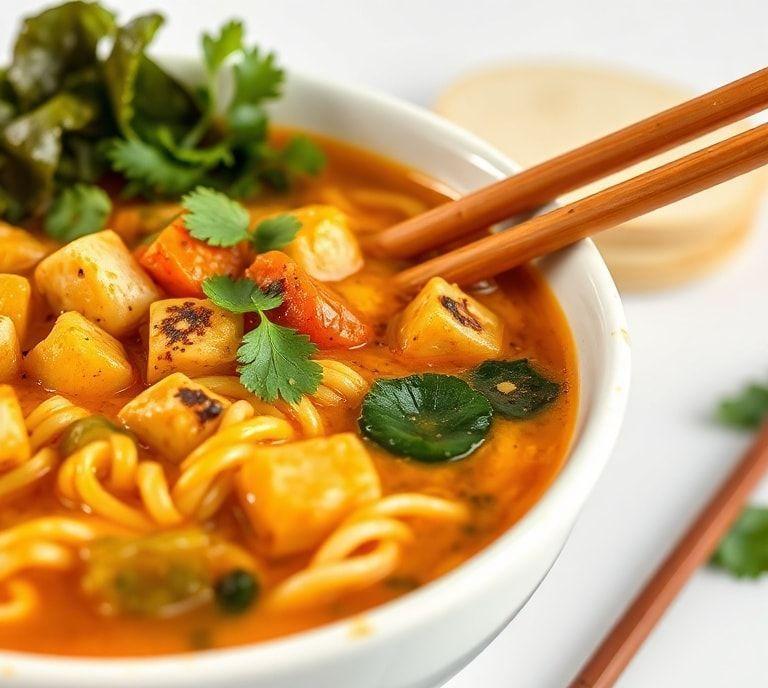
This vegetarian curry ramen recipe brings together the best of both worlds: a rich, spiced curry broth with the comforting slurp of ramen noodles. It’s flexible, easily adaptable, and perfect for personalizing with whatever vegetables or seasonings you have on hand. Ready to warm up your soul? Let’s get cooking.
Ingredients Needed
Here’s what you’ll need to bring this vegetarian curry ramen to life:
- Ramen noodles: The star of the show! Go for fresh or dried noodles based on what’s available. I usually opt for fresh, but both work great.
- Coconut milk: For that creamy, rich base that makes the curry come alive.
- Vegetable broth: Use a good-quality veggie broth for the foundation of the soup. The richer the broth, the more flavorful your ramen will be.
- Curry paste (or powder): This is where the magic happens. I prefer a mild yellow or red curry paste, but feel free to experiment based on your heat tolerance. The paste blends perfectly with the coconut milk for a balanced, aromatic flavor.
- Carrot: Sliced into thin rounds or julienned, this adds a nice crunch and sweetness to balance the spiciness of the curry.
- Bell peppers: Red, yellow, or green-pick what you like! These add color, freshness, and a bit of sweetness.
- Mushrooms: Shiitake or button mushrooms work well. They soak up the curry broth and add that meaty, umami flavor, perfect for vegetarian ramen.
- Spinach or kale: Greens to round out the dish and add some freshness to offset the creamy richness.
- Tofu (optional): If you want some extra protein, a few cubes of pan-fried tofu bring a crispy, savory bite.
- Garlic and ginger: The base of many Asian dishes-these bring warmth, depth, and a little zing to the broth.
- Soy sauce and lime juice: For balancing the flavors and giving a touch of brightness.
- Chili flakes or fresh chilies: If you like heat, this is where you can crank it up a notch.
Cooking Instructions
The magic of this dish lies not only in the ingredients but in the way they all come together. Here’s a step-by-step guide to making your very own vegetarian curry ramen:
- Prepare your noodles: Bring a pot of water to a boil. Add the ramen noodles and cook according to package instructions, usually about 3-4 minutes. Once done, drain and set aside. If you’re using dried noodles, this will be your first step. If you’re using fresh noodles, don’t worry about them until the broth is ready.
- Sauté aromatics: Heat a little oil in a large pot over medium heat. Add finely chopped garlic and grated ginger. Sauté for about 1-2 minutes, until fragrant. Be careful not to burn them-your kitchen should start smelling like a cozy corner of a spice market by now.
- Cook the vegetables: Add your sliced carrots, bell peppers, and mushrooms to the pot. Sauté them for about 5 minutes, just enough to soften them slightly while retaining some crunch. This is where you get the base flavors for your curry, so don’t rush this part.
- Make the curry broth: Stir in your curry paste (or powder), and cook for another minute or so to let the spices bloom. Then, pour in the vegetable broth and coconut milk. Bring it to a simmer. Let it cook for 10-15 minutes, so the vegetables absorb the flavors and the broth thickens just slightly. Season with soy sauce and a squeeze of lime juice to balance out the richness.
- Assemble the ramen: Once your broth is ready, add the cooked noodles and spinach or kale. Let the spinach wilt into the soup, which should only take about 1-2 minutes.
- Serve and garnish: Ladle the ramen into bowls. Top with tofu cubes (if using), a sprinkle of chili flakes, and a few more fresh herbs or lime wedges for an extra punch. You can even add a boiled egg if you’re not fully committed to the vegetarian aspect.
Ingredient Science Spotlight
Here’s a quick look at the science behind some of the ingredients that make this vegetarian curry ramen so special.
- Coconut milk: This ingredient’s richness comes from the natural fats in coconut, which are particularly high in medium-chain triglycerides (MCTs). These fats are known for being more easily metabolized by the body, providing a quick source of energy. Plus, the creamy texture helps thicken the broth and balance the spices.
- Curry paste: The main spices in curry paste (turmeric, cumin, coriander) aren’t just flavorful; they’ve got health benefits too. Turmeric, for example, contains curcumin, which has anti-inflammatory properties. It’s like a little immune boost in every bite.
- Tofu: Tofu is a fantastic source of plant-based protein, and it’s full of isoflavones, compounds that have been shown to have antioxidant properties. When fried, it develops a golden, crispy exterior that contrasts beautifully with the creamy broth.
Expert Tips
- Customize your curry: Don’t be afraid to adjust the curry paste or powder to suit your taste. If you like things spicy, a bit of fresh chili or extra curry paste can do wonders.
- Make it ahead: The flavors of the curry broth improve over time, so making it in advance can allow the spices to meld together and deepen the flavor.
- Noodles, noodles, noodles: If you want a more authentic experience, try using soba or udon noodles instead of ramen. Both offer a slightly different texture and flavor that can complement the curry broth in unique ways.
- Top it off with crunch: A handful of crispy fried onions or a sprinkle of toasted sesame seeds can give your ramen that perfect crunch to balance out the smoothness of the broth.
Recipe Variations
- Add more vegetables: Broccoli, sweet potatoes, or zucchini can easily be thrown into the mix. Just make sure they’re cut thin enough to cook through in the same amount of time as the other ingredients.
- Noodle swap: If you can’t find ramen, udon or soba noodles will work just as well. For a gluten-free option, use rice noodles.
- Use different proteins: While tofu is a great option, tempeh, seitan, or even chickpeas can be used for added protein. If you’re not vegetarian, a soft-boiled egg on top is a classic ramen topping.
- Coconut milk-free version: If you’re not a fan of coconut, try using almond milk or oat milk. It won’t have the same richness, but it’ll still give you a creamy broth.
Final Words
Cooking, at its core, is about combining ingredients to create something greater than the sum of its parts. Vegetarian curry ramen does just that-it turns humble ingredients into a dish that’s complex, comforting, and satisfying in every bite. It’s the kind of recipe that invites you to make it your own, to experiment with flavors and ingredients, and ultimately, to share a bowl with the people you care about.
FAQs
What Are The Key Ingredients Needed For A Vegetarian Curry Ramen Recipe?
A vegetarian curry ramen recipe typically requires vegetable broth, curry paste (such as red or yellow curry), ramen noodles, tofu or tempeh for protein, assorted vegetables (e.g., carrots, bell peppers, mushrooms, spinach), soy sauce, garlic, ginger, and coconut milk for a creamy texture. You can also use miso paste or sesame oil for added flavor.
Can I Substitute The Ramen Noodles With Another Type Of Noodle In A Vegetarian Curry Ramen Recipe?
Yes, you can substitute ramen noodles with other types of noodles such as udon, soba, or even rice noodles. However, the texture and flavor of the dish may slightly change depending on the noodle used. Make sure to cook the noodles according to their package instructions before adding them to the curry broth.
How Can I Make The Vegetarian Curry Ramen Spicier?
To make your vegetarian curry ramen spicier, you can add ingredients like chili flakes, sliced fresh chilies, or a tablespoon of sriracha or hot curry paste. Adjust the amount based on your spice tolerance. Additionally, adding a dash of hot sesame oil or chili oil can enhance the spiciness without overpowering the curry flavor.