If you’re like me, you’ve probably noticed how easy it is to fall in love with the world of homemade snacks. I’ve always been one to experiment with food, and there’s something incredibly satisfying about making something from scratch, especially when you can control every ingredient and make it just the way you like it. Enter vegetarian jerky-a crunchy, savory snack that can be made in your very own kitchen with the help of a dehydrator.
I first got into making vegetarian jerky a few years ago, during a particularly adventurous summer. My family and I had gone on a road trip, and we were looking for snacks that could travel well and keep us satisfied without the usual bag of chips or candy. That’s when I stumbled across dehydrated jerky recipes and knew I had to try my hand at making a plant-based version. It was a game changer-both in terms of flavor and nutrition. This jerky was not only packed with protein and flavor, but it also had the perfect balance of chewiness and crispness.
Now, I’m here to share the love by walking you through my favorite dehydrator-based vegetarian jerky recipe. Whether you’re a seasoned pro or a novice in the kitchen, this recipe is straightforward and can easily be tailored to your preferences. So, let’s dive in and get you ready to make your own batch of delicious, plant-based jerky!
Vegetarian Jerky Dehydrator Recipe
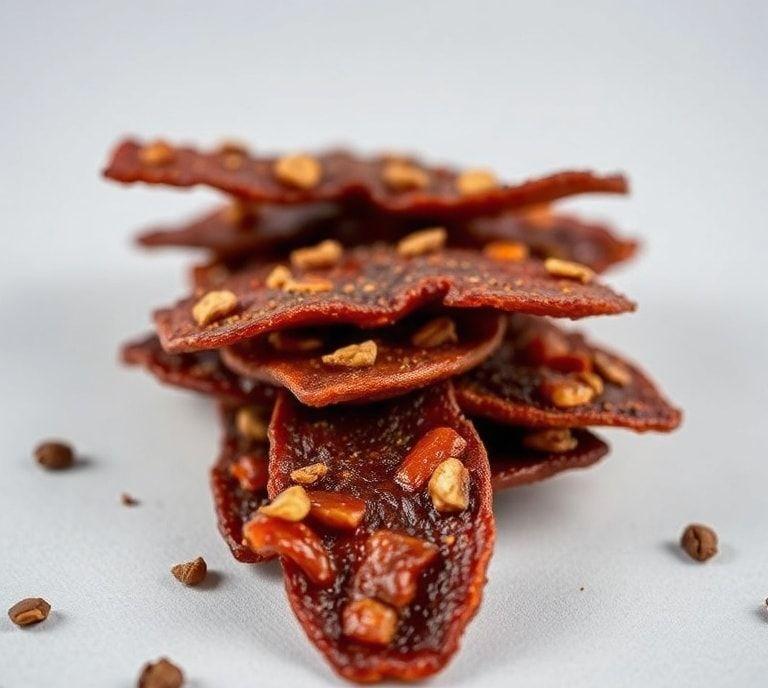
Making vegetarian jerky might sound complicated, but trust me, it’s one of those recipes that will have you wondering why you didn’t try it sooner. All you need is a dehydrator, a handful of simple ingredients, and some patience. The best part is that you get to customize the flavors. I love that! For me, the versatility of flavors is what makes vegetarian jerky such an exciting snack. You can go bold with smoky barbecue flavors or keep it simple with a tangy soy sauce base. The options are endless.
Ingredients Needed
Here’s the shopping list for this recipe:
- 1 ½ cups of soy sauce (or tamari for a gluten-free version)
- ¼ cup of apple cider vinegar
- 2 tablespoons of olive oil (or any neutral oil like avocado oil)
- 2 tablespoons of maple syrup (adds a nice touch of sweetness)
- 2 teaspoons of smoked paprika (this is where the flavor depth comes in!)
- 1 teaspoon of garlic powder
- 1 teaspoon of onion powder
- ½ teaspoon of ground black pepper
- 1 ½ cups of sliced mushrooms (shiitake or portobello work best here, but really, whatever you like!)
- 2 tablespoons of nutritional yeast (optional, but highly recommended for a cheesy, umami flavor)
- 1 cup of soy curls or jackfruit (depending on your preference for texture)
I personally love using jackfruit because it has such a fantastic meaty texture once it’s dehydrated, but soy curls have a great chew to them as well. The mushrooms, though, they bring something special to the table: a deep, savory taste that really takes this jerky to another level.
Cooking Instructions
Alright, here’s the fun part! Grab your dehydrator and let’s start cooking.
- Prep the mushrooms: Slice your mushrooms thinly. The thinner the slices, the crispier the jerky will turn out, so take your time on this step. I’ve found that about 1/8 inch works best.
- Mix the marinade: In a bowl, combine the soy sauce, apple cider vinegar, olive oil, maple syrup, smoked paprika, garlic powder, onion powder, black pepper, and nutritional yeast (if you’re using it). Whisk everything together until it’s nice and smooth. It smells amazing already, doesn’t it?
- Marinate the mushrooms: Once your marinade is ready, toss the sliced mushrooms (or jackfruit/soy curls) into the bowl, making sure each piece is well-coated. You want these flavors to really soak in, so let them marinate for at least 1 hour. If you have time, you could leave them for a few hours or even overnight. Trust me, the longer they sit, the better they taste.
- Dehydrate: Now it’s time for the dehydrator. Lay the marinated mushrooms in a single layer on your dehydrator trays, making sure they aren’t overlapping. Depending on your dehydrator model, you’ll want to set it at around 135°F (57°C) for mushrooms or 150°F (65°C) for jackfruit/soy curls. The drying process typically takes about 6-8 hours for mushrooms. If you’re doing jackfruit or soy curls, they might need a bit longer-up to 10 hours.
- Check for doneness: Once the jerky is done, it should be slightly pliable and chewy, but with a bit of crispiness around the edges. Don’t worry if it’s a little soft right out of the dehydrator-it’ll firm up as it cools.
- Cool and store: Let the jerky cool completely before you pack it away. Store it in an airtight container, and it will last for up to two weeks, or even longer if you keep it in the fridge.
Ingredient Science Spotlight
Let’s dive a little deeper into what makes these ingredients so effective. One of the key players here is soy sauce (or tamari). Not only does it bring saltiness, but it’s also packed with umami, that savory flavor that tricks your brain into thinking you’re eating something meaty. Then there’s the apple cider vinegar, which adds a tangy brightness that balances out the rich soy sauce. The addition of maple syrup may seem unconventional at first, but it’s there to create a delicate sweetness that rounds out the salty and sour flavors, giving your jerky that craveable complexity.
I also have to highlight the mushrooms-they’re not just there for flavor. Their natural umami properties complement the soy sauce, enhancing the overall savoriness. And if you’re using jackfruit, it’s a fantastic substitute for meat due to its fibrous texture, which mimics the feel of traditional jerky.
Expert Tips
- Don’t rush the marinating process: Let your mushrooms (or jackfruit/soy curls) soak in that marinade as long as possible. The longer it marinates, the more flavor will develop, making each bite richer and more satisfying.
- Cut thin slices for crispy jerky: If you prefer a crispier texture, make sure your mushroom slices are thin. If you go too thick, the jerky will take longer to dehydrate and might end up a bit chewier.
- Monitor your dehydrator: Every dehydrator works slightly differently, so make sure you check on the jerky every few hours. You don’t want to end up with over-dried, brittle jerky.
- Use a variety of mushrooms: Experiment with different types of mushrooms-shiitakes, oyster mushrooms, and cremini all bring unique flavors and textures. I’ve found that shiitakes give a great meaty bite, but oyster mushrooms can add a lovely lighter texture.
- Store it right: Keep your jerky in a cool, dry place in an airtight container. If you live in a humid area, storing it in the fridge will help maintain its shelf life.
Recipe Variations
- Spicy Jerky: Add a tablespoon of sriracha or your favorite hot sauce to the marinade. For extra heat, throw in some crushed red pepper flakes or fresh chili peppers.
- BBQ Jerky: For a smoky, sweet twist, swap out the maple syrup for some molasses and add a tablespoon of your favorite BBQ sauce to the marinade. You can also toss in some smoked salt for an extra layer of flavor.
- Herb Infused Jerky: If you’re a fan of fresh herbs, add rosemary, thyme, or basil to the marinade. These will lend an earthy, aromatic fragrance that pairs beautifully with the mushrooms.
- Sweet & Sour: Try swapping half of the soy sauce with pineapple juice for a tropical flavor profile, and add a little extra maple syrup for sweetness.
Final Words
Making vegetarian jerky is one of those recipes that really takes minimal effort for maximum reward. It’s flexible, flavorful, and satisfying in a way that store-bought snacks just can’t replicate. Plus, it’s a snack you can feel good about eating-packed with plant-based goodness, free from preservatives, and easy to make at home.
Whether you’re preparing for a hike, a road trip, or just stocking up for the week, homemade jerky will never let you down.
FAQs
What Are The Key Ingredients Needed For A Vegetarian Jerky Dehydrator Recipe?
The key ingredients for a vegetarian jerky recipe include plant-based protein sources such as soy protein, tempeh, or seitan, along with a variety of flavoring agents. Common ingredients include soy sauce, tamari, liquid smoke, maple syrup, apple cider vinegar, garlic powder, onion powder, smoked paprika, black pepper, and nutritional yeast. You can also add spices like cumin or chili flakes for an extra kick. The protein source is typically marinated in the seasoning mix before dehydration.
How Do I Properly Marinate The Ingredients For A Vegetarian Jerky Recipe Before Dehydrating?
To properly marinate the ingredients, first slice your plant-based protein (such as tempeh or seitan) into thin, uniform strips. Prepare your marinade by mixing your chosen liquid and dry seasonings in a bowl. Submerge the protein strips in the marinade, ensuring they are fully coated. For best results, refrigerate and let them marinate for at least 4 to 6 hours, or overnight for deeper flavor infusion. The longer the marinade time, the more intense the flavor will be.
How Long Does It Take To Dehydrate Vegetarian Jerky, And At What Temperature Should I Set The Dehydrator?
Dehydrating vegetarian jerky typically takes between 6 to 12 hours, depending on the thickness of the strips and the specific dehydrator model. The ideal temperature range for dehydrating vegetarian jerky is between 130°F (54°C) and 160°F (71°C). It’s important to check the jerky periodically to ensure it is drying evenly and that the texture is firm, but not brittle. Proper jerky should bend without breaking and feel slightly dry to the touch but still pliable.