There’s something incredibly comforting about a bowl of kimchi jjigae, that rich, spicy, and savory Korean stew that’s been a staple in homes for generations. Whether you grew up in a Korean household or just stumbled upon it one day, you probably immediately felt the magic of that deep, complex flavor. Now, the version I want to dive into today is a vegetarian take on this dish, perfect for those who might not want meat but still crave the heartwarming, satisfying depth that makes kimchi jjigae so special.
I’ll be honest with you: Kimchi jjigae wasn’t always my favorite growing up. I was a kid with a mild palate, and the fiery heat of kimchi didn’t exactly win me over. But as I got older and my tastes matured, something clicked. Suddenly, I found myself craving that spicy, sour broth, with the rich complexity that comes from the fermentation of kimchi, all of it dancing on the edge of umami.
This vegetarian version is my go-to these days, especially when I want to keep things light but don’t want to sacrifice flavor. It’s a beautiful blend of vegetables, tofu, and, of course, that famous fermented kimchi. Let’s dive into the recipe and explore how to make this simple but incredibly satisfying dish.
Kimchi Jjigae Vegetarian Recipe
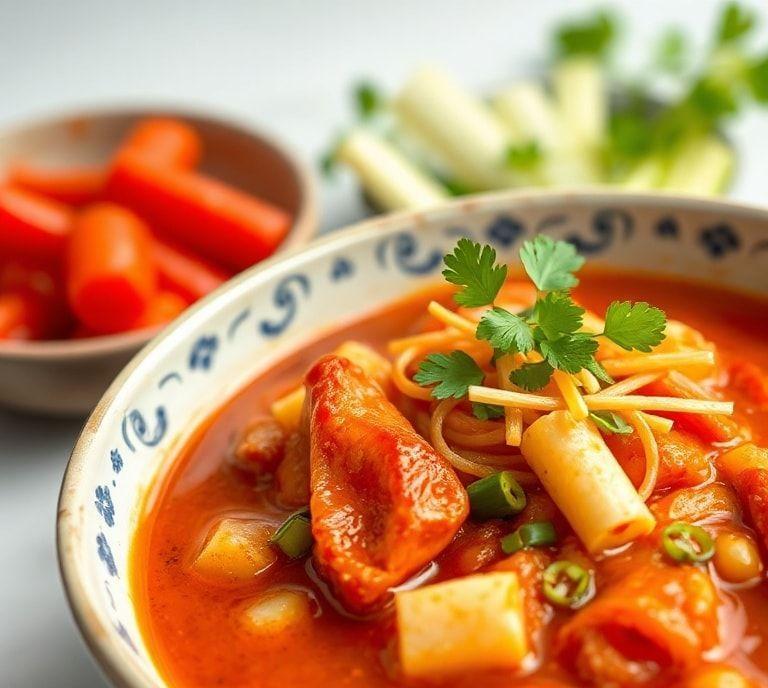
This vegetarian kimchi jjigae captures all the essence of the traditional dish, but without the meat. It’s hearty, bold, and oh-so-satisfying, making it a perfect dinner for anyone looking to embrace more plant-based meals without feeling like they’re missing out on any flavor.
Ingredients Needed
Before we dive into the cooking, let’s talk ingredients. The great thing about kimchi jjigae is that it’s flexible, and you probably have many of the components in your pantry already. Here’s what you’ll need:
- Kimchi (preferably well-fermented) – The star of the show. Aged kimchi (the more sour, the better) provides the tang and depth that really makes this stew sing.
- Firm Tofu – This will add protein and texture. The tofu soaks up the broth’s flavor and adds a creamy element when you bite into it.
- Vegetable Broth – If you want that rich base without any meat, a good-quality vegetable broth will work wonders.
- Onion – For that savory sweetness that balances out the tang of the kimchi.
- Garlic – A couple of cloves for that punch of flavor.
- Gochugaru (Korean chili flakes) – These will add the spice and color to the stew. If you’re sensitive to spice, you can scale it back a little.
- Gochujang (Korean chili paste) – This ingredient thickens the stew and adds a subtle fermented depth to the dish.
- Soy Sauce – Adds saltiness and umami to the base.
- Sesame Oil – For sautéing and adding a little nuttiness to the flavor.
- Spring Onions – Chopped for garnish, they’ll add a touch of freshness and color to the final dish.
- Optional: Mushrooms – Shiitake or enoki mushrooms add an earthy flavor, but they’re entirely optional.
Cooking Instructions
- Prepare the Ingredients: Start by cutting your tofu into cubes and draining any excess liquid. Slice your onions, garlic, and any mushrooms you’re using. If your kimchi isn’t cut into small pieces already, chop it up.
- Sauté Aromatics: Heat about a tablespoon of sesame oil in a large pot over medium heat. Add the onions and garlic, cooking them until they’re soft and fragrant, about 3-4 minutes. This is where the base of your stew starts to develop.
- Add the Kimchi: Once the onions and garlic are ready, toss in your kimchi. Let it sauté for another 5 minutes, allowing the kimchi to caramelize a bit and release its juices. This step helps deepen the flavors.
- Add Broth and Seasoning: Pour in your vegetable broth, then add a tablespoon of gochujang, a teaspoon of soy sauce, and a pinch of gochugaru. Stir well, bringing everything together. You should already smell that spicy, savory kick.
- Simmer: Bring the broth to a simmer and let it cook for 15-20 minutes, allowing the flavors to meld. The kimchi will infuse the broth with its deep tang, and the gochujang will add a touch of richness.
- Add Tofu and Mushrooms: Add your tofu cubes (and mushrooms, if using) to the pot, letting them absorb the broth’s flavor as it simmers for another 10 minutes.
- Taste and Adjust: Give it a taste. If it needs a bit more salt, soy sauce, or gochugaru, feel free to adjust. Every batch of kimchi is different, so sometimes you need a little extra seasoning.
- Garnish and Serve: Serve the kimchi jjigae hot, garnished with fresh spring onions. The stew is perfect over a bowl of steamed rice, or you can simply enjoy it on its own.
Ingredient Science Spotlight
One of the key ingredients in this dish is kimchi, and it’s worth understanding why it plays such a central role. Kimchi is a fermented food, which means it’s full of beneficial probiotics that help support gut health. The fermentation process also breaks down the complex carbohydrates in cabbage, making it easier to digest and enhancing the flavor. Plus, the lactic acid bacteria that form during fermentation add that signature tang and help balance out the dish’s rich, savory elements.
The tofu in this recipe is another ingredient worth mentioning. Firm tofu acts like a sponge in the stew, absorbing all the flavors of the broth while adding protein and texture. Unlike meat, which often overwhelms the dish, tofu lets the kimchi and broth shine while giving you that comforting, hearty bite.
Expert Tips
- Use well-fermented kimchi: The older your kimchi, the more intense the flavor of your stew will be. Don’t go for the fresh stuff unless you’re in a pinch-it’s just not the same!
- Add a little sugar: Some people like to add a small pinch of sugar to balance out the acidity from the kimchi. It’s not traditional, but it can really round out the flavors, especially if your kimchi is particularly sour.
- Don’t skip the sesame oil: It adds a subtle depth of flavor that’s crucial for bringing everything together.
- Add a dash of vinegar: If you find the stew too rich or heavy, a tiny splash of vinegar can brighten up the flavor.
Recipe Variations
- Add More Vegetables: You can really get creative here. Consider adding zucchini, potatoes, or carrots to bulk it up. Just make sure to cook them long enough to soften.
- Noodle It Up: If you’re craving a heartier meal, add some cooked ramen noodles to the stew right before serving.
- Make It Spicy: Crank up the heat by adding more gochugaru, or toss in a sliced jalapeño or two for an extra kick.
Final Words
Kimchi jjigae is one of those dishes that’s so simple yet so satisfying. It’s full of bold flavors that are comforting and energizing at the same time. This vegetarian version doesn’t miss a beat, bringing the deep, fermented tang of kimchi into every bite while keeping it light with tofu and vegetables.
FAQs
What Is Kimchi Jjigae And How Is It Made Vegetarian?
Kimchi jjigae is a Korean stew made primarily with kimchi, tofu, and vegetables, simmered in a flavorful broth. To make it vegetarian, replace any meat-based ingredients, such as pork or beef, with plant-based alternatives. Common substitutions include tofu, mushrooms, and vegetables like zucchini, onions, and carrots. Vegetable broth can be used as the base, and the dish can be spiced with gochujang (Korean chili paste) and gochugaru (chili flakes) for an authentic flavor.
Can I Use Store-bought Kimchi For A Vegetarian Kimchi Jjigae?
Yes, you can use store-bought kimchi for a vegetarian kimchi jjigae, but it’s important to ensure that the kimchi is vegetarian-friendly. Some commercially available kimchi may contain fish sauce, shrimp paste, or anchovies, which are not suitable for vegetarians. Look for kimchi labeled ’vegan’ or check the ingredients to make sure it’s free from any animal products.
What Are The Best Ingredients To Add To A Vegetarian Kimchi Jjigae?
For a flavorful vegetarian kimchi jjigae, the best ingredients include tofu (for protein), mushrooms (shiitake or button mushrooms work well), napa cabbage kimchi (the core ingredient), and vegetables like onions, zucchini, and carrots. You can also add garlic, green onions, and chili flakes to enhance the flavor. To give the stew more depth, a splash of soy sauce, sesame oil, and a pinch of sugar can be used. For a heartier dish, adding rice cakes (tteok) or noodles is a popular option.