There’s something incredibly satisfying about preparing a dish that not only bursts with flavor but also carries a rich history and versatility. Olive tapenade is one of those timeless recipes. Originating in the sun-kissed lands of the Mediterranean, this simple yet robust spread is the epitome of Mediterranean flavors. It’s savory, briny, and utterly delightful on anything from a crusty baguette to grilled vegetables. And if you’re like me-someone who loves dishes that are both quick to prepare and packed with complexity-you’ll find olive tapenade to be an absolute treasure.
I first stumbled upon olive tapenade while visiting a small seaside town in southern France. The scent of olives and fresh herbs filled the air, and the local bistro served the most divine tapenade I’d ever tasted. With each bite, I felt as though I was tasting a piece of the land itself. Ever since that trip, I’ve been hooked on making my own version of this Mediterranean classic, experimenting with different ingredients and tweaking flavors to suit my taste. What’s wonderful about olive tapenade is its simplicity-it’s made from just a handful of ingredients, but the result is so much more than the sum of its parts. It’s the kind of dish that turns any gathering into an event.
The beauty of this vegetarian olive tapenade recipe is its adaptability. Whether you’re planning a sophisticated dinner party, a casual afternoon snack, or just want to bring a bit of the Mediterranean into your everyday life, this recipe delivers. Let’s dive into the details, shall we?
Olive Tapenade Vegetarian Recipe
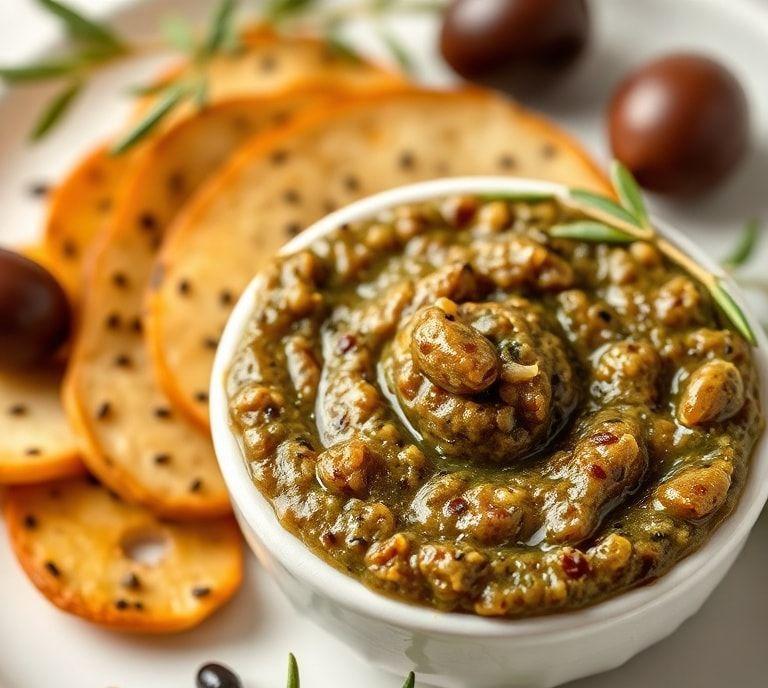
This olive tapenade recipe is perfect for those who want to bring the bold flavors of the Mediterranean to their table without needing a culinary degree. It’s vegetarian, simple, and absolutely delicious. The best part? It’s incredibly versatile-you can serve it on bread, toss it with pasta, or even use it as a topping for grilled veggies. I’m getting hungry just thinking about it.
Ingredients Needed
- 1 ½ cups of mixed olives (green, Kalamata, or a combination)
- 2 tablespoons of capers (for that salty, briny tang)
- 1 garlic clove, minced (because everything’s better with garlic)
- 2 tablespoons of fresh lemon juice (for brightness)
- 1 tablespoon of fresh thyme or rosemary (optional, but adds depth)
- ¼ cup of extra virgin olive oil (the best you can find)
- 2 tablespoons of balsamic vinegar (adds a little sweet, a little tang)
- Freshly ground black pepper, to taste
Cooking Instructions
- Prep the Olives: If you’re using whole olives, start by pitting them. I’ve often used a small glass jar of mixed olives, which makes this part easy-no need to pit them individually! Just make sure they’re drained and roughly chopped.
- Combine the Ingredients: In a food processor (or blender if that’s what you’ve got), toss in your chopped olives, capers, minced garlic, and any fresh herbs you’re using. Add a squeeze of lemon juice, the balsamic vinegar, and a pinch of freshly ground black pepper.
- Pulse: Start pulsing your mixture a few times. You want the consistency to be a coarse paste, not a smooth blend. The bits of olives and capers should still be visible, giving the tapenade its signature texture.
- Add Olive Oil: Slowly drizzle in the extra virgin olive oil while the processor is running. This helps the ingredients come together, and the oil adds that smooth, rich finish. You want a silky texture, but not soupy-just enough to make it spreadable.
- Taste and Adjust: At this stage, taste your tapenade. If you think it needs more tang, add a little more lemon juice. If it’s too salty (depending on the olives and capers you used), balance it with a touch more oil. Don’t forget that a little fresh black pepper goes a long way.
- Serve or Store: Transfer your tapenade to a jar or airtight container. It’s ready to serve immediately, but like many dips and spreads, it gets even better after a few hours (or overnight) in the fridge. The flavors will meld together beautifully, deepening in complexity.
Ingredient Science Spotlight
Olives are the undisputed star of any tapenade, and while they’re often taken for granted, their impact is undeniable. Olives, and particularly the olive oil they produce, are high in monounsaturated fats-good fats that are beneficial for heart health. But there’s more to them than just nutrition. The process of curing olives, which can be done in various ways (brining, dry-curing, lye-curing), brings out their distinctively savory, almost meaty flavor. When combined with ingredients like capers and garlic, olives create a powerful depth that’s both earthy and bright.
Capers, often seen as an added garnish, pack a real punch when it comes to flavor. These little buds are harvested from the caper bush, and once pickled, they bring a sharp, zesty contrast to the more mellow notes of olives. They’re the secret ingredient that gives your tapenade that ’wow’ factor.
Lemon juice, on the other hand, does the job of cutting through the richness of the olives and olive oil, providing a crisp, refreshing balance. The acidity also helps to bring out the other flavors, allowing each ingredient to shine in its own way. It’s a perfect example of how acid can elevate a dish.
Expert Tips
- Olive Variety: If you can, mix up the types of olives. Kalamata olives bring a strong, tangy flavor, while green olives (especially if they’re brined) add a more herbaceous, slightly bitter note. A combination will give your tapenade a nice balance.
- Herbs: Fresh thyme or rosemary adds complexity, but don’t go overboard-just a hint is enough. Too much can overpower the olives.
- Don’t Over-Process: The texture is key. You want it to be chunky, not a smooth paste. The olive tapenade should have some texture that allows you to enjoy the different elements with each bite.
- Storage: Tapenade actually tastes better after a day or two in the fridge. If you have leftovers, make sure to store it in an airtight container with a thin layer of olive oil on top to keep it fresh.
Recipe Variations
- Spicy Tapenade: Add a small chili pepper or a teaspoon of red pepper flakes for a little heat. This pairs beautifully with creamy cheeses like goat cheese or feta.
- Nuts for Tapenade: Walnuts or almonds can add some extra texture and richness to your tapenade. Just toast them lightly and pulse them in with the olives.
- Sun-Dried Tomato Tapenade: For a more Mediterranean twist, throw in some sun-dried tomatoes. They add a lovely sweetness and depth that pairs beautifully with the briny olives.
- Vegan Tapenade: While the traditional recipe is naturally vegetarian, you can make it 100% plant-based by ensuring you’re using vegan-friendly balsamic vinegar and confirming the capers are processed without any animal products (most are, but it’s always good to check).
Final Words
I can’t help but get excited every time I make olive tapenade. There’s something so satisfying about combining a handful of simple ingredients and transforming them into something so bold and flavorful. The rich, salty olives, the brightness of the lemon, the bite of the capers-it’s a little piece of the Mediterranean on your plate. Whether you’re serving it as a snack, appetizer, or even as a topping for roasted vegetables, this tapenade is sure to impress. It’s a dish that feels both luxurious and grounded, a perfect blend of simplicity and sophistication.
FAQs
What Are The Main Ingredients In A Vegetarian Olive Tapenade Recipe?
The main ingredients in a vegetarian olive tapenade recipe include olives (usually Kalamata or green olives), olive oil, garlic, capers, lemon juice, and herbs such as thyme or oregano. Some variations may also include anchovies or sundried tomatoes, though these are not typical in vegetarian versions.
How Can I Make Olive Tapenade If I Don’t Have A Food Processor?
If you don’t have a food processor, you can make olive tapenade by finely chopping the ingredients with a knife. Start by mincing the olives, garlic, capers, and any other herbs or ingredients you are using. Then, use a mortar and pestle or simply mix everything together in a bowl, gradually adding olive oil until you achieve the desired consistency.
Can I Make Olive Tapenade Ahead Of Time, And How Should I Store It?
Yes, you can make olive tapenade ahead of time. In fact, allowing the flavors to meld for a few hours or overnight can improve the taste. Store it in an airtight container in the refrigerator for up to a week. Make sure to cover the tapenade with a thin layer of olive oil to help preserve its freshness.