There’s something about a simple, vibrant vegetable dish that can make you feel connected to nature. You know, those meals that bring a taste of the garden to your plate. I’ve always felt that way about bok choy-its crisp leaves and tender stalks make it a perfect centerpiece for a light, but satisfying, vegetarian meal. Bok choy is one of those vegetables that might not always grab attention in the grocery store, but when you give it a chance, it’s like a hidden gem in your kitchen.
I first fell in love with bok choy years ago, during a trip to a small Asian market in my neighborhood. It was a place I’d always walked by, thinking it was more for seasoned cooks than someone like me, who was still figuring out how to balance flavor profiles. But one day, on a whim, I decided to step inside. The market was overflowing with fresh produce, and amidst all the bold, unfamiliar sights and smells, bok choy stood out. The crisp, bright green leaves just called to me.
The best part? Bok choy is not only versatile but incredibly easy to cook. Whether you’re stir-frying, sautéing, or steaming it, the flavors it brings out are something special. So, today I’m going to share a simple vegetarian bok choy recipe that’s bursting with flavor and texture. It’s something that you can whip up in no time and feels like you’re having a home-cooked, wholesome meal without all the fuss.
Bok Choy Vegetarian Recipe
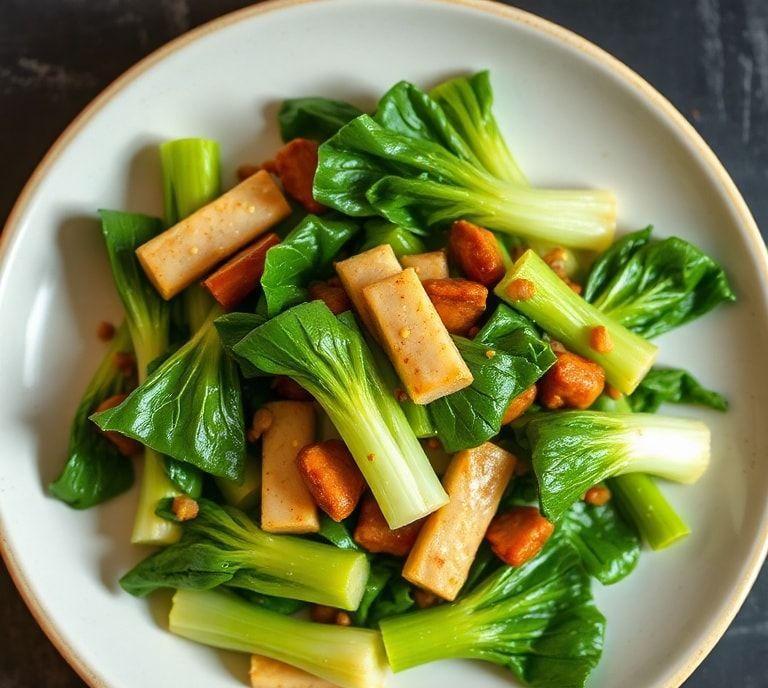
I love how this dish can be a meal on its own or pair well with a variety of other sides. It’s not too complicated, but it still feels special. Let’s dive in:
Ingredients Needed
- 1 bunch of bok choy (baby bok choy works beautifully here)
- 2 tablespoons sesame oil (or olive oil, if you prefer)
- 2 garlic cloves, minced
- 1-inch piece of fresh ginger, minced
- 1 tablespoon soy sauce (or tamari for a gluten-free version)
- 1 tablespoon rice vinegar
- 1 teaspoon maple syrup or honey (optional, but adds a lovely sweetness)
- A pinch of red pepper flakes (for a little heat, adjust to taste)
- A sprinkle of sesame seeds (optional, for garnish)
- Fresh cilantro or green onions, chopped (optional garnish)
This recipe is simple, yet it comes together in such a delicious way. I find that the combination of sesame oil, soy sauce, and a hint of sweetness from the maple syrup brings the bok choy to life in a way that’s both savory and bright.
Cooking Instructions
- Prep the bok choy: Wash the bok choy thoroughly, making sure to remove any dirt from between the leaves. For baby bok choy, you can leave it whole, but if you’re using regular-sized bok choy, cut it into quarters lengthwise to help it cook more evenly. Don’t forget to dry it gently using a kitchen towel or a salad spinner.
- Sauté the aromatics: Heat the sesame oil in a large pan or wok over medium heat. Once the oil is hot, add the minced garlic and ginger. Stir constantly to avoid burning them (trust me, burnt garlic can easily ruin a dish). Sauté for about 1 minute until fragrant.
- Cook the bok choy: Add the bok choy to the pan, cut side down, and cook for 2-3 minutes, allowing the stalks to caramelize slightly. Turn them over and cook for an additional 3-4 minutes, depending on the size of the bok choy. The leaves should be tender and wilted, while the stalks remain crisp.
- Season it up: Drizzle the soy sauce, rice vinegar, and maple syrup (if using) over the bok choy. Add the red pepper flakes for a kick. Stir gently to coat everything evenly, allowing the flavors to combine. Taste, and adjust seasoning as necessary.
- Serve and garnish: Transfer the bok choy to a serving platter. Sprinkle sesame seeds and fresh herbs over the top for an added burst of flavor and color. Serve it as a side dish or pair it with a hearty grain like quinoa or brown rice.
Ingredient Science Spotlight
What I love most about bok choy is its nutritional value. A single serving of this veggie is packed with vitamins A, C, and K, making it a great choice for boosting immune health, promoting healthy skin, and supporting strong bones. Bok choy is also a good source of antioxidants, which help reduce inflammation and fight off oxidative stress.
Its high water content means it’s incredibly hydrating, and the fiber it provides helps with digestion. But did you know that bok choy also contains glucosinolates-compounds found in cruciferous vegetables like broccoli and kale? These compounds are known to have cancer-fighting properties. Talk about a veggie with some serious health benefits!
And let’s not forget about the texture-bok choy has this wonderful balance of tender and crunchy. The leaves cook down quickly, but the stems hold their shape and give a satisfying bite.
Expert Tips
- If you’re looking for an extra layer of flavor, try adding a drizzle of toasted sesame oil at the end. It’s richer and gives the dish a deep, nutty flavor.
- For those who love heat, try adding some chopped fresh chili peppers or a few dashes of sriracha to bring a spicier kick.
- If you want to make this dish even more filling, you can easily add protein. Tofu or tempeh works really well, sautéed alongside the bok choy or tossed in at the end.
- For a richer, more savory flavor, you can swap out the soy sauce for coconut aminos or add a splash of mushroom soy sauce for a deeper umami taste.
Recipe Variations
Bok choy is incredibly versatile, so don’t be afraid to switch things up depending on your taste preferences. Here are a few variations you might want to try:
- Garlic and Chili Bok Choy – Add thinly sliced red chilies and extra garlic to the pan for a more intense, aromatic punch.
- Bok Choy with Mushrooms – Add sliced mushrooms (shiitake, oyster, or even button mushrooms) for an earthy, umami flavor that complements the bok choy perfectly.
- Curry Bok Choy – Try adding a teaspoon of curry powder and a splash of coconut milk for a creamy, spiced twist on this dish.
- Bok Choy with Noodles – Toss the cooked bok choy with cooked noodles (rice noodles or soba work great) and a little extra soy sauce for a quick stir-fry. Top with crushed peanuts or cashews for crunch.
Final Words
Cooking with bok choy has become a weekly habit in my kitchen. Its mild flavor and wonderful texture allow it to absorb whatever seasonings you throw at it, and it’s forgiving enough that you can add just about anything to make it your own. Whether you’re looking for a quick side dish or a light vegetarian meal, bok choy is a solid choice. And, just like me, I think you’ll find that it’s one of those veggies that surprises you with just how good it tastes when you give it a little attention and care.
FAQs
What Are Some Common Ingredients Used In A Bok Choy Vegetarian Recipe?
A typical bok choy vegetarian recipe often includes fresh bok choy, garlic, ginger, soy sauce or tamari for seasoning, sesame oil for sautéing, and vegetables like mushrooms, carrots, and bell peppers. Tofu, tempeh, or edamame are often added for protein, while rice or noodles may serve as a base.
How Do You Prepare Bok Choy For Cooking In A Vegetarian Dish?
To prepare bok choy for a vegetarian dish, first rinse it thoroughly to remove any dirt or grit. Cut off the root end of the bok choy and separate the leaves if you’re using baby bok choy. For regular bok choy, slice it into 1-2 inch pieces. The stalks can be cooked slightly longer than the leaves to ensure even tenderness.
Can I Substitute Bok Choy With Other Leafy Greens In Vegetarian Recipes?
Yes, you can substitute bok choy with other leafy greens such as napa cabbage, spinach, kale, or Swiss chard. Keep in mind that different greens have distinct flavors and textures, so the overall taste of the dish may vary slightly, but these alternatives work well in stir-fries, soups, and salads.