
Food has a magical way of connecting people, evoking memories, and stirring up deep emotions. One of the dishes that I have always turned to when I want something comforting yet exciting is Indo-Chinese noodles. There’s something about the blend of spices, the crisp vegetables, and that unmistakable umami flavor that makes this dish so satisfying. What makes Indo-Chinese so appealing is that it’s a fusion of two very different culinary traditions-Indian and Chinese. It’s like a cultural marriage of flavors that somehow just work.
I remember the first time I had these noodles at a small street food stall in Mumbai. The vendor would toss a wok with such precision that the sound of the sizzling ingredients echoed in the air, drawing people in like a magnet. Every bite of those noodles-perfectly fried with the right amount of spice, crunch, and tang-felt like an adventure. Ever since then, Indo-Chinese food has had a special place in my heart, and today, I want to share this simple yet delightful vegetarian recipe with you, so you can experience that same joy at home.
Indo Chinese Noodles Vegetarian Recipe
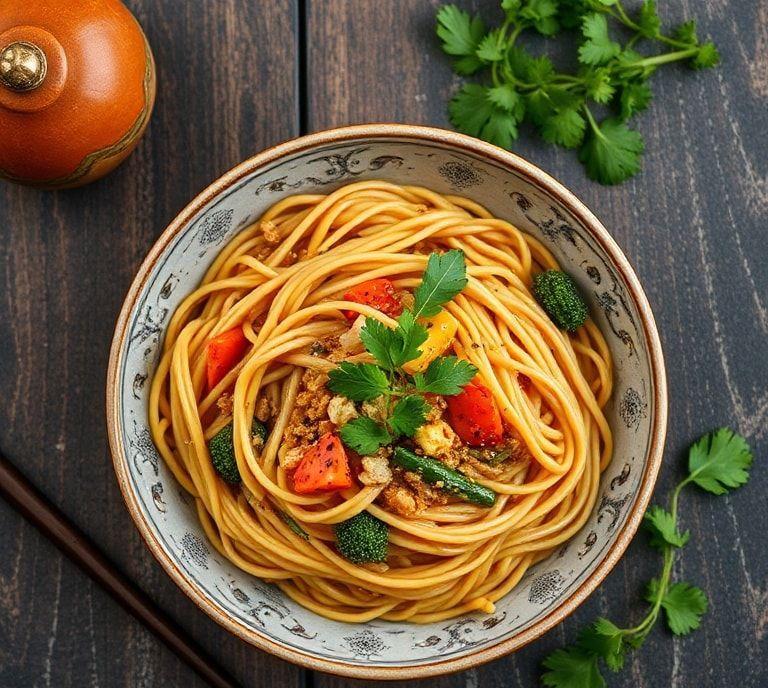
This recipe is inspired by the vibrant street food culture of India, where Chinese-inspired dishes have been tweaked and transformed into something uniquely Indian. It’s not just food; it’s a celebration of flavors. The key to a perfect Indo-Chinese noodle is the balance between the vegetables’ freshness, the noodles’ soft chewiness, and the soy and chili sauce blend that ties everything together.
Ingredients Needed
The beauty of this recipe is its simplicity. You don’t need anything too extravagant, just a few everyday ingredients that you probably already have in your kitchen. Here’s what you’ll need:
- Noodles: You can use any noodles you prefer, but I recommend using egg noodles or thin Hakka noodles for that authentic street-style experience.
- Vegetables: A colorful assortment of veggies-bell peppers, carrots, cabbage, onions, and spring onions-are a must. The more vibrant, the better!
- Soy Sauce: The heart of the Indo-Chinese flavor. Use a good quality dark soy sauce to get that deep, savory taste.
- Vinegar: Adds a tangy kick to balance out the richness of the soy sauce.
- Green Chilies: For a burst of heat. Adjust the quantity based on your heat tolerance.
- Ginger and Garlic: Freshly minced to add that aromatic depth to the dish.
- Sesame Oil: For that earthy undertone that completes the Indo-Chinese flavor profile.
- Chili Sauce: This adds the signature spicy, tangy punch. I like to use a mix of sweet chili sauce and the classic Chinese chili paste.
- Salt and Pepper: To taste.
- Sugar: A pinch to balance the tang and heat.
That’s it! Simple, yet packed with flavors that will transport you straight to those bustling food stalls.
Cooking Instructions
Here’s how you can bring this vibrant dish to life in your kitchen:
- Prepare the Noodles: Start by boiling the noodles in a pot of salted water. Cook them according to the package instructions, but make sure they are al dente-firm but tender. Once done, drain the noodles and rinse them under cold water to stop the cooking process and prevent them from sticking. Drizzle a little sesame oil over them to keep them separate.
- Prep the Vegetables: While your noodles are cooking, slice the vegetables. Thinly slice the carrots, bell peppers, and cabbage into julienne strips. Chop the spring onions and set them aside, keeping the white and green parts separate.
- Stir-fry the Veggies: Heat a large wok or pan over high heat and add a splash of sesame oil. Once hot, toss in the garlic and ginger, frying until fragrant (about 30 seconds). Immediately add the onions (white part), carrots, bell peppers, and cabbage. Stir-fry for a couple of minutes until they start to soften, but still retain their crunch.
- Add the Sauces: This is where the magic happens. Add soy sauce, vinegar, chili sauce, and a pinch of sugar. Stir everything well to coat the vegetables in the sauce. Let it sizzle for another minute to allow the flavors to meld.
- Combine the Noodles: Now, gently add your cooked noodles to the pan. Toss everything together, making sure each strand of noodle is coated in that delicious sauce. Add the spring onion greens and a sprinkle of salt and pepper to taste. Stir for a couple of minutes to heat through and ensure everything is well mixed.
- Serve: Transfer the noodles to a serving platter, sprinkle with more spring onions, and maybe even a little extra chili sauce if you like your food spicy. And just like that, you’re ready to enjoy your Indo-Chinese noodles!
Ingredient Science Spotlight
Let’s dive a bit deeper into the role of some of these ingredients. I’ve always been fascinated by how they work together to create the magic of Indo-Chinese cuisine.
- Soy Sauce: It’s not just a flavor enhancer but a natural source of umami. It’s the salty-sweet component that creates the foundation for the dish. The fermentation process gives it that savory richness, which makes it such a perfect match for vegetables and noodles.
- Vinegar: The acidity from vinegar plays a crucial balancing act here. It cuts through the richness of the soy sauce and chili, preventing the dish from becoming too heavy or overly salty.
- Sesame Oil: This is one of my favorite ingredients in any stir-fry. It adds an earthy, nutty undertone that complements the freshness of the vegetables and the depth of the sauces. The oil also creates a silky texture that binds the noodles together.
- Green Chilies: When you bite into a green chili, you experience the fresh, raw heat that defines much of Indo-Chinese cuisine. The capsaicin in chilies creates a sensation of heat, which, when balanced with the soy sauce and vinegar, creates an addictive flavor profile.
Expert Tips
- High Heat Cooking: The secret to getting that authentic street food taste is cooking on high heat. This ensures that the noodles and veggies get that smoky, stir-fried flavor without getting soggy.
- Don’t Overcook the Vegetables: Keep the veggies crunchy! The joy of Indo-Chinese noodles is the contrast between the crisp veggies and the tender noodles, so avoid overcooking them.
- Use Fresh Ingredients: Fresh ginger, garlic, and spring onions make a world of difference. The flavors are brighter, and the fragrance is more intense, adding that irresistible aroma to the dish.
- Customize the Spice Level: If you’re not into the heat, you can reduce the number of green chilies or substitute with sweet chili sauce for a milder kick.
Recipe Variations
- Protein Boost: Want to make this dish more substantial? Add some protein by tossing in cubes of tofu, tempeh, or even paneer. The tofu, in particular, absorbs all the flavors beautifully.
- Sichuan Style: If you love the numbing heat of Sichuan cuisine, try adding a bit of Sichuan peppercorns. It adds a unique tingling sensation that makes this dish even more exciting.
- Sweet and Sour: To change things up, make a sweet and sour version by using pineapple chunks, bell peppers, and a bit of ketchup along with the chili sauce. The pineapple gives it a refreshing, tropical flavor.
Final Words
Cooking Indo-Chinese noodles is not just about following a recipe; it’s about experiencing the joy of combining simple ingredients into something far greater than the sum of its parts. Whether you’re cooking for yourself or sharing it with friends, this dish has the power to create memories and make any meal feel like a special occasion.
The beauty of Indo-Chinese noodles lies in its versatility. It’s a dish that welcomes experimentation. It adapts to whatever you have on hand, allowing you to put your own spin on it. One thing’s for sure though: no matter how you make it, these noodles will always be bursting with flavor.
FAQs
What Are The Key Ingredients In A Vegetarian Indo-Chinese Noodles Recipe?
The key ingredients for a vegetarian Indo-Chinese noodles recipe typically include boiled noodles (usually Hakka or egg noodles), vegetables like bell peppers, carrots, cabbage, beansprouts, and spring onions. Common seasonings include soy sauce, vinegar, chili sauce, and a blend of Chinese spices such as five-spice powder or Szechuan sauce. Garlic and ginger are also frequently used to enhance the flavor.
Can I Make Indo Chinese Noodles Without Using Soy Sauce Or Vinegar?
Yes, you can make Indo-Chinese noodles without soy sauce or vinegar, though it will alter the flavor. For a soy-free option, you can substitute with tamari or coconut aminos. As for vinegar, you could use lemon juice, lime juice, or rice vinegar as alternatives. The key is to balance the salty, sour, and spicy elements for the authentic Indo-Chinese flavor profile.
How Do I Make Indo-Chinese Noodles Spicy Without Using Chili Sauce?
To make Indo-Chinese noodles spicy without using chili sauce, you can incorporate chopped green chilies, chili flakes, or crushed black pepper. Additionally, Szechuan peppercorns or a spicy stir-fry paste made from ginger, garlic, and dried red chilies can add heat. Adjust the level of spiciness based on your preference.