It’s a rainy day in the middle of March, and all I can think about is Irish stew. But not just any Irish stew – the vegetarian kind. Growing up, I remember my grandmother in the kitchen, stirring a large pot of stew. The air was always filled with the earthy scent of potatoes, carrots, and herbs, simmering gently on the stove. It wasn’t just food; it was comfort, tradition, and the warmth of home all in one bowl.
Over time, as I learned more about food and how it brings people together, I realized that Irish stew doesn’t have to include meat to be hearty and soul-satisfying. So, I set out to create a vegetarian version that still held onto the rich flavors of the traditional dish, and I want to share that with you. The beauty of this stew is that it’s both simple and deeply satisfying, perfect for a cozy night in or as a meal to serve at a dinner party.
This vegetarian Irish stew swaps out lamb or beef for a medley of fresh vegetables and robust broth, allowing the natural flavors to shine. It’s a celebration of Ireland’s roots, with a modern twist that suits any dietary preference without sacrificing the comforting essence of the dish. Let’s dive into how you can make this heartwarming stew yourself!
Irish Stew Vegetarian Recipe
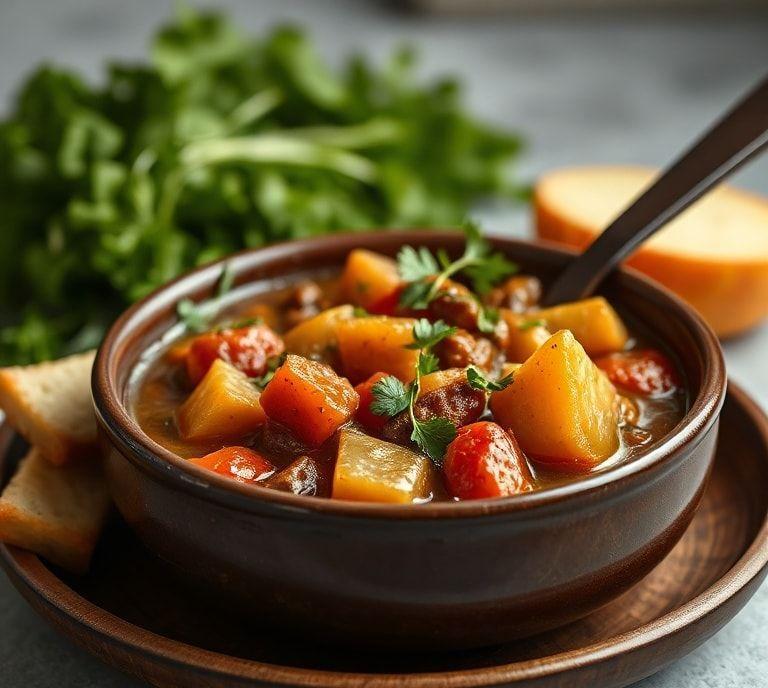
The magic of Irish stew lies in its simplicity. It’s the type of recipe where the quality of ingredients is the star, with minimal fuss involved. While there are many ways to approach a vegetarian version, this recipe is designed to keep the flavors rich and satisfying – no meat required. It’s earthy, savory, and surprisingly filling.
Ingredients Needed
- Olive oil – 2 tablespoons (or butter for extra richness)
- Yellow onion – 1, diced
- Garlic – 3 cloves, minced
- Carrots – 3, peeled and sliced into thick rounds
- Potatoes – 4 medium, peeled and cubed (Yukon Gold or Russet work great)
- Leeks – 2, cleaned and sliced (or 1 large onion, if leeks are hard to find)
- Vegetable broth – 4 cups (homemade or store-bought)
- Fresh thyme – 3-4 sprigs
- Bay leaves – 2
- Parsnips – 2, peeled and chopped into bite-sized pieces
- Salt – to taste
- Freshly ground black pepper – to taste
- Chopped parsley – for garnish
Optional Add-ins For Extra Flavor
- Mushrooms – 1 cup, sliced (for an earthy depth)
- Green peas – 1/2 cup (for a pop of sweetness)
- Frozen pearl onions – 1/2 cup (for extra texture)
Cooking Instructions
- Start by preparing the vegetables: Peel and chop the potatoes, carrots, parsnips, and leeks. Don’t stress about making them perfectly uniform; rustic and chunky pieces will cook down beautifully in the stew.
- Sauté the aromatics: In a large pot, heat the olive oil over medium heat. Add the onion and garlic, and sauté until softened and fragrant – about 5 minutes. This is the base of the stew, where all those rich flavors begin.
- Add the vegetables: Stir in the carrots, potatoes, parsnips, and leeks. Let them cook for about 3-4 minutes, giving them a little time to soften and absorb the flavors of the onion and garlic.
- Pour in the broth: Add the vegetable broth, making sure the vegetables are just covered. If you prefer a thinner stew, you can add a little more broth or water. Toss in the thyme, bay leaves, and a generous pinch of salt and pepper.
- Simmer to perfection: Bring the stew to a boil, then reduce the heat to low. Cover the pot and let the stew simmer for 35-40 minutes, or until the vegetables are tender and the flavors have melded together. If you’re adding peas or mushrooms, toss them in during the last 10 minutes of cooking.
- Finish with fresh parsley: When the stew is done, discard the thyme sprigs and bay leaves. Taste and adjust the seasoning as necessary – you might want to add more salt or a dash of black pepper. Ladle the stew into bowls and sprinkle with fresh parsley.
Ingredient Science Spotlight
Let’s take a deeper dive into a few of the key ingredients here – not just because they make the stew taste great, but because there’s a bit of science behind why they work so well together.
- Potatoes: The humble potato is the backbone of any Irish stew. Why? Well, potatoes are starchy and absorb flavors like a sponge, which means the broth becomes rich and creamy as it simmers. Plus, their texture offers a hearty, filling base for the stew. Fun fact: potatoes are also a great source of potassium, which helps maintain heart and muscle function.
- Leeks: Leeks bring a delicate onion-like flavor that is milder and sweeter, adding a touch of elegance to the dish. They also contain compounds like quercetin, a flavonoid known for its anti-inflammatory and antioxidant properties. This helps balance the heartiness of the root vegetables.
- Thyme and Bay Leaves: These two herbs are the backbone of the stew’s flavor profile. Thyme has earthy, slightly lemony notes, while bay leaves release their aromatic oils over time, enhancing the stew with a subtle depth. Together, they add a warm, savory complexity to the dish. Plus, they’re both packed with antioxidants, so they’re doing your health a favor while they season your stew.
Expert Tips
- Don’t skip the sautéing step: Sure, you could throw everything into the pot and let it go, but taking the time to sauté the onions, garlic, and other aromatics creates a depth of flavor that’s hard to replicate in a one-pot wonder. This step caramelizes the natural sugars in the vegetables, enhancing their sweetness and richness.
- Use quality broth: A good vegetable broth can make or break the flavor of your stew. If you can, go for homemade broth, or pick one that’s low-sodium so you can control the seasoning. A rich, well-seasoned broth will give the stew that depth it needs to feel like comfort food.
- Let it sit: Like many stews and soups, this vegetarian Irish stew tastes even better the next day. If you can, make it in advance and let it rest overnight – the flavors will have even more time to develop.
- Texture matters: The consistency of the stew is key. If you prefer a thicker stew, mash a few of the potatoes and carrots against the side of the pot during the last few minutes of cooking. This will release their starches and thicken the broth naturally.
Recipe Variations
While this version of Irish stew sticks closely to tradition, there’s plenty of room for personalization:
- Swap in root vegetables: If you’re not a fan of parsnips or carrots, try using turnips, sweet potatoes, or even rutabaga. They’ll add their own distinct flavors and textures to the stew.
- Add beans for protein: To make the stew even heartier, toss in a can of white beans or chickpeas about 10 minutes before the stew is done. They’ll add texture and a good amount of plant-based protein.
- Throw in some greens: Kale or spinach can be added in the last few minutes of cooking for an extra burst of nutrients. Just stir them in until they wilt, and you’re good to go!
Final Words
What I love most about this vegetarian Irish stew is how adaptable it is – you can tweak it based on what you have in the fridge or your own personal tastes. And no matter what you add or change, it still retains that comforting, rustic charm that makes Irish stew so beloved.
The beauty of a stew like this is that it’s not just about the food; it’s about the experience. Sitting down with a warm bowl of stew on a chilly day feels like a hug from the inside out. It’s the kind of dish that encourages conversation, storytelling, and connection – just like the best meals should.
FAQs
What Are The Key Ingredients In A Vegetarian Irish Stew?
A vegetarian Irish stew typically includes root vegetables such as potatoes, carrots, and parsnips, along with onions and celery for flavor. Mushrooms are often used to provide a meaty texture. Vegetable broth serves as the base, while herbs like thyme, bay leaves, and parsley enhance the flavor. Optional ingredients can include peas, leeks, and turnips for added depth.
How Can I Make The Stew Rich And Flavorful Without Meat?
To achieve a rich, savory flavor in a vegetarian Irish stew, start by sautéing onions, garlic, and mushrooms to develop a deep umami base. Deglaze with vegetable broth and add herbs such as thyme and bay leaves. Roasting root vegetables before adding them to the stew can intensify their natural sweetness. A splash of soy sauce or miso paste can also boost the savory notes without introducing meat.
Can This Stew Be Prepared In Advance Or Frozen?
Yes, vegetarian Irish stew can be prepared in advance and stores well. It is best kept in an airtight container in the refrigerator for up to 3 days. For longer storage, it can be frozen for up to 3 months. When reheating, thaw it slowly in the refrigerator and gently simmer on the stove to restore its texture and flavor. Adding fresh herbs just before serving can refresh the taste.