It’s funny how a single dish can capture so much of the heart of a culture. Japanese Okonomiyaki is one of those foods that feels like a warm hug, and it’s so much more than just a savory pancake-it’s a dish that invites you to get creative, experiment with flavors, and gather around the table with loved ones. The name "Okonomiyaki" itself means "grilled as you like it," and the beauty of it is in its adaptability. Originally from Hiroshima or Osaka, this pancake-like dish can be packed with a variety of ingredients, ranging from seafood to meat, but today, we’re focusing on a vegetarian version that highlights one of the simplest and most underrated vegetables: cabbage.
I first encountered Okonomiyaki in a little family-owned restaurant in Osaka. It was raining outside, the air thick with the unmistakable smell of fresh, sizzling batter and vegetables, and as soon as the plate hit the table, the aromas enveloped me. I had heard of Okonomiyaki before, but tasting it in Japan was an entirely different experience. The crispiness of the outside, the soft cabbage on the inside, and the tangy sauce that just tied everything together-each bite was a perfect balance of comfort and flavor. It was love at first taste. The thing about Okonomiyaki is that it’s the ultimate canvas-endlessly customizable, so you can make it as simple or as complex as you like.
For this vegetarian version, we’re using tender cabbage as the hero ingredient, complemented by just enough flavor to make each bite something special. Whether you’re a seasoned cook or just looking for a new way to enjoy cabbage, this recipe is going to hit the spot.
Japanese Cabbage Pancake Vegetarian Okonomiyaki Recipe
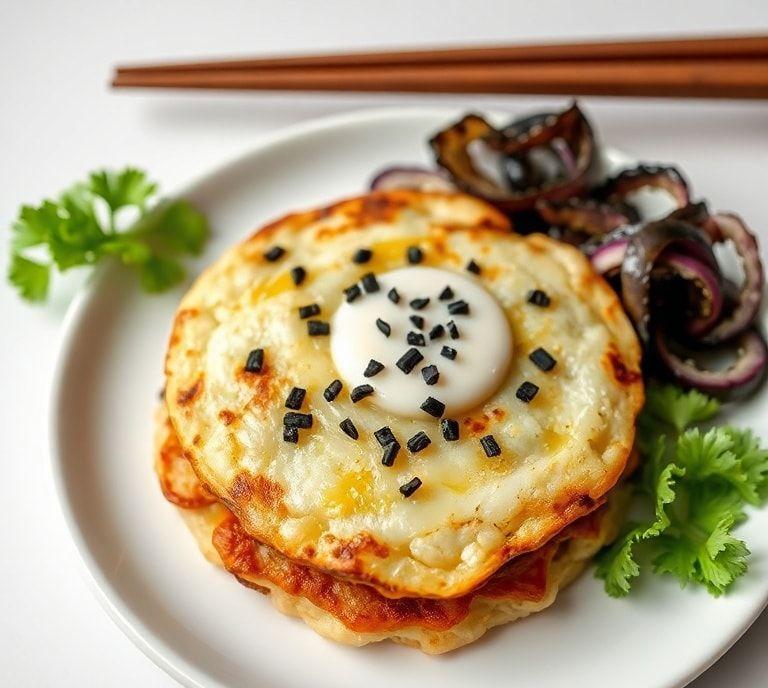
I have to admit, every time I make Okonomiyaki, it’s a little like flipping a coin. It’s never quite the same twice, even when I follow the same basic recipe. That’s the beauty of it-there’s room to experiment, but the core of it always stays the same: crispy on the outside, soft on the inside, with a perfect balance of savory umami. This vegetarian version is light but satisfying, and it’s one of those dishes you can throw together with whatever you’ve got in the fridge, but it still feels special.
Ingredients Needed
You can find these ingredients in most supermarkets, and a lot of them are pantry staples, so you may even have them already!
- 1 small head of cabbage – The heart of this recipe. Cabbage brings a subtle sweetness and crunch to the pancake, and when cooked, it becomes tender and juicy, with just a hint of caramelization.
- 1 cup all-purpose flour – This binds the pancake together and gives it that delightful crispy texture.
- 1/2 cup water or vegetable broth – The liquid helps create the pancake batter and balances the cabbage’s moisture.
- 2 large eggs – Eggs provide structure and richness to the batter. If you’re looking for a vegan version, you can swap these out for a flax or chia egg.
- 1 tablespoon soy sauce – Adds depth of flavor, the saltiness and umami that will carry the pancake’s flavor throughout.
- 1 tablespoon rice vinegar – A little acidity to brighten up the dish, balancing out the sweetness of the cabbage.
- 1/2 teaspoon sugar – Just a touch of sweetness to enhance the cabbage’s natural flavor.
- 1/2 teaspoon salt – Enhances the flavor of all the ingredients, so don’t skip this.
- 1/4 teaspoon ground pepper – A subtle kick to season the batter.
- 1 tablespoon vegetable oil – For cooking the pancake, so it gets that perfect crispy edge.
- Okonomiyaki sauce (or substitute with a mix of soy sauce, ketchup, and Worcestershire sauce) – For drizzling on top, this is what transforms Okonomiyaki from just a pancake to a full-on flavor explosion.
- Katsuobushi (optional) – Dried bonito flakes. You can skip this if you’re keeping the dish vegetarian, but if you enjoy an extra layer of umami, a light sprinkle adds an amazing finishing touch.
- Pickled ginger (optional) – For a refreshing tangy bite that balances out the richness.
Cooking Instructions
- Prepare the cabbage: Start by shredding the cabbage into thin strips. You can use a knife or a mandolin slicer, whichever you prefer. The key is to get the cabbage finely chopped, but not so much that it turns into mush. The cabbage should have enough texture to retain its bite when cooked.
- Make the batter: In a large mixing bowl, whisk together the flour, water (or broth), eggs, soy sauce, rice vinegar, sugar, salt, and pepper until smooth. The batter should be fairly thick but not dry. It needs to coat the cabbage, not drown it.
- Combine: Add the shredded cabbage to the batter and mix until the cabbage is evenly coated. The cabbage will release some moisture, which will help thin out the batter as you mix.
- Cook the pancake: Heat a large nonstick pan or griddle over medium heat and add a tablespoon of vegetable oil. Once hot, pour the batter into the pan and spread it out into a round pancake, about 1/2-inch thick. Cook for about 3-4 minutes on one side, or until the bottom is golden brown and crispy.
- Flip: Carefully flip the pancake using a large spatula. If you’re feeling fancy, you can try flipping it the Japanese way-using two spatulas to slide under the pancake and flip it quickly, but no shame in using a single spatula! Cook for another 3-4 minutes, until both sides are crisp.
- Serve: Remove from the pan and transfer to a plate. Drizzle with Okonomiyaki sauce, and sprinkle with optional toppings like katsuobushi and pickled ginger. Slice into wedges and enjoy!
Ingredient Science Spotlight
Let’s talk about cabbage for a second. You might think of it as just a leafy green, but it’s actually a powerhouse in this dish. The cabbage brings moisture to the batter while adding a satisfying crunch and sweetness when cooked. When cabbage is heated, its sugars caramelize, bringing out a deeper, slightly sweet flavor that balances out the savory notes in the batter and sauce. The water content in the cabbage also plays a role in creating the right consistency for the pancake batter-without it, the pancake might end up dry and dense. So next time you bite into an Okonomiyaki, know that the cabbage is doing some heavy lifting!
Expert Tips
- Don’t overmix the batter: While it’s tempting to get everything perfectly smooth, overmixing the batter can result in a dense, tough pancake. Just mix until everything is combined. The batter should still have some lumps of cabbage in it.
- Use a nonstick pan: A nonstick skillet will ensure the pancake doesn’t stick and makes flipping it much easier. It’s also less likely to burn since Okonomiyaki needs a little more time to cook through than other pancakes.
- Crispier edges: For extra crispy edges, use a little more oil in the pan, and let it cook slowly over medium heat. If the edges are browning too quickly before the middle cooks through, lower the heat slightly.
- Let it rest: If you’re not eating right away, let the Okonomiyaki rest for a minute or two off the heat before serving. This gives the interior a chance to firm up just a bit.
Recipe Variations
While this is a vegetarian take on Okonomiyaki, the dish is infinitely adaptable. Here are a few variations you can try:
- Mushroom Okonomiyaki: Add in some sliced mushrooms like shiitake or button mushrooms to the batter for an earthy, umami kick.
- Zucchini: Grated zucchini can replace or complement the cabbage, adding moisture and a fresh flavor.
- Cheese: For a richer twist, try adding a bit of shredded cheese to the batter. It’ll melt inside and add a gooey, indulgent element to each bite.
- Vegan Okonomiyaki: Swap the eggs for a flax or chia egg (mix 1 tablespoon of ground flax or chia with 3 tablespoons of water), and use a plant-based sauce instead of the traditional Okonomiyaki sauce.
Final Words
Okonomiyaki is the kind of dish you can make your own, and that’s what makes it so special. Whether you’re cooking it for the first time or you’ve made hundreds, the joy of creating a crispy, savory pancake is always there. The cabbage acts as a fantastic base, taking on the flavors around it while still holding its own. You can serve it for a casual lunch, a family dinner, or even at a party. Once you get the hang of it, you’ll find yourself experimenting with different toppings and variations to make it your own.
FAQs
What Ingredients Are Needed For A Vegetarian Okonomiyaki?
For a vegetarian okonomiyaki, you typically need cabbage, all-purpose flour, baking powder, salt, water or vegetable broth, and eggs or an egg substitute for binding. Additional vegetables such as carrots, green onions, and mushrooms can be included. Toppings can include okonomiyaki sauce, Japanese mayonnaise, pickled ginger, nori flakes, and sesame seeds.
How Do You Make The Okonomiyaki Batter For A Vegetarian Version?
To make the batter, finely shred the cabbage and mix it with flour, baking powder, salt, and a liquid such as water or vegetable broth until a thick, pancake-like consistency forms. If you want it fully vegetarian, replace eggs with alternatives like flaxseed meal mixed with water or chickpea flour. Stir in any additional vegetables you prefer before cooking.
What Is The Best Method To Cook A Vegetarian Okonomiyaki?
Heat a non-stick skillet or griddle over medium heat and lightly oil it. Pour the batter into a round shape and cook for about 4-5 minutes on each side, until golden brown and cooked through. Flip carefully using a spatula to keep the pancake intact. Once cooked, top with vegetarian okonomiyaki sauce, Japanese mayonnaise, and other desired garnishes before serving.