If you’ve ever wandered through a local farmers’ market or an Asian grocery store, you’ve likely spotted a vibrant, purplish potato tucked between the usual white and orange varieties. I first encountered Japanese purple sweet potatoes-often referred to as murasaki-when I was living in Kyoto, and it completely changed my perspective on what a sweet potato could be. These potatoes are deep, almost royal purple on the inside, with a texture that’s fluffier and creamier than the regular ones you might be used to.
As I spent more time experimenting with these sweet potatoes, I started thinking about how they could fit into everyday cooking, especially for those who follow vegetarian diets or just want to add more plant-based meals to their repertoire. These Japanese purple sweet potatoes are a nutritional powerhouse, packed with fiber, antioxidants, and vitamins, and they offer a slightly sweet, earthy flavor that works in both savory and sweet dishes.
This recipe, which is a simple yet flavorful vegetarian creation using these purple gems, has quickly become one of my go-to meals. It’s versatile, colorful, and comforting-perfect for everything from a quick weeknight dinner to a more elaborate weekend gathering.
Japanese Purple Sweet Potato Vegetarian Recipe
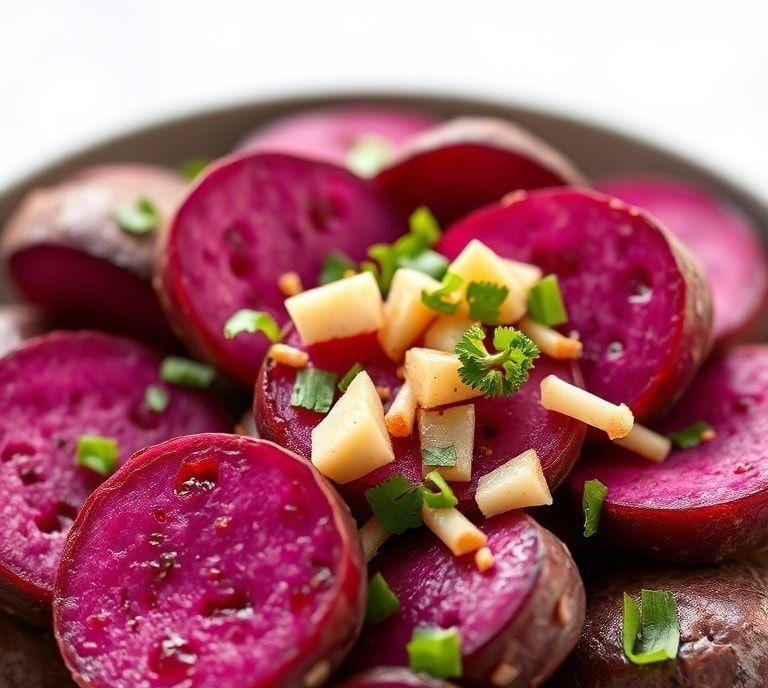
Let’s jump straight into the recipe. The vibrant purple sweet potatoes are the star here, but we’ll round out the dish with a mix of other vegetables and seasonings that complement their natural sweetness. The final dish is both hearty and balanced, with textures that range from creamy to crunchy.
Ingredients Needed
-
2 Large Japanese Purple Sweet Potatoes
These are the heart and soul of the dish, with their smooth, creamy texture and naturally sweet flavor.
-
1 Cup Baby Spinach
Adding spinach provides a pop of green and balances the sweetness of the potatoes. It also contributes some extra nutrients like iron and vitamins A and C.
-
1/2 Cup Chickpeas (canned Or Cooked)
Chickpeas give this dish some protein and texture. They’re a great vegetarian option that adds heartiness without overpowering the flavor.
-
1 Medium Onion
The onion is sautéed until soft and golden, adding a sweet, savory base to the dish.
-
1 Garlic Clove (minced)
Fresh garlic will add a savory depth and a bit of a bite, complementing the sweetness of the potatoes.
-
1 Tbsp Olive Oil
For sautéing the onions, garlic, and spinach, olive oil works well to carry the flavors.
-
1 Tsp Ground Cumin
Cumin adds an earthy warmth that pairs beautifully with the sweetness of the potatoes. If you don’t have cumin, coriander works as a great substitute.
-
1/2 Tsp Turmeric
This bright yellow spice adds not just color but also a subtle depth and anti-inflammatory benefits.
-
Salt And Pepper
To taste. Don’t be shy with the salt-those sweet potatoes really shine when they’re seasoned properly.
-
1 Tbsp Soy Sauce Or Tamari (for A Gluten-free Option)
A dash of soy sauce gives a savory, umami-rich contrast to the dish.
-
A Squeeze Of Fresh Lemon Juice
A touch of acidity to bring everything together at the end.
Cooking Instructions
-
Prep The Potatoes
Start by washing and peeling the Japanese purple sweet potatoes. Cut them into bite-sized cubes, about 1-inch pieces, so they cook evenly. I recommend steaming them, as it helps preserve their nutrients and results in a silky texture. Steam the sweet potatoes for about 10-15 minutes or until they’re tender and can be easily pierced with a fork.
-
Sauté The Onions And Garlic
While the potatoes steam, heat the olive oil in a large pan over medium heat. Add the chopped onions and cook, stirring occasionally, until they become soft and golden-about 5 minutes. Add the minced garlic and cook for another 1-2 minutes, until fragrant.
-
Cook The Spinach And Chickpeas
Add the spinach to the pan and sauté until wilted, about 2-3 minutes. If you’re using canned chickpeas, drain and rinse them, then add them to the pan. If you’re using cooked chickpeas, add them directly. Toss everything together and cook for another 5 minutes, allowing the chickpeas to warm through.
-
Combine Everything
Once the sweet potatoes are done steaming, gently add them to the pan with the sautéed vegetables and chickpeas. Stir everything together, ensuring the flavors meld. Season with cumin, turmeric, salt, and pepper, and drizzle in the soy sauce. Let everything cook together for an additional 3-5 minutes, allowing the potatoes to absorb the flavors.
-
Finish With Lemon
Before serving, squeeze some fresh lemon juice over the dish to brighten the flavors and balance the sweetness of the potatoes.
-
Serve And Enjoy
Plate your dish, and if you like, sprinkle some fresh herbs like parsley or cilantro on top for added freshness. This dish works beautifully as a main course, but it can also be served as a side dish alongside grilled vegetables or tofu.
Ingredient Science Spotlight
One of the things I love most about cooking with Japanese purple sweet potatoes is the unique combination of nutrients they offer. These potatoes are rich in anthocyanins, the same antioxidants found in blueberries, which are known for their anti-inflammatory and immune-boosting properties. Not only do these compounds contribute to the potato’s striking color, but they also offer impressive health benefits.
The purple sweet potato is also higher in fiber compared to its orange cousin, which can aid in digestion and help you feel fuller longer. Plus, they’re loaded with potassium, a mineral essential for heart health and muscle function. In short, these potatoes are a superfood that packs a punch, providing nourishment while making your meal visually stunning.
Expert Tips
- Texture Tip: If you prefer a chunkier texture in your dish, you can mash the sweet potatoes once they’re steamed. This will create a comforting, almost risotto-like texture when mixed with the sautéed vegetables.
- Flavor Tip: To elevate the dish even more, sprinkle a little feta cheese on top just before serving, or toss in some toasted pine nuts for an added crunch.
- Time-Saving Tip: If you’re in a rush, use pre-cooked or canned sweet potatoes (not the sugary kind), and you can skip the steaming step. This saves you a good 15-20 minutes!
- Flavor Flexibility: Feel free to adjust the spices to your taste. Add more cumin for a deeper, spicier flavor, or throw in a pinch of chili flakes for a little heat. The beauty of this recipe is that it’s incredibly adaptable.
Recipe Variations
This dish can be easily customized depending on your preferences or what you have in the pantry:
- Add Protein: For a more protein-packed meal, toss in some sautéed tempeh or a scoop of quinoa. These options blend well with the flavors of the sweet potatoes while keeping the meal vegetarian or vegan.
- Different Veggies: Switch up the spinach for kale or arugula, or add roasted bell peppers or mushrooms for added depth of flavor.
- Curry Version: Add a tablespoon of red curry paste along with the cumin and turmeric to create a spiced-up version. Coconut milk would also work wonderfully here, turning the dish into a creamy, comforting curry.
Final Words
Japanese purple sweet potatoes are a game-changer, not just for their beautiful color but also for the versatility they bring to a meal. They work just as well in sweet dishes like pies and cakes as they do in savory applications, as shown in this recipe. Whether you’re looking to add more vegetables to your diet or are simply searching for a new way to enjoy sweet potatoes, this dish is a fantastic option.
FAQs
What Are Some Popular Ways To Prepare Japanese Purple Sweet Potatoes In Vegetarian Dishes?
Japanese purple sweet potatoes, known for their naturally sweet flavor and vibrant color, are versatile in vegetarian cooking. They can be roasted, mashed, or steamed as a base for soups, casseroles, or salads. They are also often used in Japanese sweets like ’daigaku imo’ (candied sweet potatoes) or incorporated into tempura and stir-fries. A popular method is to roast them with a drizzle of olive oil and seasoning, or use them as a filling for vegetarian curries or stews.
Can Japanese Purple Sweet Potatoes Be Substituted For Regular Sweet Potatoes In Vegetarian Recipes?
Yes, Japanese purple sweet potatoes can typically replace regular sweet potatoes in vegetarian recipes. They have a denser texture and a slightly drier consistency, but they provide a similar sweetness and nutritional profile. However, due to their unique purple color, they can add an aesthetically vibrant touch to your dish. When substituting, it’s important to adjust cooking times slightly, as Japanese purple sweet potatoes may take a bit longer to cook than regular varieties.
What Are The Health Benefits Of Using Japanese Purple Sweet Potatoes In Vegetarian Meals?
Japanese purple sweet potatoes are not only rich in antioxidants, particularly anthocyanins (the compound responsible for their purple color), but they are also high in dietary fiber, vitamins, and minerals like vitamin C and potassium. These nutrients help support the immune system, improve digestive health, and reduce inflammation. Incorporating them into vegetarian meals boosts the nutritional value of the dish while adding natural sweetness without added sugars.