I have to say, there’s something magical about the way certain dishes have the ability to transport you to a different place, a different moment in time. For me, one of those dishes is Japchae, a beloved Korean stir-fried noodle dish that holds so many memories. I remember the first time I tried it: a friend invited me to her family’s house for dinner, and I was a little nervous about what to expect-especially because I wasn’t very familiar with Korean cuisine. But then, I took a bite of Japchae, and everything changed. The noodles were so perfectly chewy, the vegetables so crisp, and the balance of savory and sweet flavors had me hooked instantly.
It wasn’t long before I found myself in the kitchen, determined to recreate that feeling. Over time, I’ve made this dish so many different ways, always experimenting with ingredients based on what I had available or what my tastebuds were craving that day. And today, I’m sharing with you a version of Japchae that’s vegetarian, yet still as rich and delicious as the traditional one. Whether you’re a seasoned cook or a beginner, this recipe is straightforward, adaptable, and full of vibrant flavors. I’ve included a few extra tips and variations too, because why not make it a little more fun?
Japchae Vegetarian Recipe
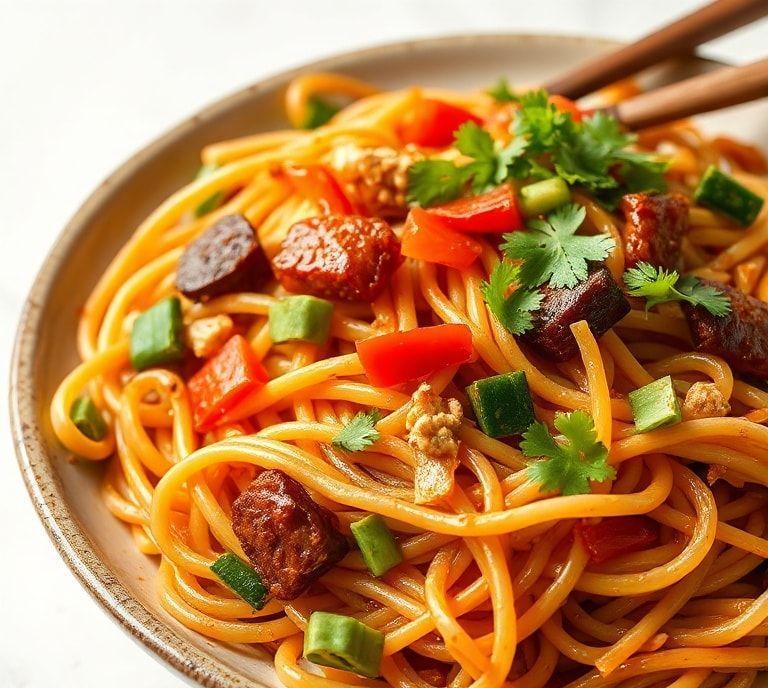
Japchae is all about those chewy glass noodles-called dangmyeon-stir-fried with an array of vegetables and sometimes meat, but in this vegetarian version, we’re skipping the meat and focusing on the vegetables’ natural flavors. Trust me, you won’t even miss it.
If you’ve ever been hesitant about trying to cook something new, this is one of those recipes that feels accessible but also a bit impressive when you put it on the table. You know that moment when you bring out a dish, and everyone’s eyes light up? Japchae has that effect, especially when it’s served with all those colors popping on the plate. But even beyond the visual appeal, it’s the texture contrast between the noodles, vegetables, and the savory-sweet sauce that gets everyone talking.
Ingredients Needed
You don’t need a laundry list of ingredients to make Japchae, but you do need to gather a few key components that give it that signature flavor. Here’s what you’ll need for a basic vegetarian Japchae recipe:
- Dangmyeon (glass noodles) – These are the star of the dish. They’re made from sweet potato starch, so they have this amazing, slightly chewy texture that can’t be replicated with any other kind of noodle.
-
Vegetables
- Carrots – I like to julienne them for that satisfying crunch.
- Spinach – This adds a subtle earthy flavor and a pop of green.
- Shiitake mushrooms – Their deep, umami-rich flavor is key to adding complexity to the dish.
- Onions – Sweet onions, thinly sliced, bring a touch of sweetness to balance out the savoriness.
- Bell peppers – These add sweetness and a beautiful color contrast.
- Garlic – A must for that aromatic base.
- Soy sauce – The umami backbone of the sauce.
- Sesame oil – Adds that nutty richness that elevates the whole dish.
- Sugar – A little sweetness helps balance the savory elements and rounds out the flavor.
- Sesame seeds – For garnish (optional, but they add a nice crunch).
- Green onions – Optional, but they give a fresh burst of flavor.
Cooking Instructions
- Prepare the noodles: Start by boiling the dangmyeon noodles. They cook pretty quickly, so make sure to keep an eye on them! They only need to cook for about 5-7 minutes in boiling water. Once they’re done, drain and rinse them in cold water to stop the cooking process. I always give them a gentle toss in a little sesame oil right after draining to keep them from sticking together.
- Sauté the vegetables: While the noodles are cooking, heat some oil in a large skillet or wok over medium heat. Add your garlic and onions and sauté for a minute or so, just enough for them to release their fragrance. Then, toss in the carrots, shiitake mushrooms, and bell peppers. Cook for another 3-4 minutes, until the veggies start to soften but still have a bit of bite to them. Add in the spinach last, stirring it in until it wilts down-this happens pretty quickly, so be ready to move fast.
- Make the sauce: In a small bowl, mix together soy sauce, sesame oil, sugar, and a pinch of salt. The sugar will help balance the soy sauce’s saltiness and give the dish that characteristic sweet-salty flavor profile.
- Combine everything: Toss the cooked noodles into the pan with the vegetables, and pour the sauce over the top. Stir everything together, making sure the noodles get coated with the sauce and the vegetables are evenly distributed. You can add a bit more sesame oil or soy sauce if needed-just keep tasting and adjusting to your liking. This is the fun part!
- Garnish: Serve your Japchae hot, sprinkled with sesame seeds and green onions for that final touch.
Ingredient Science Spotlight
It’s easy to overlook how each ingredient in Japchae plays its part in the dish, but if you take a moment to think about the science behind the flavors and textures, it gets even more interesting.
- Dangmyeon (sweet potato noodles): The texture of these noodles is key. Unlike wheat-based noodles, dangmyeon is made from sweet potato starch, which gives it that slightly elastic, chewy quality. It also absorbs the sauce beautifully, creating a satisfying mouthfeel. The noodles themselves are pretty neutral in flavor, which is why they shine when paired with the savory sauce.
- Sesame oil: The nutty flavor of sesame oil is derived from the toasting of sesame seeds, and it’s a rich source of unsaturated fats. The oil’s flavor profile can be surprisingly complex: a slight bitterness, earthiness, and toastiness that adds an aromatic layer to the dish. Plus, it has antioxidants that contribute to its longevity as a pantry staple.
- Shiitake mushrooms: These mushrooms contain compounds like lentinans, which not only give them their deep umami flavor but also provide a host of health benefits. Shiitakes are often used in East Asian cooking for their rich taste, which adds that savory depth to the dish without the need for meat.
Expert Tips
- Don’t overcook the noodles: Glass noodles are delicate, and you don’t want them turning into mush. Keep an eye on the cooking time, and if anything, undercook them a little bit because they’ll continue to cook once you toss them with the sauce.
- Make sure to rinse the noodles: Rinsing them in cold water after cooking helps to remove excess starch, so they don’t clump together. It also cools them down so you can work with them right away.
- Customize your veggies: Feel free to play with different veggies based on what’s in season or what you have on hand. Zucchini, baby corn, or even a little bit of kale can add new dimensions to the dish.
- Taste as you go: The balance of sweet, salty, and umami is essential to Japchae. Don’t be afraid to adjust the soy sauce or sugar levels as you stir everything together. It’s all about getting that perfect balance.
Recipe Variations
While this recipe is already packed with flavor, Japchae is a very flexible dish. Here are a few variations to keep things interesting:
- Add tofu: For a boost of protein, try adding some crispy tofu cubes. Pan-fry the tofu first to get a golden, crunchy texture before tossing it in with the vegetables and noodles.
- Spicy Japchae: If you like a bit of heat, you can stir in some gochujang (Korean chili paste) or a few dashes of chili oil when mixing the noodles with the sauce. It’ll give the dish a nice spicy kick.
- Try different mushrooms: While shiitakes are my favorite for their rich flavor, you can experiment with other mushrooms like enoki, oyster, or cremini for a different texture or taste.
Final Words
Japchae is one of those dishes that feels both simple and luxurious at the same time. The combination of chewy noodles, vibrant vegetables, and savory sauce makes it a perfect main or side dish for any occasion. And the best part is that you can easily make it your own by swapping out ingredients, adjusting the flavors, or even playing with the presentation.
FAQs
What Is Japchae And How Is It Made In A Vegetarian Version?
Japchae is a traditional Korean dish made from stir-fried glass noodles (sweet potato starch noodles) with various vegetables and sometimes meat or seafood. In a vegetarian version, the meat is omitted and replaced with a variety of vegetables such as spinach, mushrooms, carrots, bell peppers, and onions. The noodles are stir-fried with sesame oil, soy sauce, garlic, and a little sugar to create a flavorful, savory-sweet dish that can be enjoyed as a main course or side dish.
Can I Use Any Substitute For The Glass Noodles In A Vegetarian Japchae Recipe?
While traditional japchae uses glass noodles made from sweet potato starch, you can substitute them with other types of noodles such as rice noodles or even soba noodles if preferred. However, keep in mind that the texture and flavor may vary slightly from the original dish. Glass noodles are typically chewy and absorb the flavors of the sauce, so selecting a substitute with a similar texture will give the dish the best results.
How Can I Make Japchae Vegetarian Recipe Gluten-free?
To make a gluten-free version of japchae, ensure that you use tamari or gluten-free soy sauce as a substitute for regular soy sauce. The glass noodles used in japchae are naturally gluten-free, so no changes are needed there. Additionally, check all seasonings and sauces used to make sure they are gluten-free, as some may contain traces of wheat or other gluten-containing ingredients.