Jollof rice. It’s a dish that feels like a warm embrace, no matter where you’re from. If you’ve ever attended a party or family gathering in West Africa, chances are you’ve encountered this vibrant, flavorful dish sitting proudly at the center of the table. It’s more than just a meal; it’s a symbol of celebration, connection, and tradition. The spicy, aromatic rice cooked in a rich, tomato-based sauce is a cornerstone of many cultures, and each region has its own twist on it.
But did you know that Jollof rice can be made vegetarian, too? In fact, vegetarian Jollof is just as satisfying as its meat-filled counterpart, packing all the layers of flavor, a balance of sweetness and spice, and the richness that makes it a favorite among many.
Today, let’s dive into a vegetarian Jollof rice recipe that will not only satisfy your taste buds but also impress your guests. You don’t need a complex list of ingredients, and the cooking process is straightforward, but the result is a beautiful, vibrant dish that brings comfort in every bite.
Jollof Rice Vegetarian Recipe
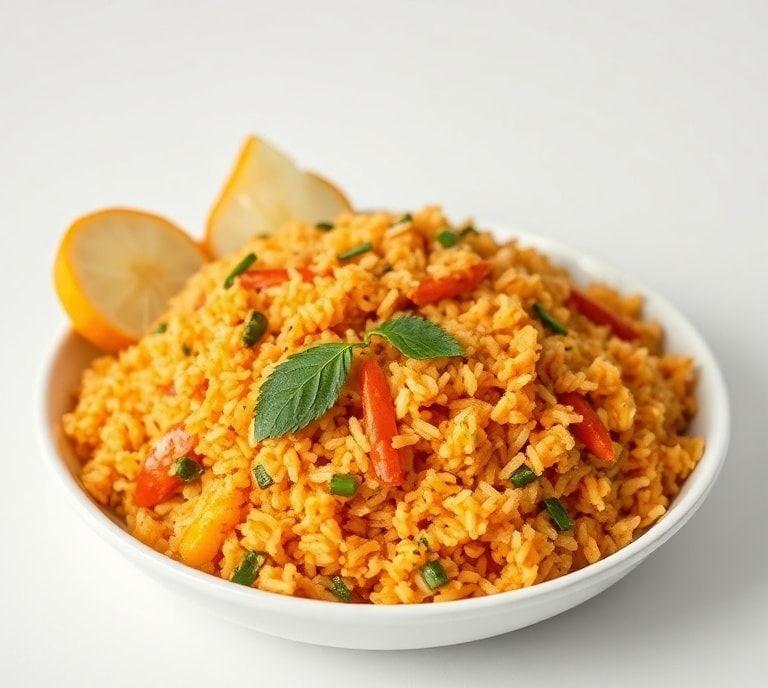
Let me set the scene for you. Imagine a lazy Saturday afternoon, the aroma of tomatoes, onions, and bell peppers filling the kitchen. You’re standing in front of a simmering pot of Jollof rice, stirring gently, your mouth watering as you anticipate that first bite. The rice is fluffy, the sauce tangy and bold, and the entire house smells like home. This is exactly the experience you’ll get when you follow this recipe.
The beauty of Jollof rice lies in the simplicity of the ingredients. A handful of pantry staples come together to create a dish that can stand on its own, or pair beautifully with any number of sides.
Ingredients Needed
Here’s what you’ll need to make a fantastic vegetarian Jollof rice:
- 2 cups long-grain parboiled rice (or basmati, if you prefer a lighter texture)
- 1 can of tomatoes (or 5-6 fresh tomatoes, blended)
- 1 large onion (finely chopped)
- 1 red bell pepper (blended with the tomatoes)
- 2 tablespoons vegetable oil (or palm oil for a richer flavor)
- 2 garlic cloves (minced)
- 1 teaspoon ginger (freshly grated or powdered)
- 1 tablespoon tomato paste
- 1 teaspoon thyme (dried or fresh)
- 1 teaspoon curry powder
- 1 teaspoon paprika (for color and a mild smokiness)
- 1-2 scotch bonnet peppers (or any chili of your choice for heat)
- 2 cups vegetable broth (or water, but broth adds depth)
- 1 teaspoon white pepper (for a subtle heat)
- Salt to taste
- 1 cup frozen peas (or any other vegetable you prefer-carrots, green beans, or corn are all great choices)
- 1 tablespoon of soy sauce (optional, for depth)
Note: You can customize this list according to what you have at home. For instance, if you like a more intense flavor profile, add more scotch bonnet pepper or throw in a dash of smoked paprika.
Cooking Instructions
This recipe doesn’t require any complicated steps. But trust me, it’s all about patience and layering the flavors correctly.
- Prep the Rice: Start by rinsing your rice under cold water until the water runs clear. This helps remove excess starch and keeps the rice from becoming too sticky when cooked. Let it sit to drain while you get the sauce going.
- Make the Base Sauce: Heat the vegetable oil in a large pot over medium heat. Add the chopped onions and sauté until they soften, turning golden brown and fragrant (about 5-7 minutes). This process really draws out the natural sweetness of the onions, which will balance the acidity of the tomatoes later on.
- Blend the Tomatoes & Peppers: If you’re using fresh tomatoes, blend them with the red bell pepper, garlic, ginger, and scotch bonnet pepper until smooth. Pour this mixture into the pot with the onions, stirring to combine. Let it cook for about 10-15 minutes, stirring occasionally, until it thickens slightly and the oil begins to separate from the tomato paste. That’s the signal that the flavors are really developing.
- Spice it Up: Add the thyme, curry powder, paprika, white pepper, and a pinch of salt to the sauce. Stir everything together and cook for another 5 minutes so that the spices bloom in the oil.
- Add the Rice: Pour the drained rice into the pot, and stir to coat the rice with the rich, spicy sauce. It’s at this point that the rice will start soaking up all the incredible flavors you’ve just built.
- Simmer the Rice: Pour in the vegetable broth (or water), making sure the liquid covers the rice. Stir to combine, then reduce the heat to low. Cover the pot with a tight-fitting lid, and let it simmer for about 25-30 minutes. Don’t lift the lid too much-the steam does most of the work.
- Add the Vegetables: Once the rice is almost done, stir in your peas (or any other vegetables) and let it cook for another 5 minutes. You want the peas to retain their vibrant color and texture, so don’t overcook them.
- Fluff and Serve: Once the rice is tender and the liquid is fully absorbed, give the rice a gentle fluff with a fork to separate the grains. Now, your vegetarian Jollof rice is ready to serve!
Ingredient Science Spotlight
Ever wonder why Jollof rice is so irresistibly delicious? It’s not just the tomatoes or the spices-there’s science behind it.
- Rice Starch: Rice is primarily composed of starch, and when cooked properly, it absorbs flavors from the sauce. Parboiled rice, in particular, is partially precooked before packaging, so it holds up well to extended cooking without becoming mushy.
- Tomatoes and Acidity: The acidity in tomatoes (due to their natural citric acid content) is what gives the dish that signature tangy flavor. When combined with onions, which provide sweetness, the balance of flavors becomes a harmonious contrast. The tomato paste and fresh tomatoes are key to getting that rich, velvety sauce.
- Spices and Their Aromatics: Spices like thyme, curry powder, and paprika are more than just flavoring agents. They contain essential oils that vaporize when heated, infusing the entire dish with their aromatic compounds. The pepper heat and garlic also work in tandem to create depth.
- Broth vs. Water: Using broth instead of water adds a whole new level of flavor. Vegetable broth, in particular, has natural umami and mineral content that enriches the dish, making it more savory.
Expert Tips
- Rice Cooking Tip: For the fluffiest rice, make sure not to stir it too much while it’s cooking. Stirring too often breaks the grains and can make it mushy.
- For Extra Depth: You can add a teaspoon of smoked paprika or a dash of liquid smoke to introduce a hint of smokiness to the dish.
- Make Ahead: Jollof rice actually tastes better the next day as the flavors continue to meld. So, if you’re cooking for a crowd, consider making it a day in advance!
- Perfecting the Heat: If you love a spicy kick, feel free to add more scotch bonnet pepper or even a dash of cayenne pepper. But be cautious-these peppers pack a serious punch.
Recipe Variations
Jollof rice is so versatile-you can play around with it to match your tastes:
- Vegetable Variety: While peas are a common addition, you can swap them out for carrots, green beans, or even mushrooms for an earthy flavor.
- Add Tofu or Tempeh: For a protein boost, try adding sautéed tofu or tempeh. These plant-based proteins will absorb the spices and complement the rice perfectly.
- Use Coconut Milk: To bring in a tropical twist, you can substitute a portion of the broth with coconut milk. This will give the rice a creamy texture and a subtle sweetness.
- Add Beans: Some people love to incorporate beans (black-eyed peas, kidney beans) for an extra layer of richness. This is especially common in certain regions of West Africa.
Final Words
The beauty of vegetarian Jollof rice is that it offers all the comforting, celebratory aspects of the traditional dish, without needing meat. It’s a true example of how a few simple ingredients, cooked in the right way, can transform into something extraordinary. Whether you’re a seasoned chef or a beginner in the kitchen, this dish is approachable and deeply satisfying.
FAQs
What Ingredients Are Typically Used In A Vegetarian Jollof Rice Recipe?
A vegetarian jollof rice recipe typically includes long-grain parboiled rice, tomatoes, tomato paste, red bell peppers, onions, garlic, ginger, vegetable broth, and a variety of spices such as thyme, curry powder, bay leaves, and paprika. Optional vegetables like carrots, peas, green beans, and mushrooms can be added for extra flavor and nutrition. Some recipes also use plant-based oils such as coconut or vegetable oil instead of butter or animal fats.
Can I Make Jollof Rice Vegetarian Without Losing The Traditional Flavor?
Yes, you can maintain the rich, smoky flavor of traditional jollof rice by using a combination of roasted or charred vegetables, smoked paprika, and carefully balanced spices. Tomato paste and blended roasted red peppers create a deep, savory base, while vegetable broth enhances umami without the need for meat. For added depth, some cooks use soy sauce or mushroom powder as a flavor enhancer.
What Are Some Tips For Cooking Vegetarian Jollof Rice So It Doesn’t Turn Out Mushy?
To avoid mushy jollof rice, rinse the rice thoroughly before cooking to remove excess starch. Use a measured amount of liquid-just enough to cook the rice fully without over-saturating it. Cook on low to medium heat and avoid stirring too often, as this can break the grains. Allow the rice to steam with the lid on after cooking to achieve a fluffy texture. Toasting the rice lightly in oil before adding the sauce can also help maintain separate grains.