If you’ve ever wandered through the vibrant streets of northern Thailand, the tantalizing scent of Khao Soi would have likely beckoned you down hidden alleys and bustling food stalls. It’s that unmistakable aroma of rich, curry-like broth mingling with fried noodles, a dish that promises comfort and warmth with every spoonful. The beauty of Khao Soi lies in its complexity: a sweet-spicy, savory flavor profile that comes together perfectly in one steaming bowl.
But, what if I told you that this iconic dish can be made vegetarian without sacrificing any of its soul-satisfying essence? I first fell in love with Khao Soi during a trip to Chiang Mai, where I stumbled upon a small, tucked-away restaurant with just a handful of tables. They offered a vegetarian version of the dish, which I assumed would be a pale imitation. However, what arrived was nothing short of extraordinary-rich, deep flavors, satisfying textures, and a comforting warmth that lingered long after the last bite. That experience ignited a passion to recreate this version at home, and after some trial and error, I’ve crafted a vegetarian Khao Soi that packs all the magic of the original but without the meat. Let me take you through this delicious journey.
Khao Soi Vegetarian Recipe
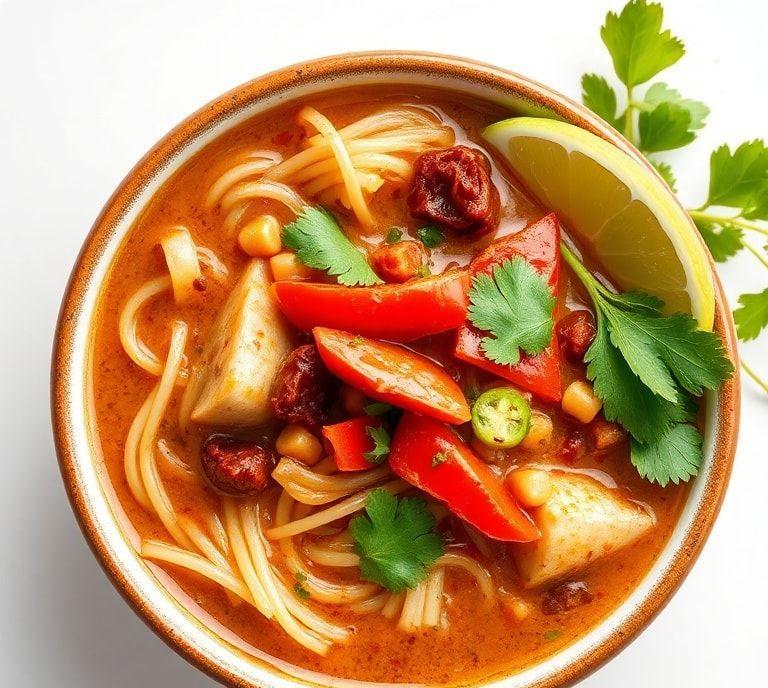
This vegetarian Khao Soi recipe is a symphony of flavors and textures, showcasing the power of plant-based ingredients to create a dish that’s rich, complex, and utterly satisfying. With a creamy coconut milk base, a delicate balance of spices, and the crispy fried noodles on top, you won’t miss the traditional meat-based version one bit. Let’s break down what makes this recipe work.
Ingredients Needed
For the curry broth, you’ll need:
- Coconut Milk (1 can): The heart of the broth, creamy and luxurious, providing the perfect canvas for all the spices.
- Vegetable Broth (2 cups): A light base that will help bring the dish together without overpowering the other flavors.
- Yellow Curry Paste (2 tablespoons): This is your flavor punch, packed with turmeric, ginger, and garlic, giving the dish its signature color and warmth.
- Garlic (4 cloves, minced): A must-have for any good curry, infusing the broth with a savory depth.
- Shallots (2, finely chopped): Adds sweetness and a gentle, aromatic bite.
- Soy Sauce (2 tablespoons): For depth and a hint of umami.
- Brown Sugar (1 tablespoon): A little sweetness balances out the heat and acidity.
- Lime (1, juiced): The freshness of lime brightens everything up.
- Fresh Herbs: Thai basil and cilantro for garnish, bringing a fresh, fragrant touch to the dish.
For the crispy noodles on top, you’ll need:
- Egg Noodles (about 150 grams): While traditionally made with wheat noodles, you can use any type of noodles you prefer (rice noodles work too).
- Oil (for frying): Choose a neutral oil like vegetable or sunflower oil.
For the toppings:
- Pickled Mustard Greens (a small handful, optional): A tangy contrast to the rich broth.
- Red Onion (sliced thin): For a sharp, crunchy bite.
- Chili Oil (optional): If you like heat, a drizzle of chili oil will add the perfect kick.
Cooking Instructions
-
Prepare The Broth
In a large pot, heat a splash of oil over medium heat. Add the minced garlic and chopped shallots, sautéing until they become fragrant and golden brown. Then, stir in the yellow curry paste, allowing it to cook for about 1-2 minutes, releasing its oils and intensifying the flavors.
-
Build The Flavor Base
Once the curry paste has bloomed, pour in the coconut milk and vegetable broth. Stir to combine and let it simmer on low heat for about 10-15 minutes. This allows the spices to infuse the liquid and creates a rich, creamy broth. Add the soy sauce and brown sugar, adjusting the seasoning to taste.
-
Cook The Noodles
While the broth simmers, bring a pot of salted water to a boil. Cook the egg noodles according to the package instructions until just tender. Drain and set aside.
-
Fry The Noodles
In a small pan, heat a bit of oil over medium-high heat. Fry the noodles until they are crispy and golden brown. This step adds the iconic texture of Khao Soi, and trust me, it’s worth it.
-
Assemble The Dish
To serve, divide the cooked noodles between bowls. Pour the hot curry broth over the noodles, ensuring they are submerged. Top with the crispy fried noodles, and garnish with fresh Thai basil, cilantro, pickled mustard greens, red onion, and a squeeze of lime. For a bit of heat, drizzle with chili oil.
Ingredient Science Spotlight
The magic of Khao Soi lies not just in its flavors but in the science of its ingredients. Take the coconut milk, for example. It’s a brilliant base because of its fat content, which helps to carry the complex spices without letting them become overwhelming. Coconut fat is also uniquely able to coat the taste buds, which helps balance the heat and acidity from the lime and curry paste. Then there’s the yellow curry paste-a combination of turmeric, ginger, garlic, and dried chilies. The heat from the chilies is countered by the turmeric’s earthy bitterness, and the ginger adds a fresh, spicy kick that pairs perfectly with the creaminess of the coconut milk.
In terms of texture, fried noodles play a crucial role in creating contrast. Their crunch adds an unexpected layer of satisfaction, making each bite a little adventure. The crispy noodles hold their shape in the broth, creating a delightful contrast against the soft, silky noodles at the bottom of the bowl.
Expert Tips
- Adjust the spice level: The beauty of this dish lies in its balance of flavors, so feel free to adjust the spice level to your liking. If you prefer a milder version, cut back on the curry paste and chili oil. If you like it fiery, go wild with the chili oil and perhaps some extra fresh chilies on top.
- Make it a meal prep wonder: The broth can easily be made in advance and stored for up to 3-4 days. Just reheat when ready to serve, and prepare the noodles fresh for each bowl.
- Fresh herbs are key: The Thai basil and cilantro aren’t just for looks; they add a burst of freshness that cuts through the richness of the broth. Don’t skip them!
- Vegan? No problem! Simply substitute soy sauce for tamari (or another gluten-free soy alternative), and you’re good to go.
Recipe Variations
- Add Vegetables: Feel free to load up the dish with any seasonal vegetables you like. Carrots, bell peppers, or even mushrooms work beautifully in this curry. Just sauté them with the garlic and shallots for added flavor.
- Tofu or Tempeh: If you’re craving a bit more protein, crispy tofu or tempeh can be a great addition. Fry it up until golden and add it as a topping to the dish.
- Spicy Lemongrass Twist: For a more aromatic, herbal flavor, you could add a stalk of smashed lemongrass to the broth while it simmers. It’ll infuse a bright, citrusy note that complements the coconut milk beautifully.
Final Words
Whether you’re new to Thai food or a long-time fan of Khao Soi, this vegetarian version is sure to surprise you. It’s hearty, satisfying, and packed with vibrant flavors that will transport you to the bustling streets of Chiang Mai. The crispy noodles, rich coconut broth, and fresh garnishes make this dish a celebration of texture, flavor, and balance. I promise you, it’s a bowl of comfort in every sense.
FAQs
What Is A Vegetarian Version Of Khao Soi?
A vegetarian version of Khao Soi is a Thai noodle soup that retains the rich, creamy, and slightly spicy flavors of traditional Khao Soi but replaces meat with plant-based ingredients. Common substitutions include tofu, tempeh, or assorted vegetables, while the coconut milk-based curry broth and egg noodles (or vegan alternatives) maintain the dish’s characteristic taste and texture.
How Can I Make The Curry Broth Flavorful Without Using Meat?
To achieve a rich and flavorful curry broth for vegetarian Khao Soi, sauté aromatics like garlic, shallots, and ginger, then add a well-balanced Thai curry paste. Use coconut milk for creaminess and add vegetable stock to deepen the flavor. Incorporating soy sauce or tamari, lime juice, and a touch of sugar helps balance saltiness, acidity, and sweetness, while mushrooms or roasted vegetables can add umami similar to meat.
What Are The Best Toppings For Vegetarian Khao Soi?
Traditional Khao Soi toppings such as pickled mustard greens, crispy fried noodles, fresh cilantro, sliced red onions, and lime wedges can all be used in the vegetarian version. Additional vegetarian-friendly toppings include sautéed or roasted tofu, steamed vegetables like bok choy or carrots, and roasted peanuts or fried shallots for extra texture and flavor.