One of my favorite things in life is the transformative magic that food has. It’s more than just a meal-it’s an experience. There are certain dishes that go beyond just satisfying hunger; they connect us to memories, cultures, and, if you’re lucky, to people. Khow Suey, a Burmese noodle soup, does all of that. It’s a dish that’s deeply rooted in history, yet it holds the ability to adapt and evolve, making it as comforting today as it was for the people who first created it.
I remember the first time I had Khow Suey at a small Burmese restaurant tucked away on a quiet street. The richness of the curry broth, the delicate noodles, and the endless array of toppings completely captivated me. But as someone who loves experimenting in the kitchen, I thought, ’Why not try making a vegetarian version of this?!’ And thus began my journey of adapting and reinterpreting this traditional dish. What I came up with is a vegetarian Khow Suey that delivers all the flavors of the original, without losing any of the comfort and warmth that this dish brings. Let’s dive in!
Khow Suey Vegetarian Recipe
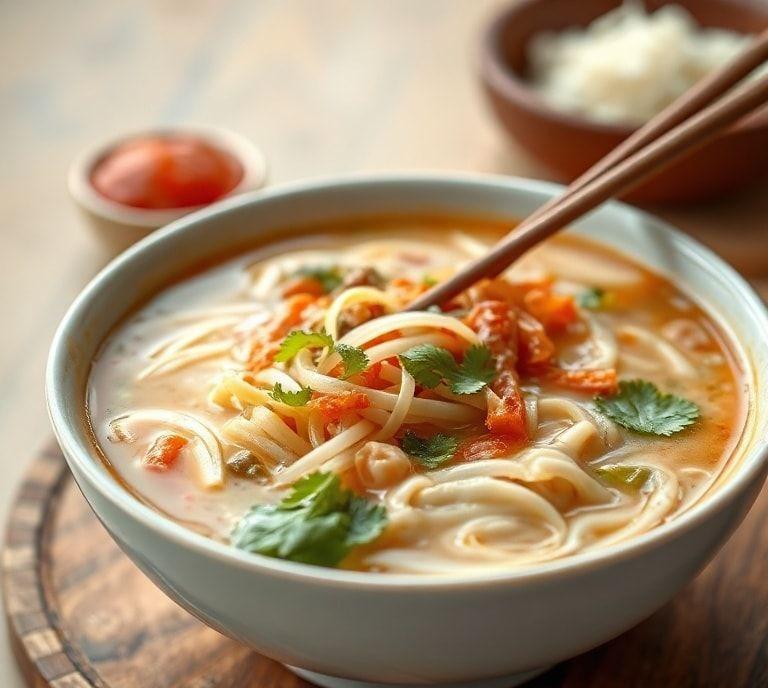
This vegetarian version of Khow Suey keeps the spirit of the original intact-rich, savory, with a delightful balance of textures. The traditional Khow Suey is usually made with chicken or beef, but in my version, I’ve swapped that out for tofu, making it an approachable and inclusive dish for everyone. The real key to this recipe lies in the perfect balance of spices and the toppings you choose. Whether you like it spicy or more on the mild side, you can tailor it to your taste.
Ingredients Needed
Before you dive into the kitchen, here’s what you’ll need to gather. Many of these ingredients are common in Southeast Asian cooking, and you might already have some of them in your pantry. Some items, like curry leaves or chickpea flour, might be a little harder to find, but trust me-they make a big difference in this dish.
-
For The Soup
- 1 block of firm tofu (pressed to remove excess moisture, then cubed)
- 200g egg noodles (you can also use rice noodles for a gluten-free version)
- 2 tablespoons vegetable oil
- 1 medium onion, finely chopped
- 3 cloves garlic, minced
- 1 tablespoon ginger, minced
- 1 tablespoon red curry paste (use more for a spicier version)
- 1 can (400ml) coconut milk
- 2 cups vegetable broth
- 1 tablespoon soy sauce
- 1 tablespoon tamarind paste (or a squeeze of lime if you can’t find it)
- 1 teaspoon turmeric powder (for color and warmth)
- 1 teaspoon ground coriander
- 1 teaspoon ground cumin
- 1/2 teaspoon cinnamon
- Salt and pepper to taste
- Fresh cilantro, chopped, for garnish
-
Toppings (this Is Where The Magic Happens)
- Boiled eggs, halved (optional, for non-vegans)
- Sautéed onions
- Crispy fried garlic
- Roasted peanuts
- Lime wedges
- Fresh cilantro
- Chopped chili peppers (for heat)
- Fried shallots
- A drizzle of soy sauce
Cooking Instructions
Let’s get cooking! The beauty of this recipe is that the steps are fairly simple, but the flavors are anything but basic.
- Prepare the Tofu: Start by pressing the tofu to release as much moisture as possible. This will help it absorb the flavors and achieve that crispy texture we want. Cube the tofu into bite-sized pieces.
- Cook the Noodles: Boil the noodles according to package instructions. Once they’re done, drain and set them aside. If you’re using rice noodles, make sure not to overcook them-they can turn mushy very quickly!
- Make the Broth Base: In a large pot, heat the vegetable oil over medium heat. Add the onions, garlic, and ginger, and sauté until they are soft and fragrant, about 3-4 minutes. This is your aromatic base. Stir in the curry paste, turmeric, cumin, coriander, and cinnamon. Let the spices toast in the oil for a minute or two, which will bring out their full depth of flavor.
- Create the Soup: Now, pour in the coconut milk and vegetable broth, stirring to combine. Add the soy sauce, tamarind paste (or lime), and season with salt and pepper. Bring the mixture to a simmer, letting it cook for about 15 minutes to let all the flavors meld together.
- Fry the Tofu: While the broth is simmering, heat a small pan with a little oil over medium-high heat. Add the cubed tofu and cook until each side is golden and crispy, about 3-4 minutes per side. Remove and set aside.
- Assemble the Dish: Once the broth has simmered and is flavorful, divide the noodles among bowls. Pour the hot broth over the noodles, then top with the crispy tofu. This is where the toppings come in. Add a little bit of everything: fried onions, boiled eggs, peanuts, fresh herbs, and a squeeze of lime. The more, the merrier!
Ingredient Science Spotlight
Let’s talk a bit about the science behind some of the ingredients. Coconut milk is a key component in Khow Suey, and it’s more than just a creamy base-it’s an emulsion of fat and water that helps bind together the spices and other flavors. Its richness provides a smooth mouthfeel that balances the heat from the curry paste and the acidity from the tamarind. The fat also helps with the absorption of fat-soluble vitamins, like vitamin A, from the turmeric and other spices.
Another hero ingredient in this dish is tamarind, which is famous for its ability to balance out sweetness and acidity in dishes. Tamarind has a tangy, almost sour profile that gives the broth its distinctiveness. If you can’t find tamarind paste, a squeeze of lime can do the trick, but the paste offers a more concentrated, complex flavor.
Expert Tips
- Press Your Tofu Well: The texture of tofu can make or break the dish. Pressing it for at least 15 minutes helps remove excess moisture, ensuring a crispy and flavorful exterior when you fry it.
- Control the Heat: If you like heat, don’t shy away from adding extra chili flakes or fresh chilies to the broth. However, if you’re serving people with a less adventurous palate, consider leaving the spice level mild and offering extra chili as a topping.
- Vegan Modifications: This recipe can easily be made vegan by omitting the boiled eggs and using plant-based toppings. The soup base itself is already dairy-free, so you’re golden in that department!
- Toppings are Key: Don’t skip the toppings! They add texture and layers of flavor, from the crunch of fried garlic to the freshness of lime. You can also experiment with different nuts or herbs, like basil, for variation.
Recipe Variations
The beauty of Khow Suey is how versatile it is. Here are a few ways to make this dish your own:
- Protein Swap: You can swap the tofu for tempeh, seitan, or even chickpeas for different textures.
- Spicy Broth: If you like more heat, try adding some chopped bird’s eye chilies directly to the broth or blending in some chili paste. You can also throw in some chopped lemongrass or kaffir lime leaves for a more aromatic flavor.
- Add Vegetables: Feel free to add vegetables like spinach, bok choy, or mushrooms to the broth. They not only enhance the flavor but also add a nutritious boost to the dish.
Final Words
Khow Suey is one of those dishes that doesn’t just fill your stomach-it fills your heart. It’s comforting and rich, with every bite offering a new texture or flavor. What’s great is that it’s completely adaptable. Whether you’re vegetarian, vegan, or just looking for a fun way to spice up your dinner routine, this dish offers endless possibilities.
FAQs
What Is Khow Suey And How Is It Prepared?
Khow Suey is a flavorful Burmese noodle soup that typically consists of egg noodles served in a coconut-based curry broth. For a vegetarian version, vegetables like cabbage, carrots, and bell peppers replace meat, while tofu or chickpeas can be added for protein. The dish is garnished with a variety of condiments such as crispy fried onions, boiled eggs, lime wedges, and fresh cilantro.
What Are The Key Ingredients For Making A Vegetarian Khow Suey?
The key ingredients for a vegetarian Khow Suey include egg noodles (or any preferred noodle), coconut milk, vegetable broth, and a mix of vegetables such as carrots, bell peppers, cabbage, and mushrooms. Spices such as turmeric, garlic, ginger, and curry powder are also essential. For protein, tofu or chickpeas are commonly used. Condiments like fried onions, cilantro, and lime are crucial for garnishing.
Can Khow Suey Be Made Gluten-free?
Yes, Khow Suey can be made gluten-free by using gluten-free noodles (such as rice noodles or gluten-free egg noodles) instead of traditional wheat-based noodles. Ensure that the vegetable broth and any sauces used (such as soy sauce) are also gluten-free. This way, the dish can be fully adapted for those with gluten sensitivities or dietary restrictions.