Kimchi Fried Rice is one of those dishes that, for me, holds a special place in my heart. It’s comfort food in its purest form, blending rich, fermented flavors with the satisfying, savory goodness of fried rice. I remember the first time I made it-it was an accidental creation. My fridge was nearly empty, except for some leftover rice and a jar of kimchi I’d bought at the store for a curiosity experiment (I had never tried it before). Tossing those two things together with whatever else I could find turned into a meal that left me thinking, “How did I not know about this before”?
From that point on, kimchi fried rice became my go-to quick meal. It’s easy to make, packed with flavor, and incredibly customizable. Whether you’re looking for a satisfying lunch, a comforting dinner, or a unique side dish for a family gathering, this recipe is versatile enough to tick all the boxes. And what’s even better? This version is vegetarian-no need for meat or eggs, just fresh, bold flavors from kimchi, vegetables, and rice.
Kimchi Fried Rice Vegetarian Recipe
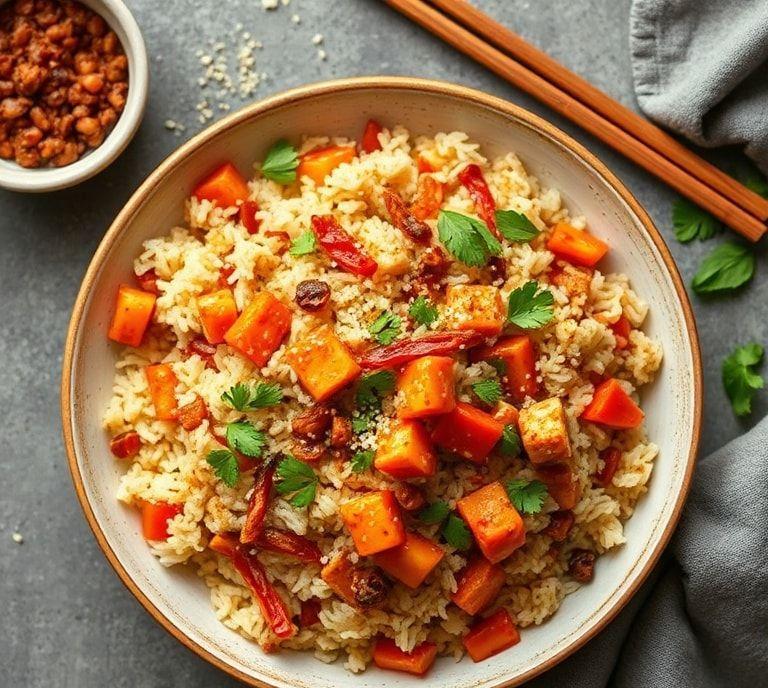
This kimchi fried rice recipe is simple yet satisfying. It brings together the tangy, spicy flavors of kimchi with the rich, earthy taste of sautéed vegetables, all wrapped in a warm, fluffy bed of rice. There’s something about the balance of sour, salty, and spicy notes that really wakes up the taste buds. What I love about this recipe is how it elevates the humble fried rice concept into something really memorable.
Here’s how to make it:
Ingredients Needed
Cooked Rice (2 Cups)
- This is a must. Day-old rice works best, as it has time to dry out in the fridge, making it easier to stir-fry without becoming mushy. Fresh rice can work, but day-old rice tends to give that signature fried rice texture.
Kimchi (1 Cup)
- Go for authentic kimchi-its fermentation gives it depth. You want the kind that has a good balance of spicy, tangy, and umami flavors. Chop it up into smaller pieces for better integration into the rice.
Vegetable Oil (2 Tbsp)
- You’ll need this to get that perfect crispness in the rice. I like using a neutral oil, like vegetable or canola, so the focus stays on the flavors of the kimchi and vegetables.
Garlic (3 Cloves, Minced)
- A little garlic goes a long way in fried rice. It adds an aromatic base that complements the fermentation of the kimchi.
Ginger (1 Tsp, Grated)
- Fresh ginger adds a subtle spice and freshness to the dish. I like to grate it to ensure it integrates smoothly with the other ingredients.
Carrot (1/2, Julienned)
- A quick sautéed carrot adds a touch of sweetness and color. It’s optional, but I find it brings a nice crunch and vibrancy to the dish.
Green Onion (2 Stalks, Chopped)
- These are great for garnish and add a mild oniony bite that contrasts the tanginess of the kimchi.
Soy Sauce (2 Tbsp)
- Soy sauce deepens the flavor profile and ties everything together with its umami-rich saltiness. You could also use tamari if you prefer a gluten-free option.
Sesame Oil (1 Tsp)
- A few drops of sesame oil at the end of cooking will give the dish an aromatic nuttiness that’s hard to beat.
Optional: Tofu (½ Block, Cubed)
- If you’re looking for some protein, tofu is a perfect addition. Press it first to get rid of excess water, then sauté until crispy.
Optional: Gochujang (Korean Chili Paste, 1 Tsp)
- If you like a spicier kick, a spoonful of gochujang brings a smoky, rich heat to the dish.
Cooking Instructions
-
Prep The Ingredients
- Start by chopping your kimchi, garlic, ginger, carrot, and green onions. If you’re adding tofu, cube it and press out any excess moisture. Having everything prepped beforehand will make cooking faster and smoother.
-
Heat The Oil
- In a large pan or wok, heat up the vegetable oil over medium-high heat. Once hot, add your garlic and ginger. Sauté them until fragrant, about 30 seconds.
-
Add The Tofu (if Using)
- If you’re using tofu, add the cubed pieces now and sauté them until they’re golden brown and crispy on the edges. Remove them from the pan and set aside.
-
Cook The Vegetables
- Toss in the julienned carrot and cook for a minute or two until it softens slightly but retains some crunch.
-
Add The Kimchi
- Add the chopped kimchi to the pan. Stir-fry it for about 2 minutes to let it heat through and release its flavorful juices. This step really infuses the rice with that signature kimchi tang.
-
Stir In The Rice
- Add the rice, breaking up any clumps with your spatula. Stir-fry everything for 5-7 minutes. The rice should begin to get a little crispy around the edges. Make sure everything is well-mixed so the kimchi flavor coats the rice.
-
Add The Seasonings
- Pour in the soy sauce and sesame oil. Stir everything to combine. Taste and adjust the seasoning if necessary. If you’re using gochujang for added heat, stir it in now.
-
Final Touches
- If you’ve cooked tofu earlier, add it back in now, along with the chopped green onions. Give everything a final stir and let it all come together for a minute or two.
-
Serve
- Serve your kimchi fried rice hot, garnished with extra green onions, sesame seeds, or a fried egg if you like.
Ingredient Science Spotlight
One of the things that makes kimchi fried rice so special is the interplay of fermentation and fresh ingredients. Let’s break down why the key ingredients are so crucial to the dish’s flavor.
- Kimchi: This is the star of the show, a fermented dish typically made from napa cabbage and radish, spiced up with chili paste, garlic, and ginger. The fermentation process creates lactic acid bacteria that not only contribute to the dish’s tangy flavor but also provide probiotic benefits. The longer kimchi ferments, the more intense the flavor becomes, and this intensity works beautifully when mixed with rice.
- Rice: Day-old rice works best in fried rice recipes because it’s drier and less sticky. Freshly cooked rice tends to clump together when stir-fried, whereas day-old rice separates more easily, creating that perfect texture. The rice absorbs the flavors of the kimchi and seasonings, making each bite rich and satisfying.
- Sesame Oil: Known for its nutty aroma, sesame oil contains antioxidants that help protect cells from damage, making it not only a flavorful addition but also one with health benefits.
Expert Tips
- Don’t Overcrowd the Pan: Fried rice is best made in batches if you’re using a large quantity of rice. Overcrowding the pan prevents it from crisping up properly.
- Let the Rice Rest: If you’re using freshly cooked rice, spread it out on a baking sheet and let it cool for a few minutes before adding it to the pan. This will help reduce moisture and improve the final texture.
- Customize the Heat: If you like spice, feel free to adjust the amount of kimchi or add some gochujang for extra heat. If you want a milder version, use a less spicy kimchi or opt for a touch of sugar to balance the flavors.
Recipe Variations
- Vegan Version: This recipe is already vegetarian, but it’s also fully vegan if you skip the optional tofu or use a vegan protein alternative.
- Add Vegetables: Feel free to add other vegetables like peas, bell peppers, or spinach for more variety and color.
- Egg on Top: For a more traditional twist, you can top your kimchi fried rice with a fried egg. The creamy yolk adds richness to the dish.
- Meat Options: If you’re not vegetarian, you can add protein like chicken, beef, or even shrimp. Just sauté the protein first and set it aside to add back at the end.
Final Words
Kimchi fried rice has a way of sneaking into your regular rotation once you try it. It’s one of those dishes that’s endlessly customizable while remaining true to its roots. Whether you stick to the basics or play around with different ingredients, the core flavors-umami from the kimchi, the depth from soy sauce, and the richness from sesame oil-create a meal that’s satisfying, comforting, and vibrant.
It’s a meal that connects you to the traditions of Korean cuisine but also offers room for personal flair. I love that about it-the way it can feel both like a tradition and a blank canvas at the same time.
FAQs
Can I Make Kimchi Fried Rice Without Using Any Animal-based Products?
Yes, kimchi fried rice can easily be made vegetarian by using plant-based ingredients. Simply choose a vegetarian-friendly kimchi (without fish sauce or other animal-based additives) and use tofu, tempeh, or a plant-based protein as a substitute for meat. You can also use vegetable oil instead of animal fat to stir-fry the rice.
What Kind Of Kimchi Should I Use For Vegetarian Kimchi Fried Rice?
For a vegetarian kimchi fried rice, you should select kimchi that does not contain fish sauce, anchovy paste, or other seafood-based ingredients. Look for ’vegan kimchi’ or check the ingredient list to ensure it’s free from animal products. Many stores now offer vegan or vegetarian kimchi options.
Can I Substitute The Rice In Kimchi Fried Rice With Another Grain, Like Quinoa Or Cauliflower Rice?
Yes, you can substitute traditional rice with quinoa, cauliflower rice, or other grains depending on your dietary preferences. If you’re using quinoa, keep in mind it has a nuttier flavor and different texture. Cauliflower rice offers a low-carb alternative, but it may not have the same chewy consistency as regular rice. Be sure to cook these alternatives well to avoid a soggy result.