Have you ever had a moment when you’re craving comfort food, but you also want something that feels fresh, vibrant, and satisfying? Korean noodle dishes have this incredible way of blending those two desires seamlessly. The deep umami flavor of fermented ingredients, the chewy texture of noodles, and the colorful, crisp veggies-they just come together in such a cozy, yet energizing way.
A couple of years ago, I was in the middle of a long, grey winter. I remember standing in front of the stove in my kitchen, staring at a sad pile of carrots and cabbage, wishing for something warm and hearty but not too heavy. That’s when I decided to try making a Korean-inspired noodle dish, vegan-style. Since then, this has become a staple in my cooking rotation. It’s nourishing, adaptable, and you can make it as spicy or as mild as your taste buds desire.
Let me take you through the process of making this vegetarian Korean noodle recipe. The ingredients are simple, but the flavors are anything but. Whether you’re new to Korean cuisine or you’re already a fan of its bold flavors, this dish will make your taste buds do a little happy dance.
Korean Noodle Vegetarian Recipe
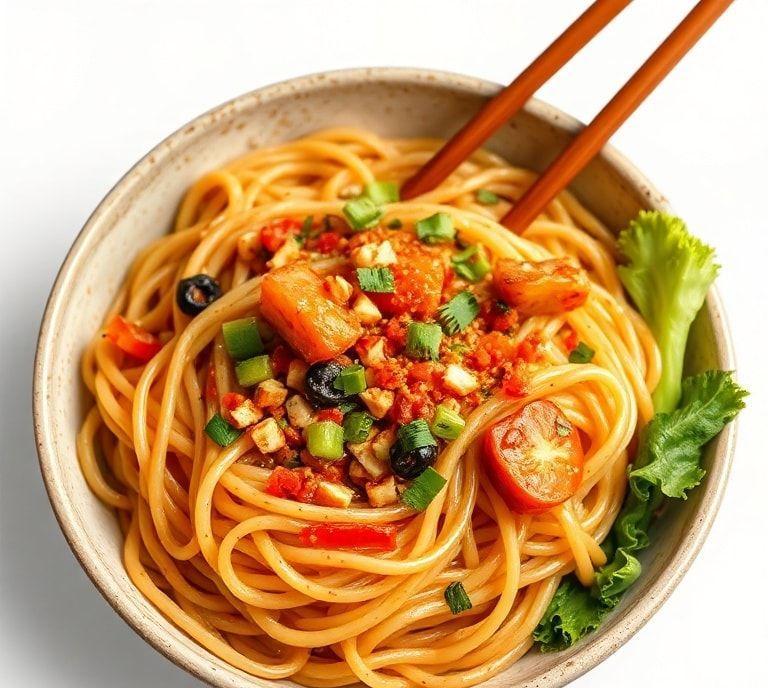
This vegetarian Korean noodle recipe takes just about 30 minutes from start to finish. It’s the perfect balance of spicy, savory, and just a touch of sweetness. The star of the dish is, of course, the noodles, which soak up all the flavorful sauce, but the real magic happens when the veggies join in-crunchy, vibrant, and full of life. Plus, it’s easily customizable based on what you have in your fridge, which is a major bonus.
Ingredients Needed
- Noodles: You’ll need 200g of dried Korean noodles-these could be sweet potato noodles (dangmyeon), wheat noodles, or even rice noodles. If you can find them fresh, even better, but dried ones will work just fine.
- Vegetables: A colorful mix of julienned carrots, napa cabbage, and shiitake mushrooms (or any mushrooms you prefer). I love using napa cabbage because of its tender, mild crunch, but you can swap it out with bok choy or even spinach.
- Tofu: 1/2 block of firm tofu. It adds a nice, chewy protein element. If you’re not into tofu, you can substitute with tempeh, or even just load up on extra veggies.
- Garlic: About 4 cloves, minced. Fresh garlic is essential to bring out the natural flavors of the dish, adding depth and richness to the broth.
- Gochujang: 1 tablespoon. This Korean fermented chili paste is what gives the dish its signature kick. It’s spicy, salty, and slightly sweet, so it really enhances the overall flavor profile.
- Soy Sauce: 2 tablespoons. You can use tamari if you’re gluten-free. Soy sauce brings a savory umami flavor, which is the backbone of many Korean dishes.
- Sesame Oil: 1 tablespoon. The nutty aroma of sesame oil makes this dish stand out-don’t skip this ingredient!
- Rice Vinegar: 1 teaspoon. Just a little splash of vinegar cuts through the richness of the dish and balances the flavors beautifully.
- Sugar: 1 teaspoon. It’s there to balance the spice and the acidity from the vinegar, but don’t worry, it won’t make the dish too sweet.
- Sesame Seeds: For garnish. They add a delightful crunch and a bit of extra flavor.
- Green Onions: 2 stalks, sliced thinly for garnish.
Cooking Instructions
- Prep the ingredients: Start by preparing your vegetables. Julienne the carrots, slice the mushrooms, and chop the cabbage into thin strips. Press the tofu to remove excess water, then cut it into cubes.
- Cook the noodles: Boil a large pot of water, add the noodles, and cook according to the package instructions (usually 3-5 minutes for dried noodles). Once cooked, drain and set aside.
- Sauté the vegetables and tofu: Heat a large pan or wok over medium heat and add a tablespoon of sesame oil. Add the tofu cubes and sauté for 4-5 minutes until golden and crispy on all sides. Remove from the pan and set aside.
- In the same pan, add another tablespoon of sesame oil. Toss in the garlic and sauté for about 30 seconds until fragrant. Add the carrots, mushrooms, and cabbage, cooking for about 5 minutes until they soften but still retain some crispness.
- Make the sauce: In a small bowl, mix together the gochujang, soy sauce, rice vinegar, sugar, and a tablespoon of water. Stir until the sugar dissolves and everything is well combined.
- Combine everything: Add the cooked noodles back into the pan with the vegetables. Pour in the sauce, then toss everything together to coat the noodles and vegetables evenly. Let everything cook together for 2-3 minutes, allowing the noodles to absorb the sauce and heat through.
- Garnish and serve: Plate the noodles and sprinkle with sesame seeds and chopped green onions. Serve immediately, and enjoy!
Ingredient Science Spotlight
Let’s talk about gochujang, the star of this recipe. It’s a fermented chili paste that packs a punch both in flavor and health benefits. The fermentation process means that gochujang is rich in probiotics, which are great for gut health. Plus, it’s loaded with antioxidants thanks to the fermented soybeans, making it more than just a flavorful ingredient-it’s a gut-friendly powerhouse. The fermentation also helps release the natural sugars in the paste, giving it that perfect balance of sweet, salty, and spicy.
Then there’s sesame oil, which isn’t just for flavor. The compounds in sesame oil, such as sesamin and sesamol, are potent antioxidants. They help reduce inflammation and protect your cells from oxidative damage. That toasty flavor isn’t just delicious; it’s doing some good work for your body!
Expert Tips
- Don’t overcook your vegetables: You want them to retain their crunch and freshness. The best way to do this is to sauté them at medium heat and for no more than 5 minutes. This way, they won’t lose their vibrant color or their bite.
- Make the sauce ahead: If you’re short on time, mix the sauce ingredients beforehand and keep it in the fridge. That way, when you’re ready to cook, you can just toss it into the pan, saving a few minutes on the clock.
- Use high heat for crispy tofu: If you want your tofu to be extra crispy, make sure your pan is nice and hot before adding it. Also, give it room to breathe-don’t overcrowd the pan.
- Adjust the spice level: If you like a little more heat, add an extra spoonful of gochujang. If you prefer something milder, reduce the amount or add a touch of honey to balance the heat.
Recipe Variations
- Add more protein: Feel free to throw in some edamame, chickpeas, or even tempeh if you’re not a tofu fan. It’s all about making the dish your own.
- Different veggies: Don’t be afraid to switch up the vegetables. You can use bell peppers, zucchini, or even broccoli instead of cabbage and carrots. The sauce is versatile enough to complement a range of textures.
- Noodle variations: While dangmyeon (sweet potato noodles) are traditional, you can swap them for buckwheat soba noodles or even rice noodles for a gluten-free option.
Final Words
This recipe isn’t just about food-it’s about creating a dish that feels like a hug on a cold day. The flavors are bold and exciting, but they’re balanced enough to feel comforting. Whether you make this as a quick weeknight dinner or as a showstopper at a gathering, it’s bound to impress.
I love how flexible this recipe is-one day you might have mushrooms, the next, you’ve got extra zucchini. You can adjust the sauce to fit your preferences, and it’s hard to go wrong.
FAQs
What Are Some Essential Ingredients For A Korean Noodle Vegetarian Recipe?
Key ingredients typically include Korean noodles such as sweet potato starch noodles (dangmyeon) or wheat noodles, a variety of vegetables like carrots, spinach, mushrooms, zucchini, and cabbage, and flavorful seasonings such as soy sauce, sesame oil, garlic, green onions, and gochujang (Korean chili paste). Tofu can be added as a protein source to make the dish more filling.
How Can I Make A Korean Noodle Vegetarian Recipe Spicy Without Using Meat-based Sauces?
You can achieve spiciness by using plant-based ingredients. Gochujang (fermented red chili paste) is naturally vegetarian and adds heat and depth of flavor. Fresh chili peppers or chili flakes can also be added. Make sure to balance the spice with a bit of soy sauce, sesame oil, and a touch of sugar to maintain the traditional Korean flavor profile.
What Are Some Tips For Preparing Korean Noodles So They Don’t Stick Together?
To prevent noodles from sticking, cook them in a large pot of boiling water without overcooking. Stir occasionally while boiling and rinse them under cold water after draining. Tossing the noodles lightly with a small amount of sesame oil after rinsing also helps keep them separate and adds a subtle flavor that complements vegetables and sauces.