Some recipes feel like time machines, don’t they? You take one bite, and you’re transported back to a family kitchen, surrounded by the smells of something comforting, something deeply rooted in tradition. Lebanese grape leaves, or warak enab, are one of those dishes. It’s more than just food; it’s a story, wrapped up in a tender leaf and soaked in flavor. It’s the kind of dish you’d find at a Lebanese family gathering, passed around the table, each bite carrying a bit of history. And while there are plenty of ways to enjoy grape leaves, today I’m sharing a vegetarian version of this classic – lighter, but no less delicious.
I grew up watching my mother and grandmother prepare this dish, with their hands moving like they had done it a thousand times before. There was a rhythm to it, a beautiful dance of chopping, stuffing, and rolling. Over the years, I’ve made my own version, one that keeps the essence of the dish but brings in a few modern touches. I hope this recipe brings you the same warmth and connection it brings me every time I make it.
Lebanese Grape Leaves Vegetarian Recipe
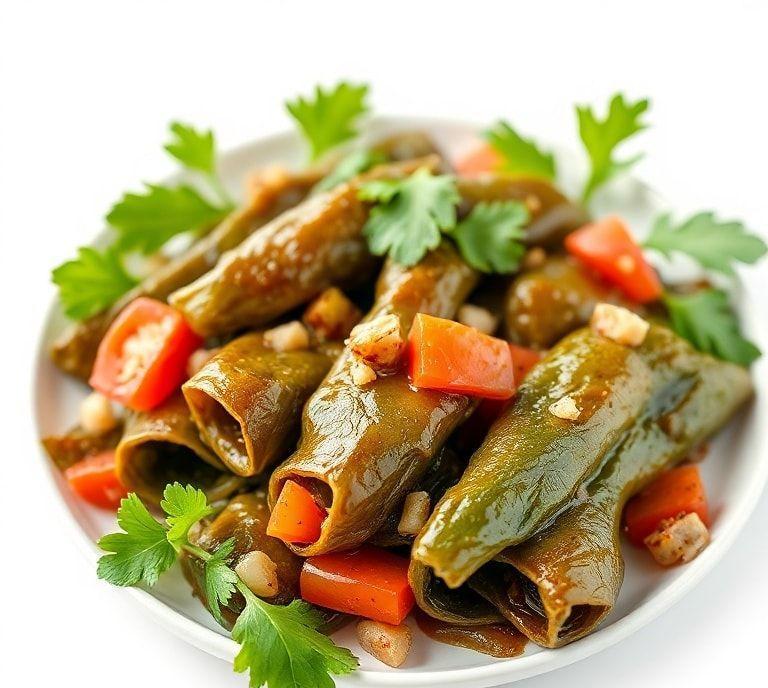
Grape leaves are such an underestimated ingredient. They’re fresh, slightly tangy, and make the perfect vessel for a stuffing. Traditionally, you might find grape leaves stuffed with lamb or beef, but the vegetarian variation holds its own, bursting with flavors of herbs, rice, and citrus. It’s satisfying, healthy, and flavorful in a way that’s different from your typical stuffed foods.
The beauty of this dish lies in the balance of textures and flavors – the softness of the rice, the crunch of the pine nuts, the freshness of the herbs, and the tangy zing from the lemon. If you’ve never tried it, you’re in for a treat. And if you’re familiar with it, I hope this version becomes a new favorite.
Ingredients Needed
Here’s what you’ll need to make your own batch of these stuffed grape leaves:
- Grape leaves: You can buy them jarred (which is the easy way to go) or, if you’re lucky enough to have access to fresh leaves, those are even better.
- Rice: Short-grain rice is the best choice for this dish. It sticks together and gives the stuffing a nice texture. I usually go with a white rice, but you could experiment with brown for a heartier flavor.
- Olive oil: A good-quality extra virgin olive oil adds richness and depth to the stuffing.
- Onion: A finely chopped onion gives the filling its base flavor. It should be lightly sautéed before mixing in with the rice.
- Pine nuts: These little guys bring a delicate crunch and a subtle nutty flavor that really elevates the dish.
- Herbs: Fresh parsley and dill are traditional, though you could toss in a little mint or thyme if you’re feeling adventurous.
- Lemon: Lemon zest and juice are essential. They brighten everything up and add that citrusy zing that cuts through the richness of the olive oil.
- Tomato paste: For a hint of sweetness and color.
- Salt & pepper: You’ll need both to season the stuffing and the water in which you’ll cook the rolls.
- Cinnamon (optional): A dash of cinnamon adds a warm spice that complements the other flavors, though you can skip it if you’re not a fan.
Cooking Instructions
Now, let’s dive into the fun part: putting it all together. Don’t worry, it’s not as complicated as it might look.
- Prepare the grape leaves: If you’re using jarred grape leaves, make sure to rinse them thoroughly to remove excess brine. If they’re fresh, blanch them in hot water for about 2 minutes to soften them up and make them easier to work with. Lay them flat, vein side up.
- Make the stuffing: In a large pan, heat a couple of tablespoons of olive oil and sauté the onion until it’s translucent. Add the rice and stir it around for a couple of minutes to toast it lightly. Then, add about a half cup of water, the tomato paste, pine nuts, parsley, dill, lemon juice, lemon zest, salt, and pepper. Stir it all together, and let it simmer for about 10-15 minutes, just until the rice starts to soften. You don’t want to cook it fully here because it will continue cooking while wrapped in the grape leaves.
- Stuff the leaves: Take a spoonful of the rice mixture and place it in the center of each grape leaf. Don’t overstuff – you want to roll them up tightly but not so much that the filling bursts out. Fold the sides of the grape leaf over the filling, then roll it up like a small cigar, keeping it compact. Continue until all the rice mixture is used up.
- Cook the rolls: In a large pot, arrange the stuffed grape leaves in layers, packing them tightly. Add enough water to cover the rolls, along with a drizzle of olive oil and a pinch of salt. Place a heavy plate on top to keep them submerged, then cover the pot and bring it to a simmer. Let them cook for about 40-45 minutes, or until the rice is tender and the flavors have melded together.
- Serve: Let the grape leaves cool slightly before serving, as they taste best at room temperature. Drizzle with more olive oil and a squeeze of fresh lemon juice if you like.
Ingredient Science Spotlight
When I think about the science behind this dish, the rice and the grape leaves really stand out. The grape leaves are naturally a little bitter and tangy, which gives the dish its unique edge. They’re also full of antioxidants and vitamins, making them an excellent choice for this type of preparation. The rice, on the other hand, acts as the perfect vehicle for soaking up all the flavors – the lemon, the herbs, the olive oil. It’s amazing how something as simple as rice can elevate a dish.
The pine nuts are another interesting element. While they’re often used in Mediterranean cooking, they have a higher oil content than most nuts, which makes them rich and buttery in texture. Toasting them before mixing them into the rice brings out their natural sweetness, complementing the tangy grape leaves beautifully.
Expert Tips
- Make Ahead: These grape leaves actually taste even better the next day, once the flavors have had time to meld together. If you’re preparing them in advance, just store them in an airtight container in the fridge.
- Don’t Overfill: It can be tempting to stuff the grape leaves as full as possible, but a little rice goes a long way. Overstuffing can cause the grape leaves to tear and the filling to spill out during cooking.
- Use Fresh Herbs: While dried herbs can be convenient, nothing beats the brightness of fresh parsley and dill in this dish. If you can’t find them fresh, however, dried will do in a pinch – just use less, as dried herbs are more potent.
Recipe Variations
While the classic vegetarian stuffing is always a winner, you can easily customize this dish to suit your preferences or dietary needs. Some variations you might want to try:
- Add More Vegetables: You could fold in some finely diced tomatoes, sautéed mushrooms, or even spinach into the rice mixture to give it more body.
- Go Vegan: This recipe is already vegetarian, but for a fully vegan option, just skip the pine nuts or swap them out for another type of nut or seed (like sunflower seeds).
- Change the Grains: For a different twist, try substituting the rice with quinoa or couscous. These grains offer their own texture and flavor profile, though they might change the overall feel of the dish.
Final Words
There’s something magical about making this dish. It’s a true labor of love, but it’s also the kind of recipe that brings people together. The process of rolling each grape leaf with care, then watching them simmer and take on all those flavors – it feels like an art form. It’s the kind of dish that you don’t just eat, you experience.
FAQs
What Ingredients Are Needed For A Lebanese Vegetarian Grape Leaves Recipe?
A traditional Lebanese vegetarian grape leaves recipe typically requires grape leaves, short-grain rice, onions, tomatoes, parsley, mint, olive oil, lemon juice, salt, pepper, and optional spices such as allspice or cinnamon. Some variations may include pine nuts or currants for added texture and flavor.
How Do You Prepare Grape Leaves For Stuffing?
Grape leaves should be rinsed thoroughly to remove excess salt if using preserved leaves. Fresh leaves should be blanched in boiling water for 2-3 minutes until tender. After blanching or rinsing, they should be drained and allowed to cool before stuffing. The stems should be trimmed, and any thick veins can be gently removed to make rolling easier.
What Is The Proper Method To Cook Vegetarian Stuffed Grape Leaves?
Stuffed grape leaves are usually layered tightly in a pot, with a few leaves at the bottom to prevent sticking. After rolling and placing the stuffed leaves seam-side down, they are covered with water or a mixture of water and lemon juice. A plate or lid can be placed on top to keep them submerged. They are then simmered gently for 40-60 minutes until the rice is cooked and the flavors have melded. After cooking, they are allowed to cool slightly before serving, often drizzled with additional olive oil and lemon juice.