There’s something about paella that brings a sense of celebration to any table. The sizzle of ingredients hitting the pan, the burst of color from saffron, the savory richness that makes every bite feel like a gift. While paella is traditionally associated with seafood or meat, there’s a world of vibrant, fresh possibilities for a vegetarian version that is equally comforting and satisfying. It’s a dish I always turn to when I want to create a meal that feels special, yet not overly complicated.
I remember the first time I made a vegetarian paella-it was a warm evening, and I had invited some friends over for dinner. I was a bit nervous, as I had never made the dish before. I knew the importance of the right ingredients, the technique, and of course, the seasoning. But when it all came together-the saffron-infused rice with roasted vegetables, the rich aromas filling the kitchen, and the joy on my friends’ faces as they tasted it-I knew I’d found something magical. There’s just something about paella that feels like a celebration of life itself.
If you’re ready to try your hand at this beautiful dish, I’m here to guide you step by step, sharing tips, variations, and everything I’ve learned along the way to make sure your vegetarian paella becomes a hit every time.
Paella Vegetarian Recipe
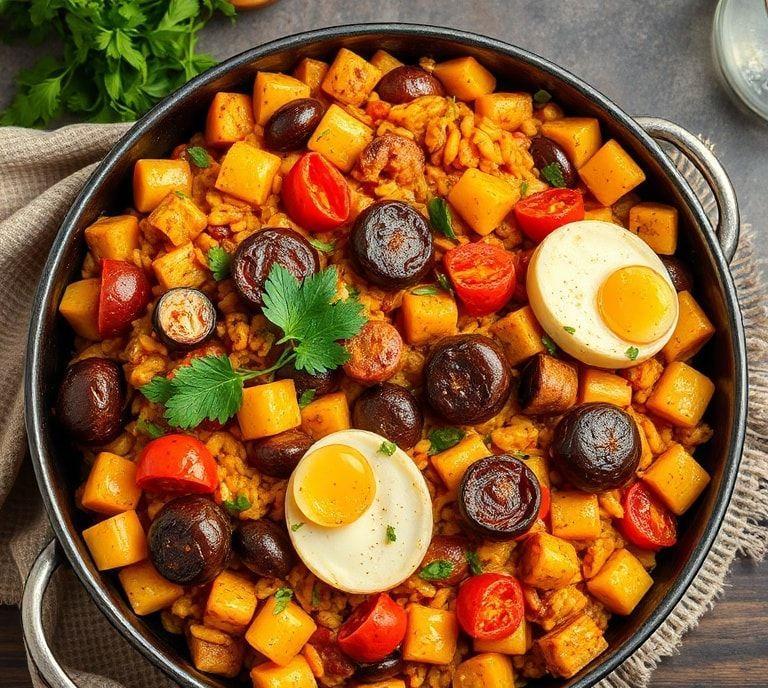
This vegetarian paella recipe doesn’t just offer the classic flavors you’re looking for, but it’s also a chance to showcase seasonal vegetables in their best light. I love how paella allows the ingredients to speak for themselves-there’s no need to rush things. The slow cooking of the rice and the delicate blending of spices create a dish that feels like a hug in a bowl.
Ingredients Needed
- 1 ½ cups of Arborio rice (or other short-grain rice, like Bomba)
- 3 tablespoons olive oil (preferably extra virgin)
- 1 onion, finely chopped
- 2 cloves garlic, minced
- 1 red bell pepper, diced
- 1 yellow bell pepper, diced
- 1 zucchini, sliced into rounds
- 1 cup cherry tomatoes, halved
- 1 cup artichoke hearts (fresh or jarred)
- 1 cup peas (fresh or frozen)
- 1 ½ teaspoons smoked paprika
- 1 teaspoon turmeric (or saffron, if you can find it)
- 4 cups vegetable broth (low-sodium preferred)
- 1 lemon, sliced (for garnish)
- Salt and pepper, to taste
- Fresh parsley, chopped (for garnish)
Cooking Instructions
Making paella is all about patience. The magic comes from the way the ingredients interact with the rice, soaking up flavors as it simmers slowly in the pan. Here’s how I go about it:
- Heat the pan: You’ll want to use a large, shallow skillet or a traditional paella pan if you have one. Heat your olive oil over medium heat, making sure the entire pan gets coated with a nice layer of oil.
- Sauté the aromatics: Add the chopped onion to the pan and sauté until it’s softened, about 4 minutes. Then add the garlic and cook for another minute, just until fragrant.
- Add the vegetables: Toss in the bell peppers, zucchini, and artichoke hearts. Cook for about 5-6 minutes, until the vegetables start to soften and caramelize slightly at the edges. This step builds so much flavor.
- Spices: Sprinkle in the paprika and turmeric (or saffron if you’re using it). Stir to coat the vegetables evenly. This is where the color of the paella starts to take shape, and the aroma fills the air.
- Add the rice: Stir the rice into the vegetable mixture. Let it toast slightly for 1-2 minutes. This step is key for giving the rice a rich, nutty flavor.
- Add the broth: Pour in the vegetable broth, and bring the mixture to a gentle simmer. Stir to combine everything, and let it cook uncovered for about 10 minutes.
- Layer and simmer: Now, scatter the cherry tomatoes and peas over the top of the rice. Don’t stir anymore. Let the paella cook for another 10-12 minutes until the rice is tender and has absorbed most of the broth. The key here is to resist the urge to stir-this is what helps develop that iconic crispy crust at the bottom (the socarrat).
- Final touch: When the paella is ready, take it off the heat and let it sit for 5 minutes. Garnish with fresh parsley and lemon slices for a burst of freshness. And there you have it!
Ingredient Science Spotlight
Each ingredient in this paella plays a role beyond just flavor. For instance, Arborio rice is crucial. It’s a short-grain rice that releases its starch as it cooks, giving the dish its characteristic creamy yet firm texture. The smoked paprika adds a deep, earthy smokiness that gives the dish a surprising depth, while the turmeric (or saffron) provides that signature yellow color and a subtle, floral bitterness. If you’re using saffron, it’s best to steep it in warm broth before adding it to the pan. The vegetables-especially bell peppers and zucchini-bring a natural sweetness that balances the savory spices. And artichokes, with their slightly tangy bite, are the perfect unexpected addition that cuts through the richness of the dish.
Expert Tips
- Don’t rush the rice: The key to a perfect paella is slow, even cooking. While it may be tempting to stir, resist the urge. The rice needs to cook undisturbed to form that delicious, slightly crispy layer at the bottom.
- Saffron vs. turmeric: Saffron is the gold standard for traditional paella, but it’s expensive. Turmeric, while not a perfect substitute, can still give you that vibrant yellow color and an earthy flavor. If you want to get close to the real deal, steep your turmeric in warm broth for about 10 minutes before adding it to the pan.
- Layer your flavors: The final step of garnishing with fresh parsley and lemon is non-negotiable. The freshness adds a level of brightness that elevates the dish, making it taste just a little bit more special.
- Choose the right pan: If you can, use a traditional paella pan. The wide, shallow shape allows the rice to cook evenly and gives it a better chance to develop that signature socarrat.
Recipe Variations
One of the best parts about paella is how easily it adapts to what’s in season or what you have on hand. Here are some fun variations I love:
- Mushroom Paella: Swap in a variety of mushrooms (shiitake, cremini, portobello) for a hearty, earthy twist.
- Roasted Butternut Squash: Add roasted cubes of butternut squash for a sweet, autumnal version.
- Chickpeas: For added protein, toss in some chickpeas to make the dish more filling.
- Spinach and Kale: Stir in some fresh spinach or kale towards the end of cooking for extra greens and a nice contrast in texture.
- Smoked Tempeh: For a more protein-packed dish with a smoky flavor, add some smoked tempeh or tofu in place of the artichokes.
Final Words
Vegetarian paella is one of those dishes that has the power to impress without being overly complex. It’s as much about the process as it is about the flavors. I always feel a little more grounded and connected when I make it, because it forces me to slow down and let the ingredients do their thing. It’s not just cooking; it’s an experience.
FAQs
What Vegetables Are Commonly Used In A Vegetarian Paella?
Common vegetables in a vegetarian paella include bell peppers, tomatoes, onions, peas, artichokes, green beans, and zucchini. Some recipes also include mushrooms, asparagus, or spinach to enhance the flavor and texture.
Can I Use Vegetable Broth Instead Of Water In A Vegetarian Paella?
Yes, vegetable broth is an excellent substitute for water in a vegetarian paella. It adds depth of flavor to the dish, making it more savory and rich. Ensure the broth is low-sodium to control the overall salt content.
How Do I Make A Vegetarian Paella With A Traditional Saffron Flavor?
To achieve the traditional saffron flavor in vegetarian paella, use saffron threads soaked in a little warm water to release their color and aroma. You can also use a small amount of turmeric as a substitute for saffron if you’re looking for a budget-friendly option, though it will change the flavor slightly.