Pasta is one of those dishes that always seems to have a place at the table, whether you’re cooking for a crowd or enjoying a quiet evening solo. There’s something about the way it pulls you in-comforting, satisfying, and endlessly versatile. But when it comes to the perfect pasta, I always come back to pappardelle. These wide, thick ribbons of pasta are like a blank canvas, just begging to be dressed in all sorts of sauces, fresh ingredients, and a sprinkle of creativity. Today, I’m sharing my go-to vegetarian pappardelle pasta recipe-a dish that’s not just filling, but a burst of color and flavor. It’s one of those meals that feels special, even on an ordinary night.
What I love about this dish is how it takes something as simple as pasta and elevates it with just a handful of ingredients. But don’t let its simplicity fool you; the flavors in this vegetarian pappardelle are bold and rich, thanks to the fresh herbs, veggies, and a touch of Parmesan. The key is balancing everything just right-making sure the pasta gets coated in the sauce without feeling heavy, and letting the natural flavors shine through.
Pappardelle Pasta Vegetarian Recipe
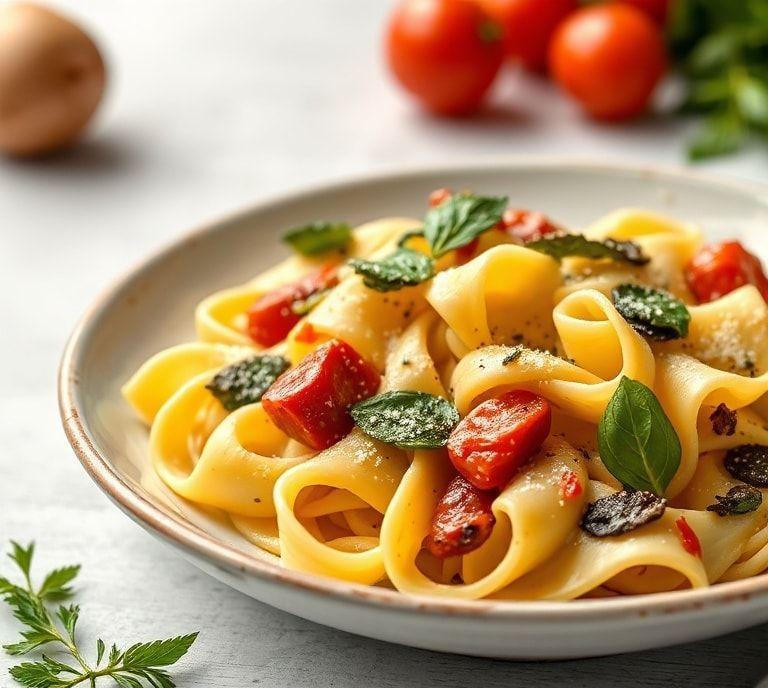
If you’ve never made pappardelle from scratch, trust me when I say it’s worth the effort. That said, I’m not here to stress you out with a complicated process. For today’s recipe, I’m going to focus on a quick and easy vegetarian approach. So, whether you’re using store-bought or homemade pappardelle, I promise it’ll be delicious.
Ingredients Needed
- 300g pappardelle pasta (fresh or dried)
- 2 tablespoons olive oil
- 1 medium onion, finely chopped
- 2 cloves garlic, minced
- 1 zucchini, sliced thinly
- 1 red bell pepper, thinly sliced
- 1 cup cherry tomatoes, halved
- 1/2 cup fresh basil leaves, roughly torn
- 1/2 cup grated Parmesan cheese (or vegan alternative)
- 1 tablespoon lemon juice (for brightness)
- Salt and pepper, to taste
- A pinch of red pepper flakes (optional, if you like a little heat)
- Extra virgin olive oil, for drizzling
- Toasted pine nuts (optional, for garnish)
Cooking Instructions
-
Cook The Pappardelle
Bring a large pot of salted water to a boil. Drop in the pappardelle and cook it according to package instructions (fresh pasta will cook faster than dried). While the pasta is cooking, prepare the veggies.
-
Sauté The Vegetables
Heat olive oil in a large skillet over medium heat. Add the chopped onion and sauté until soft and translucent, about 3 minutes. Toss in the garlic, followed by the zucchini and bell pepper. Stir them around for 4-5 minutes, until they soften a bit but still retain their color and bite.
-
Add The Tomatoes And Season
Add the halved cherry tomatoes to the skillet and cook until they start to break down, about 3-4 minutes. You want them to release their juices but not turn into a mush. Season the veggie mixture with salt, pepper, and a pinch of red pepper flakes for a little kick (totally optional, depending on your taste).
-
Toss It All Together
Once your pasta is done, reserve a small cup of pasta water, then drain the pasta. Add the drained pappardelle directly to the skillet with the sautéed veggies. Toss everything together gently, making sure the pasta gets coated with the juices from the veggies. If it’s too dry, add a little pasta water to loosen it up. Stir in the fresh basil, grated Parmesan, and a squeeze of lemon juice for that burst of freshness.
-
Serve
Plate the pasta, drizzle with a little extra virgin olive oil, and garnish with toasted pine nuts if you’ve got them. A final dusting of Parmesan won’t hurt either. Serve immediately!
Ingredient Science Spotlight
What’s so great about the combination of these ingredients? Let’s dive into a couple of key players in this recipe.
- Zucchini: This is one of those vegetables that’s often underestimated, but it has a subtle sweetness and moisture that can balance out the richness of pasta. Plus, zucchini has a decent amount of vitamin C, potassium, and antioxidants, which makes it a pretty healthy addition to your dish.
- Tomatoes: The juicy, slightly tangy bite from fresh tomatoes plays off the creaminess of the Parmesan, giving the dish a depth of flavor that’s hard to beat. Tomatoes also provide lycopene, a powerful antioxidant that’s great for heart health.
- Basil: Fresh basil is like the crown jewel of Italian cuisine. Its aromatic, peppery notes elevate any dish, and it’s packed with essential oils that are thought to have anti-inflammatory benefits.
Expert Tips
- Fresh vs. Dried Pasta: While fresh pappardelle is ideal, dried pasta can work in a pinch. If you’re using dried, just make sure to cook it al dente so it holds up to the veggies and sauce without becoming mushy.
- Balance the Veggies: The beauty of a vegetarian pasta is how adaptable it is. If you’ve got some eggplant, mushrooms, or spinach lying around, feel free to toss them in. Just be mindful of cooking times-some veggies (like mushrooms) need a little longer to sauté than others (like tomatoes or zucchini).
- Don’t Skip the Pasta Water: When you drain your pasta, always save a bit of that water! It’s like liquid gold for pasta dishes. It helps to bind the sauce and pasta together, creating a more cohesive, flavorful dish.
- Parmesan Alternatives: If you’re vegan or dairy-free, swap the Parmesan for a vegan cheese or nutritional yeast. Both will still add that savory, umami flavor to your dish.
Recipe Variations
This recipe is like a flexible framework-you can change up the veggies depending on what’s in season or what you have in the fridge.
- Mushroom Medley: Swap the bell pepper and zucchini for a mix of earthy mushrooms (shiitake, cremini, and portobello). The mushrooms bring a hearty umami flavor that pairs wonderfully with the wide pasta.
- Peas and Asparagus: In the spring, replace the zucchini with tender asparagus and add a handful of peas for some sweet crunch. A touch of mint instead of basil would be a refreshing twist!
- Butternut Squash: If you’re cooking in the fall or winter, roasted butternut squash can add sweetness and depth. Toss it in with some sage leaves and a little bit of ricotta for a creamy, comforting dish.
Final Words
Pappardelle pasta has a way of turning a simple meal into something more. It’s rich, satisfying, and just fancy enough to feel special without being difficult to make. This vegetarian version, with its mix of fresh veggies, basil, and Parmesan, captures the essence of Italian comfort food-simple, beautiful ingredients brought together to create something greater than the sum of its parts.
FAQs
What Are The Best Vegetables To Pair With Pappardelle Pasta For A Vegetarian Recipe?
For a delicious vegetarian pappardelle pasta dish, consider pairing it with vegetables like mushrooms, spinach, zucchini, cherry tomatoes, bell peppers, and eggplant. These vegetables complement the wide, flat shape of pappardelle, allowing for a hearty, flavorful dish. Adding garlic, onions, and fresh herbs like basil or thyme can enhance the overall taste.
How Can I Make A Creamy Vegetarian Sauce For Pappardelle Pasta?
To make a creamy vegetarian sauce for pappardelle pasta, you can use ingredients like heavy cream, ricotta cheese, or a blend of both. Alternatively, for a lighter option, consider using coconut milk or cashew cream. Start by sautéing garlic and onions in olive oil, then add your choice of cream and seasonings like salt, pepper, and nutmeg. For extra flavor, toss in sautéed mushrooms or spinach.
Can I Make A Gluten-free Version Of Pappardelle Pasta For A Vegetarian Recipe?
Yes, you can easily make a gluten-free version of pappardelle pasta by using gluten-free pasta options available in stores, such as rice flour-based or chickpea pasta. If you’re making your own pappardelle, you can substitute wheat flour with gluten-free all-purpose flour or a combination of rice flour and cornstarch. Just ensure to cook the gluten-free pasta according to package instructions to avoid overcooking.