There’s something about a cozy, hearty casserole that feels like a warm hug at the end of a long day. Whether it’s a snowy evening or the middle of a bustling weekend, a pasta casserole can offer that perfect balance of comfort and satisfaction. As someone who loves cooking, especially dishes that require minimal effort but pack in loads of flavor, I’ve always had a soft spot for pasta casseroles.
But here’s the thing-I don’t always want to reach for meat or heavy cream to make a dish satisfying. Sometimes, simplicity and fresh ingredients are all you need to create a meal that’s both nourishing and incredibly delicious. That’s why I decided to put together this vegetarian pasta casserole recipe. It’s a dish that’s not only packed with flavor but is also versatile enough to make any day feel a little more special.
Pasta Casserole Vegetarian Recipe
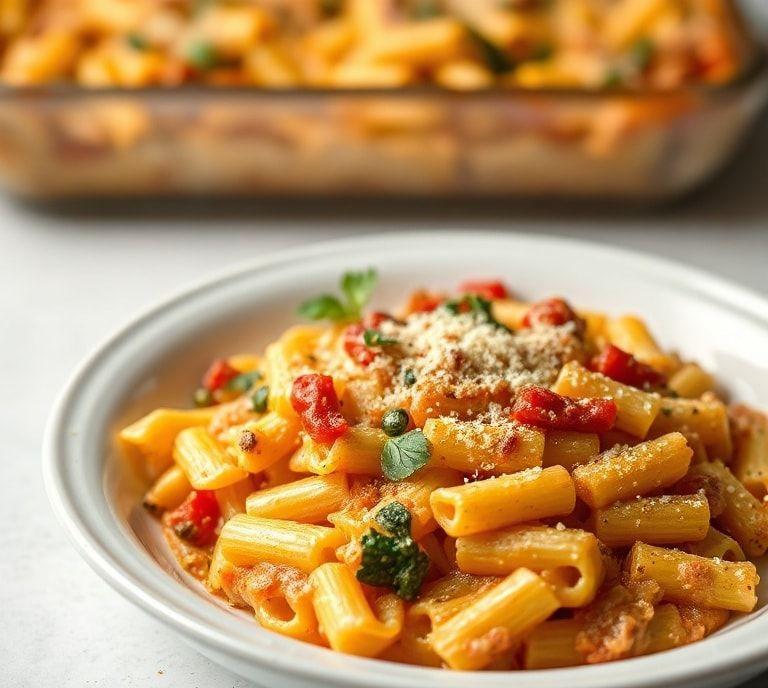
Now, let’s talk about the magic of this vegetarian pasta casserole. The beauty of it lies in the layers of flavor-tender pasta, fresh vegetables, and a rich, cheesy topping that gets perfectly golden in the oven. The casserole itself is hearty, so you won’t find yourself reaching for something else after a serving. It’s filling, savory, and definitely a crowd-pleaser, whether you’re cooking for family, friends, or even just for yourself (because leftovers are where the real joy is).
Ingredients Needed
To make this dish, you’ll need:
- Pasta: Any type works, but I tend to go for penne or rotini since they hold sauce well. I’m all about texture.
- Vegetables: Zucchini, bell peppers, spinach, and mushrooms are my go-to choices. They bring a balance of sweetness, earthiness, and freshness.
- Tomato sauce: A good, thick tomato sauce is key. I recommend something that’s flavorful and rich to complement the pasta.
- Cheese: Shredded mozzarella for that melt-in-your-mouth experience and parmesan for a touch of sharpness.
- Garlic and onions: These two ingredients are non-negotiable when I want to layer depth of flavor.
- Olive oil: For sautéing the veggies.
- Seasonings: Salt, pepper, dried oregano, and basil are classic choices. Feel free to toss in a pinch of red pepper flakes if you like a little heat.
Cooking Instructions
The beauty of this recipe is that it doesn’t demand a lot of prep time. Here’s how I like to make it:
- Boil the pasta: Start by bringing a large pot of salted water to a boil and cooking your pasta according to the package instructions. Be sure to undercook it by a minute or so because it will cook further in the oven.
- Sauté the vegetables: While the pasta’s boiling, heat some olive oil in a pan over medium heat. Toss in your garlic and onions first, sautéing them until they become aromatic and soft. Then, add the mushrooms, bell peppers, and zucchini, and cook until they soften and start to caramelize slightly. This is where your kitchen starts to smell amazing.
- Combine: Once your pasta is ready, drain it (reserving a little bit of pasta water in case the casserole gets too dry later). In a large mixing bowl, toss the cooked pasta with the sautéed veggies, spinach (which wilts quickly and adds great flavor), and tomato sauce. Season with salt, pepper, oregano, and basil to taste.
- Assemble the casserole: Transfer the pasta-vegetable mixture into a greased casserole dish. Sprinkle a generous amount of shredded mozzarella on top, followed by a little parmesan. Bake at 375°F (190°C) for about 25-30 minutes, or until the cheese is bubbly and golden brown.
- Serve: Let the casserole sit for about 5 minutes before serving. This helps everything set just right and makes it easier to scoop up a perfect portion.
Ingredient Science Spotlight
Let’s take a moment to break down the science behind a few key ingredients that make this vegetarian casserole so irresistible.
- Pasta: The star of the dish, pasta is a complex carbohydrate that provides a satisfying base. When baked, pasta absorbs the surrounding flavors, becoming a perfect canvas for the savory sauce and cheese. It also has a structure that holds up well to baking, ensuring each bite is substantial.
- Tomatoes: I’ve always loved the way tomatoes bring a balance of acidity and sweetness to a dish. Tomato sauce is rich in lycopene, an antioxidant that is good for heart health and has anti-inflammatory properties. The acidity in tomatoes also helps cut through the richness of cheese, making the casserole taste lighter than it might otherwise.
- Cheese: Ah, cheese. Aside from being an obvious crowd-pleaser, cheese adds both fat and protein, which are essential for making a dish filling. The mozzarella, in particular, is excellent for melting, while the parmesan provides a salty punch that elevates the overall flavor.
- Vegetables: Each vegetable in this casserole contributes its own unique nutritional benefits. Mushrooms are a good source of antioxidants and vitamin D. Zucchini offers hydration and fiber, while bell peppers and spinach provide a generous amount of vitamin C, essential for immune health.
Expert Tips
- Make Ahead: This casserole is perfect for preparing in advance. You can assemble everything, cover it with foil, and refrigerate it for up to 24 hours before baking. When you’re ready to serve, just pop it in the oven to bake.
- Add Some Crunch: If you like a bit of texture, consider topping the casserole with some breadcrumbs before baking. You can toast the breadcrumbs in butter for an extra layer of flavor.
- Spice It Up: If you enjoy a little heat, add red pepper flakes or a diced fresh chili to the vegetable mixture. You can also sprinkle a little smoked paprika on top for some smokiness.
- Use Fresh Herbs: Fresh basil or parsley can brighten up the dish right before serving. The freshness complements the richness of the cheese and tomato sauce beautifully.
- Experiment with Cheese: While mozzarella and parmesan are classic, don’t hesitate to get creative. A bit of ricotta or goat cheese can add an extra creaminess, and a little sharp cheddar can intensify the flavor.
Recipe Variations
One of the things I love about this pasta casserole is how versatile it is. You can really make it your own, depending on your mood or what you’ve got in the fridge.
- Add Protein: If you want to make this more filling, you can add protein by tossing in some cooked lentils, chickpeas, or even a handful of cooked quinoa. Tofu or tempeh can also bring in some plant-based protein.
- Swap the Vegetables: Not a fan of zucchini? Try eggplant, butternut squash, or even broccoli. The beauty of casseroles is that they can adapt to whatever is in season or what you have on hand.
- Use Different Pasta: If you’re looking to change the texture, try switching to a different pasta shape, like farfalle, fusilli, or even whole wheat pasta for a nuttier flavor and more fiber.
Final Words
The thing about this vegetarian pasta casserole is that it’s so easy to make yet feels like something a little more special. Whether you’re serving it for a weeknight dinner, a casual gathering, or even a cozy Sunday evening, it’s sure to satisfy. It’s a perfect balance of comforting, healthy, and just plain delicious. And, of course, the leftovers taste even better the next day, so don’t hesitate to make extra.
FAQs
What Are The Best Vegetables To Use In A Vegetarian Pasta Casserole?
The best vegetables for a vegetarian pasta casserole are those that hold their texture when baked and complement the pasta and sauce. Common choices include bell peppers, zucchini, spinach, mushrooms, broccoli, and cherry tomatoes. Roasting or sautéing the vegetables beforehand can enhance their flavor and prevent excess moisture in the casserole.
Can I Make A Vegetarian Pasta Casserole Ahead Of Time And Freeze It?
Yes, vegetarian pasta casseroles freeze well. To do this, prepare the casserole up to the point of baking, cover it tightly with foil or an airtight lid, and freeze for up to 2-3 months. When ready to serve, thaw in the refrigerator overnight and bake as directed. Freezing may slightly change the texture of some vegetables, so firmer vegetables like carrots and bell peppers tend to fare better.
What Types Of Pasta Work Best For A Vegetarian Casserole?
Short, sturdy pasta shapes are ideal for casseroles because they hold sauce and bake evenly. Examples include penne, rigatoni, fusilli, and shells. These shapes help distribute the vegetables, cheese, and sauce throughout the dish. Avoid very thin pasta, like angel hair, as it can become mushy during baking.