There’s something deeply satisfying about a bowl of warm, comforting stew. It’s the kind of meal that feels like a hug-both from the inside and the outside. One dish that has found its way into my kitchen over and over again is peanut stew. But not just any peanut stew-this one’s vegetarian, rich with hearty vegetables, creamy peanut butter, and the perfect balance of spices. It’s a dish I often crave when the weather turns chilly, or when I just need a meal that feels both nourishing and fulfilling.
The magic of peanut stew lies in its layers of flavor. It’s comforting but also packs a little punch. The richness of peanut butter contrasts beautifully with the fresh vegetables, and the spices create depth without overwhelming the dish. What I love most is how versatile it is-it’s forgiving when it comes to ingredients, and you can easily make it your own with little adjustments.
But beyond the flavor, there’s a kind of soul-warming satisfaction in the process of making this stew. There’s something therapeutic about the rhythm of chopping, stirring, and letting all those flavors meld together. For me, this recipe is more than just a meal-it’s a moment of mindfulness, an opportunity to slow down and connect with the ingredients in front of me. So, whether you’re new to peanut stew or a seasoned fan, this vegetarian version will be the kind of dish you’ll want to keep in your rotation.
Peanut Stew Vegetarian Recipe
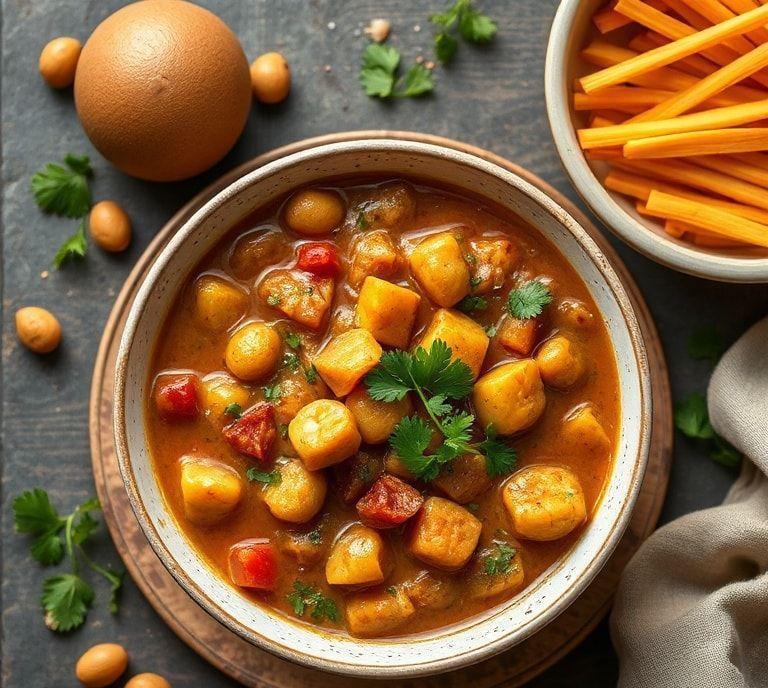
This peanut stew recipe is not only vegetarian but also highly adaptable. It’s the perfect introduction to hearty, plant-based cooking. Rich in protein and packed with nutrients, it’s a great option for anyone looking to get more vegetables and legumes into their meals.
What’s beautiful about this dish is how easy it is to make yet still so satisfying. The base is simple: peanut butter, tomatoes, sweet potatoes, and a medley of spices. It comes together in about 30 minutes, but the flavors deepen as it simmers, and the final result feels like you’ve spent hours perfecting it.
Ingredients Needed
- Peanut Butter (smooth or chunky): This is the heart of the stew. Peanut butter provides the base for the sauce and gives the stew its creamy richness. I always use natural peanut butter for a purer taste and to avoid any unnecessary sugars or preservatives.
- Sweet Potatoes: Sweet potatoes give the stew a lovely balance of sweetness and earthiness. They absorb the flavors beautifully while also adding texture and nutrients.
- Tomatoes (fresh or canned): Tomatoes provide acidity to balance the richness of the peanut butter. Fresh tomatoes work well in summer, but when they’re out of season, I use canned diced tomatoes, which I find hold their flavor really well.
- Onion and Garlic: They form the flavor base for the stew. You can’t go wrong with these two in almost any savory dish-they add depth, aroma, and that familiar comfort.
- Vegetable Broth: This helps bring everything together into a smooth, savory stew. If you’re looking for more flavor, feel free to use a low-sodium vegetable broth.
- Spinach or Kale: Dark leafy greens bring in some color and freshness to the dish. I prefer spinach because it wilts down nicely and blends in well, but kale adds a nice bite if you want a bit more texture.
- Chickpeas or other beans: Chickpeas add protein, making this stew filling and nourishing. You can swap them out for other beans if you prefer, but I love the slightly nutty taste chickpeas bring.
- Spices: A combination of cumin, smoked paprika, ginger, and turmeric makes the stew vibrant with warm flavors. A pinch of cayenne pepper adds a subtle kick, but it’s totally optional.
- Lemon Juice: A squeeze of fresh lemon at the end brightens up the stew and enhances all the flavors.
- Salt and Pepper: To taste, but don’t skip these-they help bring everything together.
Cooking Instructions
- Prep Your Ingredients: Start by peeling and dicing the sweet potatoes. Dice your onion, mince the garlic, and chop your leafy greens. If using canned tomatoes, you can skip the dicing part.
- Sauté the Base: Heat a large pot or Dutch oven over medium heat and add a little olive oil. Once it’s hot, sauté the onions until they’re translucent, about 5 minutes. Add the garlic and cook for another minute until fragrant. Add the spices-cumin, paprika, turmeric, and ginger-and cook for another 1-2 minutes. This helps to bloom the spices and release their full flavor.
- Cook the Sweet Potatoes: Add the diced sweet potatoes to the pot and stir to coat them with the spice mixture. Let them cook for 5-7 minutes, stirring occasionally. This will caramelize them slightly and add a touch of sweetness to the stew.
- Add Tomatoes and Broth: Add the canned tomatoes (or fresh ones) and vegetable broth. Bring everything to a boil, then lower the heat and let it simmer, uncovered, for about 15 minutes. The sweet potatoes should soften during this time.
- Peanut Butter Magic: Stir in the peanut butter until it’s fully incorporated. This will thicken the stew and create that rich, creamy texture we’re going for. Add the chickpeas (or beans of your choice) and simmer for another 10 minutes. The stew will thicken and the flavors will meld together beautifully.
- Add Greens and Finish: Toss in the spinach or kale and cook for a few more minutes until the greens are wilted. Taste and adjust seasoning with salt, pepper, and a squeeze of lemon juice. If you want more heat, this is the time to add that pinch of cayenne.
- Serve: Serve the stew hot, topped with a sprinkle of fresh herbs like cilantro or parsley. It’s great with a side of rice or warm flatbread to soak up all that delicious sauce.
Ingredient Science Spotlight
What makes this peanut stew not just a satisfying meal but also a nutrient-packed one is the combination of ingredients. Let’s break down some of the key players:
- Peanut Butter: Aside from the obvious deliciousness, peanut butter is a great source of plant-based protein and healthy fats, particularly monounsaturated fats. These fats help lower bad cholesterol and provide long-lasting energy. Plus, it’s rich in niacin (vitamin B3), which supports brain function.
- Sweet Potatoes: Packed with beta-carotene, which the body converts into vitamin A, sweet potatoes are great for vision, immune health, and skin. They’re also a good source of fiber, which helps with digestion and satiety.
- Chickpeas: High in protein and fiber, chickpeas provide a satisfying texture and help stabilize blood sugar levels. They’re a great meat substitute in plant-based meals, offering both heart health benefits and digestive support.
- Spinach: Dark leafy greens like spinach are loaded with iron, calcium, and folate, supporting everything from strong bones to red blood cell production.
- Tomatoes: Rich in lycopene, an antioxidant known for its potential cancer-fighting properties, tomatoes are also a good source of vitamin C and potassium.
Expert Tips
- Make it Spicy: If you love heat, don’t be shy with the cayenne or even some fresh chilies. You can also add a splash of hot sauce at the end for that extra kick.
- Peanut Butter Substitution: If you’re allergic to peanuts, you can swap out the peanut butter for almond or cashew butter. Just keep in mind that the flavor will change slightly, but it’ll still be delicious.
- Storing Leftovers: This stew actually tastes better the next day as the flavors have more time to develop. Store leftovers in an airtight container in the fridge for up to 4 days, or freeze for up to 3 months.
- Balance the Sweetness: Sweet potatoes bring a natural sweetness to the stew, so if you prefer a more savory dish, try adding a pinch of salt early on in the cooking process to counterbalance it.
Recipe Variations
- Add Coconut Milk: For a creamier, more tropical twist, you can stir in a can of coconut milk when you add the peanut butter. This will create a richer, more velvety stew.
- Roast the Sweet Potatoes: Instead of cooking the sweet potatoes in the stew, try roasting them separately. This brings out a caramelized flavor that can add a unique depth to the dish.
- Add Other Vegetables: Feel free to get creative. You can add bell peppers, zucchini, carrots, or even eggplant to the mix for extra texture and flavor.
- Protein Boost: If you want more protein, toss in some tofu or tempeh, or even a handful of quinoa for a heartier dish.
Final Words
This peanut stew is more than just food-it’s an experience. It’s about the rhythm of cooking, the joy of creating something wholesome, and the pleasure of sitting down with a bowl of warmth and comfort. The simplicity of the ingredients is part of its charm, but the depth of flavor it offers is what makes it special.
FAQs
What Are The Main Ingredients For A Vegetarian Peanut Stew?
A vegetarian peanut stew typically includes ingredients such as peanuts or peanut butter, vegetables like sweet potatoes, carrots, and spinach, along with onions, garlic, ginger, tomatoes, and vegetable broth. Spices like cumin, coriander, turmeric, and chili powder are often used to enhance the flavor.
Can I Make A Peanut Stew Vegetarian Recipe Without Peanuts?
Yes, if you have an allergy or preference against peanuts, you can substitute them with other nut butters like almond butter or cashew butter. For a different flavor, sunflower seed butter can also work as a nut-free alternative. The stew’s consistency can also be maintained by using creamy tahini.
Is A Peanut Stew Vegetarian Recipe Typically Gluten-free?
Yes, a traditional peanut stew made with vegetables, peanut butter, and vegetable broth is naturally gluten-free. However, it’s important to check the labels of any pre-made ingredients like broth or peanut butter, as some brands may add gluten-containing additives.