Some recipes never really go out of style. They evolve, they shift in flavor or presentation, but their core remains timeless. Pesto, for instance, is one of those dishes that has been around for centuries but feels just as modern today as it did in the kitchens of Liguria, Italy, where it first originated. What makes pesto truly wonderful isn’t just how delicious it is, but how versatile and simple it can be. As a vegetarian, I’ve often found pesto to be a comforting dish that’s not just satisfying, but deeply nourishing – it’s a dish that feels like an indulgence while being incredibly fresh and light at the same time. There’s something about the combination of basil, garlic, pine nuts, olive oil, and cheese that creates a flavor profile that tastes both rich and vibrant. If you’re someone who’s always looking for ways to incorporate more plant-based meals into your routine without sacrificing flavor, pesto is a recipe that will hit all the right notes.
In this recipe, we’re going to dive into a vegetarian version of pesto that skips the meat-based toppings and focuses on creating an unforgettably flavorful sauce. It’s an easy way to elevate pastas, sandwiches, and even roasted vegetables. I can’t count how many times I’ve whipped this up when I needed a quick, comforting meal. You can even store it in the fridge for a few days, which makes it the perfect make-ahead option when you’re in need of something flavorful but don’t want to spend too much time in the kitchen.
Pesto Vegetarian Recipe
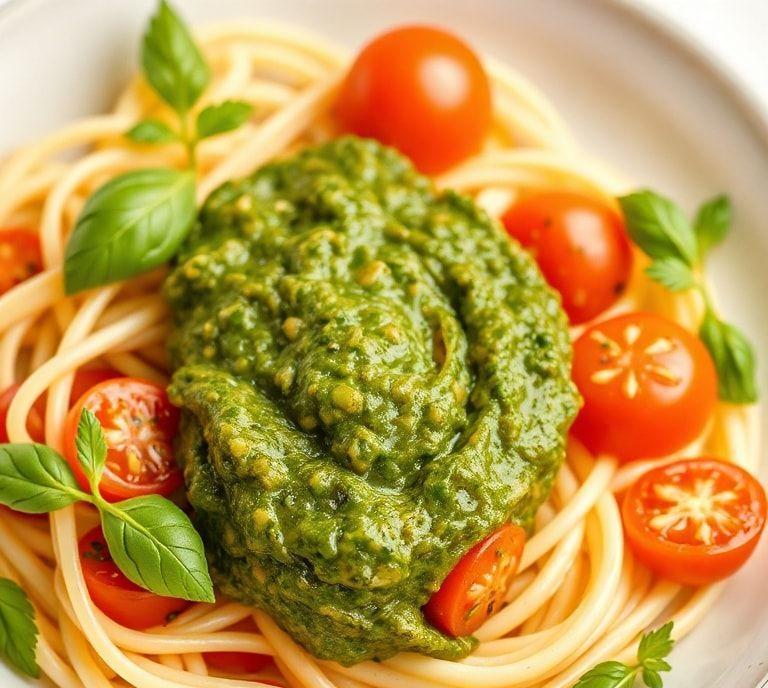
I’ve always found pesto to be the perfect blank canvas. The base ingredients-fresh basil, garlic, pine nuts, and olive oil-are incredibly aromatic and flavorful. But the beauty of pesto is that once you have the essentials down, it’s easy to add your own spin. I’ll walk you through my go-to vegetarian pesto recipe, but feel free to get creative!
Ingredients Needed
- Fresh Basil (2 cups) – This is the heart of any pesto. You’ll want to use young, tender basil for its bright, aromatic flavor.
- Garlic (2-3 cloves) – Garlic adds that zesty, earthy bite. I like it a little more garlicky, so I tend to lean toward the upper end of this range.
- Pine Nuts (1/4 cup) – These nuts are essential for the pesto’s creamy texture and nutty richness. I’ve tried using other nuts like walnuts, but pine nuts have this perfect sweetness and subtle crunch that makes pesto truly special.
- Parmesan Cheese (1/2 cup, grated) – Some pesto recipes opt for pecorino or other hard cheeses, but I’m a fan of the more delicate sharpness that Parmesan brings. It balances the flavors beautifully.
- Olive Oil (1/2 cup) – Extra virgin olive oil is the way to go. It brings a fruity, robust flavor that elevates everything in this recipe.
- Lemon Juice (1-2 teaspoons) – A bit of lemon juice brightens everything up. It cuts through the richness of the olive oil and cheese, making the sauce feel lighter and more vibrant.
- Salt (to taste) – This will depend on your cheese choice, but be sure to taste as you go. It helps bring all the ingredients together.
Cooking Instructions
- Prep the Basil: Begin by washing and drying the fresh basil leaves. The dryer they are, the better. Excess moisture can dilute the flavor and texture of the pesto.
- Toast the Pine Nuts: In a small skillet over medium heat, toast the pine nuts for a few minutes until they’re golden brown. This step is essential because the heat enhances their natural sweetness and gives the pesto that deeper nutty flavor. Be careful not to burn them – keep an eye on the pan and stir frequently. Trust me, there’s nothing worse than burnt pine nuts in pesto!
- Blend Everything Together: Add the basil, toasted pine nuts, garlic, Parmesan cheese, and lemon juice into a food processor. Pulse until the ingredients are chopped but not pureed – you want texture, not a smooth paste.
- Add the Olive Oil: With the processor running, slowly stream in the olive oil. You may need to scrape down the sides of the bowl a couple of times to ensure everything is well blended. You want the pesto to have a slightly thick but pourable consistency. If it’s too thick, you can add a little extra olive oil to loosen it up.
- Taste and Season: Here’s where you can personalize your pesto. Taste the sauce and adjust the seasoning with more salt or a squeeze of lemon if needed. If you prefer a stronger garlic flavor, feel free to add a bit more.
- Serve or Store: If you’re using the pesto immediately, toss it with your favorite pasta. If you’re storing it, transfer it into an airtight jar and cover the top with a thin layer of olive oil to prevent oxidation. It’ll keep in the fridge for 4-5 days, and you can freeze it for up to 3 months.
Ingredient Science Spotlight
One of the most interesting things about pesto is how the ingredients come together to create such a balanced flavor. Let’s break down some of the science behind the key elements of the recipe:
- Basil: The bright, almost peppery flavor of fresh basil comes from the compound called linalool, which is also found in lavender and mint. This compound has a refreshing scent that stimulates the taste buds and makes basil a natural partner to rich oils and cheeses.
- Garlic: Garlic contains allicin, a sulfur-containing compound that gives it its pungent aroma and sharp flavor. When crushed or chopped, garlic releases enzymes that turn alliin into allicin. Allicin is what gives garlic that bite, but it also has medicinal properties, including anti-inflammatory effects.
- Pine Nuts: Pine nuts are high in monounsaturated fats, which are heart-healthy fats. These fats also contribute to the creamy texture of the pesto, helping to bind the basil and olive oil together without making it too greasy.
- Olive Oil: The extra virgin olive oil is rich in antioxidants, particularly polyphenols like oleuropein. These compounds have anti-inflammatory properties and contribute to the oil’s peppery, somewhat bitter finish. When paired with the richness of Parmesan and pine nuts, it provides a velvety mouthfeel.
Expert Tips
- Use a Mortar and Pestle for a More Authentic Texture: While the food processor is convenient, grinding your pesto ingredients with a mortar and pestle is a more traditional way to prepare it. The process extracts more oils from the herbs and nuts, giving you a smoother, more aromatic pesto.
- Don’t Skip the Lemon: It’s easy to overlook lemon juice, but it’s essential for balancing the richness of the pesto. The acidity of the lemon brightens everything up, giving the pesto its signature freshness.
- Experiment with Herbs: Although basil is traditional, you can experiment with other herbs. Try using arugula, spinach, or even mint for a different flavor profile. You can even mix a few different herbs to create a more complex pesto.
- Make it Vegan: If you want to skip the dairy, you can replace the Parmesan with a dairy-free option. Nutritional yeast is a great alternative that adds a cheesy, umami flavor without the dairy.
Recipe Variations
- Sun-Dried Tomato Pesto: Add a handful of sun-dried tomatoes to your pesto for a slightly tangy, umami-packed variation. It’s a perfect addition if you want to add a bit more depth and color to the dish.
- Spicy Pesto: Add a small chili pepper or a pinch of red pepper flakes to spice things up. It’ll give your pesto a subtle heat without overpowering the delicate basil.
- Nut-Free Version: If you have a nut allergy or just prefer a nut-free pesto, sunflower seeds work as an excellent substitute. They’re a bit milder in flavor but still provide a nice texture.
- Avocado Pesto: For an even creamier version, add half an avocado to the mix. It will create a smooth, velvety pesto that’s rich without being heavy.
Final Words
At the end of the day, pesto is a recipe that invites you to make it your own. It’s simple enough to make on a whim, yet rich and sophisticated enough to serve at a dinner party. Whether you’re tossing it with pasta, spreading it on toast, or drizzling it over roasted vegetables, this vegetarian pesto is sure to satisfy. What I love most about it is that it’s a great reflection of how cooking can be both an art and a science. It’s all about the balance of flavors and textures, and with a few thoughtful adjustments, you can tailor it to your own taste.
FAQs
What Are The Key Ingredients In A Pesto Vegetarian Recipe?
A traditional pesto vegetarian recipe typically includes fresh basil, garlic, pine nuts, Parmesan cheese, olive oil, and salt. For a vegetarian version, you can substitute the Parmesan with a plant-based cheese or nutritional yeast for a dairy-free option.
Can I Use Other Nuts Besides Pine Nuts In A Pesto Vegetarian Recipe?
Yes, you can easily substitute pine nuts with other nuts such as walnuts, almonds, or cashews. Each nut will provide a slightly different flavor and texture, but they all work well in pesto and can be used based on personal preference or availability.
How Can I Make A Pesto Vegetarian Recipe Without Cheese?
To make a dairy-free pesto, simply omit the Parmesan cheese and replace it with nutritional yeast, which adds a cheesy, umami flavor. Alternatively, you can use other plant-based cheeses or even avocado for a creamy texture without the dairy.