Sometimes, a dish comes along that’s so good it stops you in your tracks. For me, that dish is ratatouille. It’s a simple yet incredible French vegetable medley that makes you appreciate the art of cooking in a way that feels almost intimate. Every bite is a celebration of fresh, vibrant vegetables, each ingredient lovingly bringing out the best in the others. When I first tried making it, I was surprised at how something so simple could taste so profound. The layers of flavor, the soft, roasted vegetables, and that rich tomato sauce… it felt like magic.
And, since I’ve embraced vegetarian cooking more over the years, ratatouille has become a go-to meal, not just for its taste but for its versatility. It’s a meal that works for nearly any occasion-whether it’s a cozy dinner for yourself or a colorful centerpiece at a dinner party. The beauty of ratatouille is that you don’t have to be an expert to make it. It’s all about respecting the ingredients, giving them the space to shine.
If you’ve been looking for a dish that combines comfort, nutrition, and that warm, Mediterranean essence, then this vegetarian ratatouille recipe will likely become a staple in your kitchen too.
Ratatouille Vegetarian Recipe
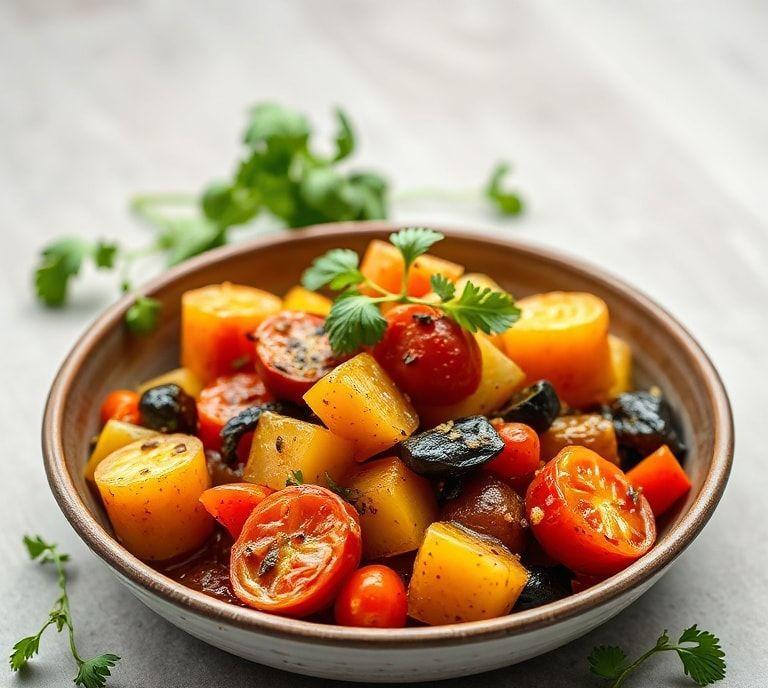
I’m not going to lie: this dish can feel like a labor of love. But the good news is, it’s not complicated, and the time it takes to prepare is totally worth it. If you’re cooking for just yourself, or sharing with friends, this dish transforms any meal into something unforgettable.
Let’s dive in, shall we?
Ingredients Needed
Here’s what you’ll need to bring this vegetable masterpiece to life:
- Eggplant: 1 medium, sliced into rounds or cubes (depending on your preference)
- Zucchini: 2 medium, sliced into rounds
- Bell Peppers: 1 red and 1 yellow (or green for a different taste), diced
- Tomatoes: 4 large, chopped (Roma or vine-ripened work best)
- Onion: 1 large, diced
- Garlic: 3 cloves, minced
- Olive Oil: 2-3 tablespoons, extra virgin is best for that rich flavor
- Fresh Basil: A handful of leaves, torn or roughly chopped
- Thyme: 1 teaspoon (fresh or dried)
- Rosemary: 1 sprig, finely chopped
- Tomato Paste: 2 tablespoons (this adds an extra depth of flavor)
- Salt & Pepper: To taste
- Optional: Red wine vinegar or balsamic vinegar (for a little tang)
That’s it! A short list, but each vegetable does its part in creating this dish’s savory, hearty nature.
Cooking Instructions
- Prep the Veggies: Start by prepping all your vegetables. It can be a bit time-consuming, but once they’re all chopped, you’re in the home stretch. Cut the eggplant, zucchini, bell peppers, tomatoes, and onion as described above, and don’t forget to mince the garlic.
- Sauté the Aromatics: In a large skillet or Dutch oven, heat up about 2 tablespoons of olive oil over medium heat. Add the diced onion and garlic, sautéing for about 3 minutes until softened and fragrant.
- Add the Vegetables: Next, add in the eggplant and zucchini. These two vegetables need a bit more time to soften and release their flavors, so let them cook for about 5 minutes, stirring occasionally.
- Introduce the Peppers and Tomatoes: Once the eggplant and zucchini are starting to soften, toss in the diced bell peppers and chopped tomatoes. Stir everything together and let it all cook down, about 10-15 minutes. The tomatoes should begin to break down and form a rich sauce.
- Seasoning & Simmering: Add your tomato paste, thyme, rosemary, salt, and pepper. Stir everything in, ensuring all the vegetables are evenly coated. If you like a little acidity in your dish, a dash of red wine vinegar or balsamic vinegar can enhance the flavor balance. Let the mixture simmer over low heat for about 20-25 minutes, stirring occasionally. The vegetables should become tender, and the flavors will start to meld together into a luscious, slightly thickened sauce.
- Finishing Touches: Just before serving, sprinkle fresh basil on top, letting it wilt slightly into the warm vegetables. A drizzle of olive oil at the end doesn’t hurt either-it adds a rich finishing touch.
- Serve: You can serve ratatouille on its own or with a side of crusty bread, quinoa, or even over pasta. It’s also a fantastic side dish to accompany grilled meats or a savory frittata.
Ingredient Science Spotlight
There’s something deeply satisfying about cooking with simple ingredients that transform into something so much greater than the sum of their parts. In the case of ratatouille, each vegetable plays an important role. Here’s a breakdown of why each one is special:
- Eggplant: This vegetable has a slightly spongy texture, which makes it perfect for absorbing all those wonderful flavors. Its neutral taste lets it pick up the essence of the garlic, tomatoes, and herbs. Eggplant is also rich in antioxidants, especially nasunin, which helps protect your cells.
- Zucchini: Often seen as a ’filler’ vegetable, zucchini actually has a mild sweetness that adds a delicate flavor and soft texture once cooked. It also contributes a significant amount of water to the dish, which helps create that luscious sauce.
- Bell Peppers: These guys bring a crunchy texture and a natural sweetness that’s elevated when sautéed. They also provide a good source of vitamin C, which helps in the absorption of iron from the other vegetables.
- Tomatoes: Packed with lycopene, an antioxidant known for its cancer-fighting properties, tomatoes provide both acidity and umami. Their richness is the backbone of the sauce, giving depth to the final dish.
Expert Tips
- Don’t Rush the Sautéing: The key to unlocking the best flavor is giving the vegetables time to release their juices and caramelize a little bit. Resist the urge to turn up the heat-low and slow is the way to go.
- Use Seasonal Produce: Ratatouille is at its best when made with fresh, in-season vegetables. If you’re lucky enough to have access to a garden or a local farmers’ market, the quality of your vegetables will shine through in the final dish.
- Let It Sit: If you have time, let your ratatouille rest for a bit after cooking. Like most stews and slow-simmered dishes, the flavors improve with time. If you can, make it the day before you plan to serve it!
- Don’t Forget the Olive Oil: A good quality extra virgin olive oil is key to finishing the dish off with a rich, silky texture. The oil also carries the flavors of the herbs, creating a smoother, more luxurious taste.
Recipe Variations
While this recipe is fantastic as-is, there are some fun ways to customize it based on what you have on hand or your personal preferences.
- Add Beans: Chickpeas or white beans can add some extra protein and texture to your ratatouille, turning it into a more substantial meal.
- Spicy Kick: If you like a little heat, add some crushed red pepper flakes when you’re sautéing the onions and garlic. It gives a nice, subtle spice that balances the sweetness of the vegetables.
- Cheese: Although this is a vegetarian dish, adding some grated Parmesan or goat cheese just before serving can elevate it. A sprinkle of feta on top is also a nice touch.
- Herb Variations: Don’t feel tied to the herbs listed. Fresh oregano, parsley, or tarragon can be great substitutes depending on the flavor profile you’re going for.
Final Words
Ratatouille might be simple, but it’s the simplicity that makes it so comforting and fulfilling. There’s no need for complicated techniques or exotic ingredients here. It’s just honest, nourishing food that brings out the best in each vegetable. And with a little attention, you can turn it into something truly memorable.
FAQs
What Vegetables Are Typically Used In A Vegetarian Ratatouille?
A traditional vegetarian ratatouille typically includes a mix of vegetables such as eggplant, zucchini, bell peppers, onions, tomatoes, and garlic. These vegetables are sautéed or roasted to create a flavorful base. Fresh herbs like basil, thyme, and rosemary are often added for seasoning.
Can I Make A Vegan Version Of Ratatouille?
Yes, a vegan version of ratatouille can be easily made. Simply ensure that the recipe excludes any animal-based products like cheese or butter. Instead, use olive oil for sautéing, and opt for a plant-based seasoning or vegan-friendly broth if needed.
How Do I Prevent The Vegetables From Becoming Soggy In My Ratatouille?
To avoid soggy vegetables in ratatouille, it’s important to cook the vegetables separately to prevent them from releasing too much moisture. For instance, roasting the vegetables individually in the oven can help concentrate their flavors and maintain texture. Additionally, avoid overcrowding the pan while sautéing, as this can lead to steaming instead of browning.