Lasagna has long been a family favorite, a comfort food that fills both the stomach and the soul. But when you opt for a vegetarian version, it becomes even more than just a meal-it transforms into a celebration of fresh, earthy flavors. I remember the first time I made roasted vegetarian lasagna. It was a cool autumn evening, the kind that invited the smell of roasting vegetables to waft through the house. I had just come back from the farmers’ market with an armful of vibrant vegetables, eager to try a recipe that felt like a warm hug on a plate. I didn’t know then that this lasagna would quickly become a staple in my kitchen, a dish that friends and family would request again and again. There’s something so satisfying about layering perfectly roasted vegetables with creamy ricotta and mozzarella, all smothered in a rich tomato sauce, and then baking it until it’s golden and bubbly. It’s the kind of dish that feels like an event, something to gather around the table for.
Let me take you through how to make this dish, step by step. Trust me-once you try this recipe, it’ll likely become your go-to vegetarian comfort food, too.
Roasted Vegetarian Lasagna Recipe
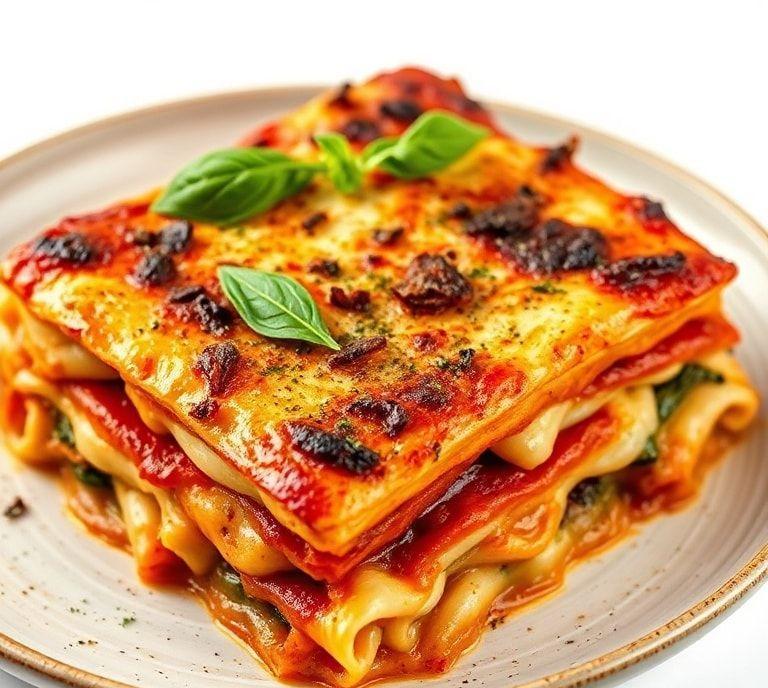
This roasted vegetarian lasagna is perfect for those days when you want a cozy, hearty meal but still want to pack in plenty of vegetables. The key to this recipe is the slow-roasting of vegetables, which brings out their natural sweetness and depth of flavor. When combined with the rich layers of creamy cheese and zesty marinara, it’s an absolute showstopper.
Ingredients Needed
Here’s what you’ll need to bring this vegetarian lasagna to life:
- 12 lasagna noodles (I prefer the no-boil type, but you can use regular pasta if you like)
- 2 zucchinis, sliced
- 1 eggplant, sliced into rounds
- 1 bell pepper, chopped (you can use any color you like)
- 2 cups spinach (fresh or frozen)
- 1 onion, thinly sliced
- 4 cloves garlic, minced
- 1 cup ricotta cheese
- 2 cups shredded mozzarella cheese
- 1/2 cup grated Parmesan cheese
- 1 jar (about 24 oz) marinara sauce
- 1 tablespoon olive oil
- Salt and pepper (to taste)
- Fresh basil leaves (for garnish)
- A pinch of red pepper flakes (optional, if you like a little heat)
Cooking Instructions
- Preheat your oven to 400°F (200°C). Start by getting the vegetables ready for roasting. Lay out your sliced zucchini, eggplant, bell pepper, and onion on a baking sheet. Drizzle everything with olive oil, and sprinkle with a little salt and pepper. Give it all a good toss to make sure the veggies are evenly coated.
- Roast the vegetables for about 25-30 minutes, stirring halfway through, until they’re nicely browned and tender. Roasting them caramelizes their natural sugars, giving the lasagna that deep, savory sweetness that’ll make each bite memorable.
- While the veggies are roasting, bring a large pot of salted water to a boil and cook your lasagna noodles according to the package instructions. If you’re using no-boil noodles, just skip this step.
- Once the veggies are done roasting, remove them from the oven and set them aside. Reduce the oven temperature to 375°F (190°C) for baking the lasagna.
- Now it’s time to assemble! Start by spreading a thin layer of marinara sauce in the bottom of a 9×13-inch baking dish. Then, place your lasagna noodles (or the no-boil ones) on top, overlapping them slightly.
- Layering time! Spread a layer of roasted vegetables over the noodles, followed by a dollop of ricotta cheese. Sprinkle on a little mozzarella and Parmesan, and then repeat the layers until you’ve used up all your ingredients. The last layer should be topped with a generous amount of mozzarella cheese.
- Bake the lasagna uncovered for 35-40 minutes, or until the cheese is bubbly and golden. Let it rest for about 10 minutes before serving, so the layers set nicely.
- When serving, sprinkle with fresh basil leaves and, if you like, a pinch of red pepper flakes for an extra kick.
Ingredient Science Spotlight
Let’s take a moment to geek out over the science of some of the key ingredients. You might not think about it while you’re layering the lasagna, but there’s some real magic happening behind the scenes in the kitchen.
- Roasting vegetables: When vegetables are roasted at high heat, their natural sugars undergo a process called Maillard reaction. This is what causes them to turn golden brown and develop that deep, umami-rich flavor. The slight caramelization makes all the difference in a vegetarian lasagna, as it adds complexity and balance to the dish.
- Ricotta cheese: Ricotta is made by heating milk and then adding an acid (like lemon juice or vinegar) to curdle it. What’s fascinating about ricotta is its texture-it’s both creamy and crumbly, which gives your lasagna a light, airy quality that complements the rich, savory roasted veggies. Plus, it’s packed with protein and calcium, so you’re getting some nutritional benefits as well.
- Mozzarella and Parmesan: Both cheeses contribute to that glorious cheesy pull. Mozzarella is known for its stretchiness, while Parmesan brings a nutty, salty punch. When they melt together, they form a gooey, satisfying layer that binds everything into a perfect slice of lasagna.
Expert Tips
- Don’t overcrowd your vegetables: If you’re roasting a large batch of veggies, spread them out in a single layer on your baking sheet. If the veggies are too crowded, they’ll steam rather than roast, and you won’t get that lovely caramelization.
- Use a mix of cheeses: While ricotta and mozzarella are essential for that creamy texture, don’t shy away from throwing in some provolone, goat cheese, or even a little feta for extra flavor layers. The more cheese variety, the richer the lasagna.
- Make it ahead: Lasagna can be a bit of a time investment, but it’s an excellent make-ahead dish. You can assemble it a day or two in advance, store it in the fridge, and then bake it when you’re ready. This also gives the flavors time to meld together, making it even more delicious.
- Rest before serving: I know it’s tempting to dig in right away, but let the lasagna rest for at least 10 minutes before slicing. This allows the layers to firm up, making it easier to serve and preventing it from falling apart.
Recipe Variations
- Add protein: If you’re not strictly vegetarian but want to add some extra protein, consider adding layers of cooked lentils or crumbled tofu. They’ll take on the flavors of the sauce and veggies beautifully.
- Swap in different veggies: Feel free to experiment with other vegetables like roasted carrots, sweet potatoes, or mushrooms. Every vegetable brings its own character to the dish.
- Vegan twist: If you’re looking for a vegan option, simply swap out the dairy cheeses for vegan alternatives, and you’ve got yourself a delicious plant-based lasagna.
Final Words
There’s something about a lasagna that brings everyone together. It’s hearty enough to feed a crowd, yet personal enough to make you feel like you’re getting a big, warm hug from the inside. What I love most about this roasted vegetarian version is how the simple, wholesome ingredients come together in such a satisfying way. Plus, the flexibility of the recipe means you can play around with different veggies and seasonings to make it your own. It’s a dish that’s comforting, yet full of flavor and good-for-you ingredients.
FAQs
What Vegetables Work Best For A Roasted Vegetarian Lasagna?
For a roasted vegetarian lasagna, vegetables that hold their shape and have rich flavors when roasted are ideal. Common choices include zucchini, bell peppers, eggplant, mushrooms, and cherry tomatoes. Roasting these vegetables beforehand enhances their natural sweetness and reduces excess moisture, which helps prevent a soggy lasagna.
Can I Make A Roasted Vegetarian Lasagna Ahead Of Time?
Yes, roasted vegetarian lasagna can be prepared ahead of time. You can assemble the lasagna a day in advance and store it in the refrigerator, covered tightly with plastic wrap or foil. When ready to bake, remove it from the fridge and allow it to come to room temperature for 15-20 minutes before baking to ensure even cooking. This approach also allows the flavors to meld together for a richer taste.
What Are Some Tips For Making The Lasagna Creamy Without Using Meat?
To make a roasted vegetarian lasagna creamy without meat, consider using ricotta, mozzarella, and Parmesan cheeses, or a béchamel sauce made with butter, flour, and milk. Layering the cheeses evenly and mixing ricotta with herbs such as basil, oregano, or parsley can enhance flavor and texture. Additionally, ensuring that roasted vegetables are not too watery prevents the lasagna from becoming runny.