There’s something undeniably comforting about a plate of spaghetti. It’s a dish that doesn’t need to try too hard. Whether you’re curled up on a cold evening, getting your hands messy in the kitchen, or gathered with friends for a cozy dinner, pasta just seems to work every time. But what happens when you ditch the meat and explore the simple beauty of a vegetarian spaghetti recipe? Well, you get a dish that’s full of flavor, texture, and nutrition-all wrapped up in a warm, comforting bowl.
I remember the first time I truly embraced a vegetarian version of spaghetti. I had spent years with the classic meat-based marinara, and it wasn’t until I had a friend over who was vegan that I really explored the idea of creating a plant-based sauce. The result was unexpected but delightful-rich, hearty, and just as satisfying. That was the turning point. I started experimenting with vegetables, herbs, and a mix of textures to create something that wasn’t just an alternative but an entirely delicious option in its own right.
The beauty of a vegetarian spaghetti recipe lies in its versatility. You can adjust it to your tastes, add your favorite veggies, and even sneak in some surprises. Whether you prefer a robust, chunky sauce or a lighter, more delicate one, this recipe allows you to bring whatever you love to the table.
Spaghetti Vegetarian Recipe
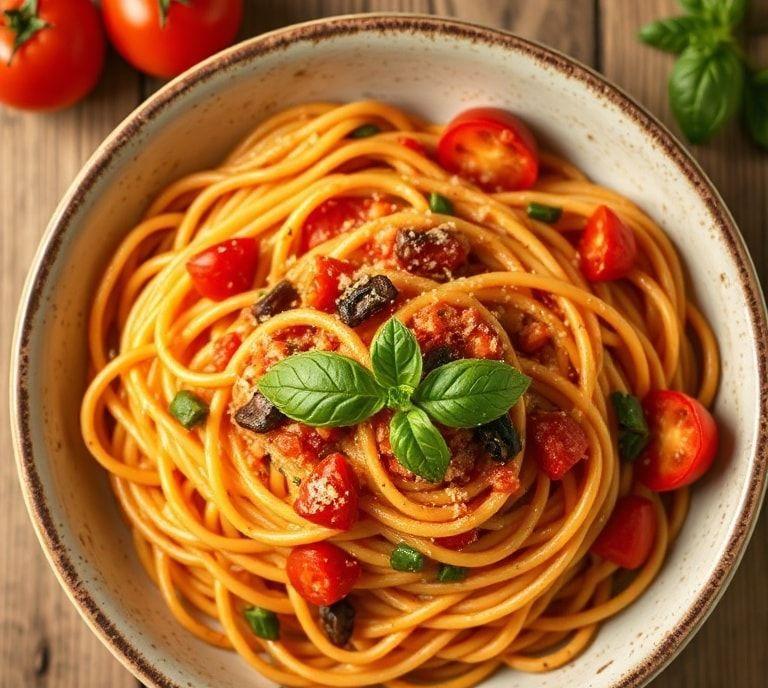
This spaghetti is all about the balance of fresh, vibrant ingredients and rich flavors. It’s simple yet satisfying. The vegetables provide texture and color, the garlic gives a depth of flavor, and the olive oil ties everything together with its richness. A sprinkle of fresh basil at the end brings everything to life.
Ingredients Needed
- Spaghetti (1 lb): The base of this dish, of course. I usually go for a good quality, whole wheat or gluten-free option, depending on the mood. You could also opt for zucchini noodles if you’re craving something even lighter.
- Olive Oil (3 tbsp): Extra virgin olive oil is my go-to here. It’s the secret to that lovely, silky finish that makes the sauce feel indulgent.
- Garlic (4 cloves): Fresh garlic is essential. It’s fragrant and adds the right kick without overpowering the other flavors.
- Tomatoes (4 medium or 2 cups cherry tomatoes): Tomatoes are the heart of any good pasta sauce, so go for ripe, juicy ones. I personally love using cherry tomatoes because they add a burst of sweetness that’s hard to resist.
- Onion (1 medium, chopped): A classic foundation for a sauce-onions bring out the natural sweetness of the other ingredients while adding that savory depth.
- Zucchini (1 medium, diced): Adding zucchini gives the sauce a bit of substance, especially if you’re missing the meatiness of a traditional sauce. It soaks up the flavors beautifully.
- Bell Pepper (1, diced): I like to add a pop of color and a slight sweetness with bell peppers. Red, yellow, or orange peppers are my favorites, but green works just as well.
- Spinach (2 cups fresh, chopped): Fresh spinach wilts down so beautifully and adds a lot of nutrients to the dish without compromising the flavor.
- Basil (fresh, handful, chopped): A finishing touch that brightens up the entire dish and gives it that Italian restaurant feel.
- Salt and Pepper (to taste): The magic of any dish is in seasoning. A little salt helps bring out the depth of the vegetables, while fresh cracked black pepper adds a nice heat.
- Grated Parmesan (optional, for serving): For a bit of indulgence, a sprinkle of parmesan adds a salty creaminess. Or, for a vegan twist, nutritional yeast works just as well.
Cooking Instructions
- Boil the Pasta: Start by bringing a large pot of salted water to a boil. Once boiling, add your spaghetti and cook according to the package directions. I always add a little extra salt to the water to infuse the pasta with flavor. Once done, drain the pasta, but save about a cup of the pasta water for later-it’ll help bring everything together.
- Prepare the Vegetables: While the pasta is cooking, heat the olive oil over medium heat in a large skillet. Add the chopped onion and garlic and sauté for about 2-3 minutes until they become fragrant and soft.
- Add the Veggies: Next, add your zucchini and bell pepper. Stir them in and cook for about 5-7 minutes, letting them soften. The colors will pop, and the kitchen will smell incredible.
- Tomatoes and Spinach: Now, toss in your tomatoes, and cook them for another 5 minutes until they start to soften and break down. At this point, throw in your spinach, letting it wilt down into the sauce.
- Season It Up: Add salt, pepper, and fresh basil to taste. If the sauce feels a bit dry, splash in some of that reserved pasta water. This will loosen the sauce and help it cling to the noodles.
- Toss the Pasta: Add the cooked spaghetti to the skillet and toss everything together. This is where the magic happens. The noodles absorb all the rich, garlicky goodness of the sauce, making every bite packed with flavor.
- Serve: Plate the pasta, top with a sprinkle of Parmesan or nutritional yeast, and a few more basil leaves. A drizzle of olive oil always helps bring it all together.
Ingredient Science Spotlight
Let’s talk about tomatoes for a second. They’re the backbone of this dish, and they do more than just taste good. Tomatoes are packed with lycopene, an antioxidant known for its anti-inflammatory properties and its role in reducing the risk of chronic diseases like heart disease. When cooked, tomatoes actually become even more potent in terms of lycopene, so that’s why I love the way the sauce deepens as the tomatoes break down. Also, the natural acidity in tomatoes pairs perfectly with the richness of olive oil, creating that velvety texture in the sauce.
Zucchini, on the other hand, isn’t just there for texture. It’s rich in vitamin C and manganese and is a great source of fiber. It helps keep the sauce light and gives it some body without making it too heavy. If you’re looking for a low-calorie, low-carb addition to your meal, zucchini is a winner.
Expert Tips
- Don’t Overcook the Vegetables: One of my go-to tips is to not let the veggies get mushy. I like to keep them just soft enough so they still have a bite. That slight crunch in the zucchini and bell pepper adds a nice contrast to the tender pasta.
- Use Fresh Herbs: Fresh basil really makes the dish pop, but you can also experiment with other herbs like oregano or thyme, depending on what you have on hand.
- Pasta Water is Your Friend: Don’t forget to reserve some pasta water! It has a natural starch that helps bind the sauce to the noodles. Adding a splash of it towards the end can make your sauce feel silkier and smoother.
- Add a Kick: If you’re into a bit of heat, a pinch of red pepper flakes can be added when you sauté the garlic and onions. It adds a subtle warmth without overpowering the other flavors.
Recipe Variations
This vegetarian spaghetti recipe is incredibly flexible. Here are a few ways you can play around with it:
- Add Roasted Vegetables: Roasted eggplant, mushrooms, or butternut squash can be added for extra depth and umami.
- Vegan Options: Keep the dish plant-based by skipping the Parmesan and using nutritional yeast instead. You can also substitute the olive oil with avocado oil for a slightly different flavor.
- Noodle Alternatives: If you’re looking for something lower in carbs, try swapping spaghetti with zucchini noodles, spaghetti squash, or even shirataki noodles for a lighter, yet still satisfying meal.
Final Words
At the end of the day, this dish is more than just a meatless version of spaghetti. It’s an opportunity to appreciate the natural flavors of vegetables in a way that feels indulgent. The rich sauce, vibrant colors, and comforting textures all come together to create something that’s good for your body and your soul.
It’s also one of those recipes you can tweak to make your own. The beauty of vegetarian cooking is that you can swap in your favorite seasonal veggies, adjust the seasonings to your liking, and still end up with a dish that feels like home.
FAQs
What Are The Key Ingredients For A Basic Spaghetti Vegetarian Recipe?
A basic spaghetti vegetarian recipe typically includes ingredients such as spaghetti pasta, olive oil, garlic, canned tomatoes or tomato sauce, vegetables (like zucchini, bell peppers, or mushrooms), and fresh herbs like basil and oregano. Some variations may include spinach, olives, or parmesan cheese (if not strictly vegan).
Can I Make Spaghetti Vegetarian Without Using Tomato Sauce?
Yes, you can make a vegetarian spaghetti recipe without tomato sauce. Instead, try using olive oil and garlic as a base, then add sautéed vegetables like mushrooms, spinach, or roasted peppers for flavor. You can also use pesto, a creamy avocado sauce, or a simple lemon and olive oil dressing for a fresh alternative.
Is Spaghetti Vegetarian Recipe Suitable For Vegans?
A traditional spaghetti vegetarian recipe can often be made vegan by avoiding cheese or any animal-based ingredients. To ensure the recipe is fully vegan, use plant-based substitutes for cheese (like nutritional yeast) and ensure that the pasta is egg-free. Many spaghetti recipes are naturally vegan-friendly with the right vegetable and seasoning choices.