
I remember the first time I came across a vegetarian version of beef stroganoff. I was scrolling through a food blog on a lazy Sunday, looking for something warm and comforting, yet a little different from the usual. As I read through the recipe, I could almost taste it – creamy, rich, with a little tang from the sour cream, all smothering tender vegetables instead of beef. It was like someone had taken the essence of the traditional stroganoff and transformed it into something lighter and just as indulgent. Ever since then, it’s become one of my go-to comfort food recipes, perfect for both weeknight dinners and cozy gatherings.
For a long time, I thought the only way to enjoy a stroganoff was with meat, but once I tasted how satisfying a vegetarian version could be, I was hooked. If you’re curious about trying this veggie take, you’re in for a treat. Let’s break down everything you need to know to make a stellar vegetarian stroganoff that’s every bit as luxurious as its meaty counterpart.
Stroganoff Vegetarian Recipe
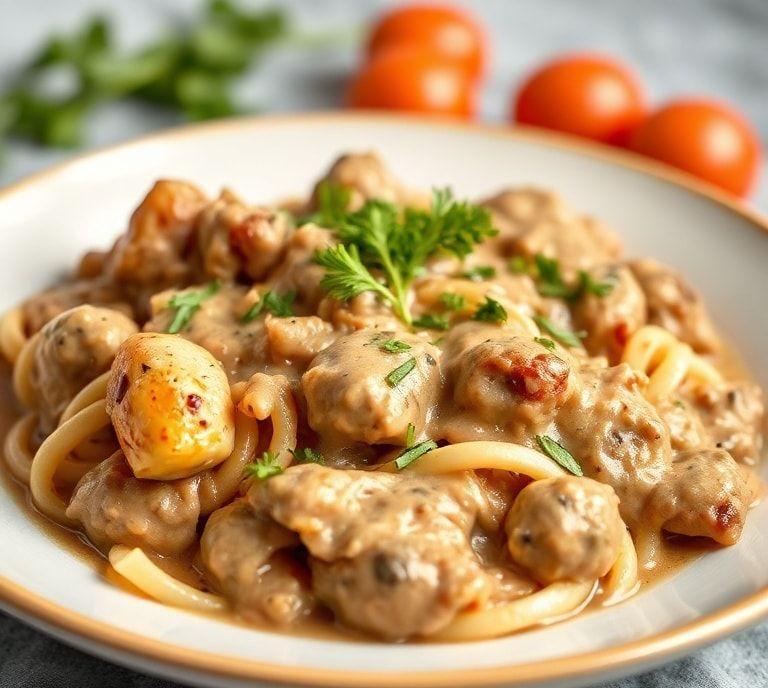
This vegetarian stroganoff is all about depth of flavor, smooth textures, and that signature tanginess. Instead of beef, we’ll be using hearty mushrooms to mimic the meaty bite, along with onions, garlic, and a rich, creamy sauce. You won’t miss the beef – trust me.
Ingredients Needed
- Mushrooms: I prefer using a mix of cremini and shiitake mushrooms, but any mushrooms you love will work. They create that hearty, savory base.
- Butter: For sautéing and adding richness.
- Onion: I go for yellow or white onions. They add sweetness and depth.
- Garlic: Minced garlic adds that aromatic punch.
- Vegetable Broth: You can use store-bought or homemade – either works.
- Sour Cream: A key ingredient for the creamy, tangy finish. If you want to keep it dairy-free, cashew cream is a great alternative.
- Dijon Mustard: For a little zing and to balance the richness.
- Fresh Thyme: This adds a fragrant, earthy note.
- Paprika: A little sweetness and smokiness.
- Egg Noodles: The classic choice for stroganoff, but feel free to swap with a gluten-free version if you need to.
- Salt & Pepper: To taste – always taste as you go.
Cooking Instructions
Making this stroganoff is as simple as it gets. You don’t need to be a chef to pull it off – just follow these easy steps:
- Sauté the mushrooms: Start by heating a tablespoon of butter in a large skillet over medium heat. Add your mushrooms and sauté until they release their moisture and become golden brown. This step is key because you want to coax out the deep, umami flavor from the mushrooms. If you’re using different mushrooms, some might take a little longer, but that’s all good – just make sure you don’t rush this step. The golden-brown bits are where all the flavor comes from.
- Add onions and garlic: Once the mushrooms are ready, toss in the onions and garlic. Sauté until they soften and become fragrant. This usually takes about 3 minutes.
- Build the sauce: Stir in the vegetable broth, mustard, paprika, and thyme. Let everything simmer for about 10 minutes. You want the broth to reduce a bit and intensify in flavor. This is where you get that wonderful, savory base.
- Finish the sauce: Once the sauce has reduced, reduce the heat to low and stir in the sour cream. Keep stirring until it’s all creamy and luscious. If the sauce feels too thick, you can add a splash of water or broth to reach your desired consistency.
- Toss with noodles: In a separate pot, cook your noodles according to the package instructions. Once they’re ready, toss them into the creamy mushroom sauce. Make sure each noodle gets coated in that velvety sauce. Season with salt and pepper to taste, and give it one last stir.
- Serve & enjoy: Serve the stroganoff immediately, garnishing with a little extra thyme or parsley for a pop of color and flavor.
Ingredient Science Spotlight
Let’s take a moment to dive into the science behind a few of the key ingredients here.
- Mushrooms: These humble fungi are packed with umami, that savory flavor that makes food taste ’meaty’ and complex. They’re also rich in antioxidants, particularly ergothioneine, which helps protect cells from oxidative damage. The different varieties of mushrooms – cremini, shiitake, and portobello – each bring their own subtle flavor nuances to the dish, contributing to that deep, meaty profile you’re craving in a stroganoff.
- Sour Cream: Sour cream’s role in this recipe is to bring creaminess and a bit of tang, balancing out the richness of the mushrooms and the broth. The lactic acid in sour cream also enhances the flavor, while its fat content makes the sauce silky and smooth.
- Dijon Mustard: This ingredient might seem small, but it has a big impact. It’s made from mustard seeds, which contain enzymes that give the mustard its sharp, tangy flavor. It’s the perfect complement to the earthy mushrooms, brightening up the whole dish.
Expert Tips
- Don’t overcrowd the pan with mushrooms: This is one of the most common mistakes. When you add too many mushrooms to the pan at once, they’ll steam instead of sear. You want the mushrooms to have enough room to release their moisture and brown properly. If necessary, do it in batches.
- Use full-fat sour cream: For the richest, creamiest texture, full-fat sour cream is the way to go. You can use low-fat if you prefer, but it may not give the same level of creaminess and richness.
- Simmering is key: The longer you let the sauce simmer, the more the flavors meld and develop. Don’t rush this step. It’s worth it to let everything come together slowly.
- Fresh thyme makes a difference: Fresh thyme has a much brighter, more aromatic flavor than dried thyme. If possible, go for fresh thyme to elevate the dish.
- Adjust the consistency: If your sauce gets too thick after you stir in the sour cream, simply add a little more broth or water until you reach your desired texture. The sauce should be creamy and coat the noodles perfectly.
Recipe Variations
- Vegan Stroganoff: Swap the sour cream for cashew cream or coconut cream to make this dish completely vegan. You can even use olive oil instead of butter for sautéing to keep it plant-based.
- Extra Veggies: If you’re looking to load up on veggies, add spinach or kale near the end of cooking. It wilts down nicely and adds extra nutrients and color to the dish.
- Spicy Stroganoff: For a bit of heat, add a pinch of red pepper flakes or a dash of hot sauce to the sauce. The heat will balance the richness of the sour cream and bring a new dimension to the flavor.
- Gluten-Free Version: Swap in your favorite gluten-free pasta for the noodles. There are great options out there that will hold up well in this creamy dish.
Final Words
This vegetarian stroganoff is one of those recipes that you’ll make again and again, whether you’re craving comfort food on a cold day or just looking for a satisfying meal. The beauty of this dish is in its versatility – it’s hearty enough to be a full meal but light enough to make on a weeknight. It’s a dish that feels indulgent without being too heavy, and it’s proof that you don’t need meat to have a rich, flavorful, satisfying meal.
FAQs
What Ingredients Are Commonly Used In A Vegetarian Stroganoff?
A vegetarian stroganoff typically replaces meat with ingredients like mushrooms, tofu, tempeh, or seitan to provide a hearty texture. Other common ingredients include onions, garlic, bell peppers, vegetable broth, sour cream or a plant-based alternative, Dijon mustard, paprika, and fresh herbs such as parsley. Pasta or rice is often served as a base.
How Can I Make A Vegetarian Stroganoff Creamy Without Using Dairy?
To make a creamy vegetarian stroganoff without dairy, you can use plant-based alternatives such as cashew cream, coconut milk, unsweetened soy or oat cream, or dairy-free sour cream. Blending soaked cashews into a smooth cream is especially effective for creating a rich texture that mimics traditional stroganoff sauce.
Can I Prepare Vegetarian Stroganoff In Advance And Reheat It Later?
Yes, vegetarian stroganoff can be prepared in advance. Store it in an airtight container in the refrigerator for up to 3-4 days. When reheating, do so gently on the stovetop or in the microwave to prevent the sauce from separating. If the sauce thickens too much after refrigeration, you can stir in a small amount of vegetable broth or plant-based milk to restore its creamy consistency.