There’s something about a crisp, fresh salad that feels like the perfect balance of indulgence and health. Thai salads, with their bold flavors, offer an exciting twist on traditional greens and veggies. I remember the first time I tried a Thai-inspired salad-it was at a small street food stall in Bangkok, tucked between bustling markets and the smell of sizzling street food. The salad was vibrant, crunchy, spicy, and tangy all at once. It completely changed the way I thought about salads.
What makes Thai salads so captivating is the way they play with contrasting flavors: the richness of peanuts, the heat from chilies, the acidity of lime, and the sweetness of palm sugar. They’re not just a side dish; they’re an experience. Whether it’s a traditional Thai papaya salad or a more adaptable version like the one I’m sharing today, you’ll find yourself diving in for more. And if you’re a vegetarian, you’re in for a treat-this recipe celebrates plant-based ingredients without skimping on flavor.
Thai Salad Vegetarian Recipe
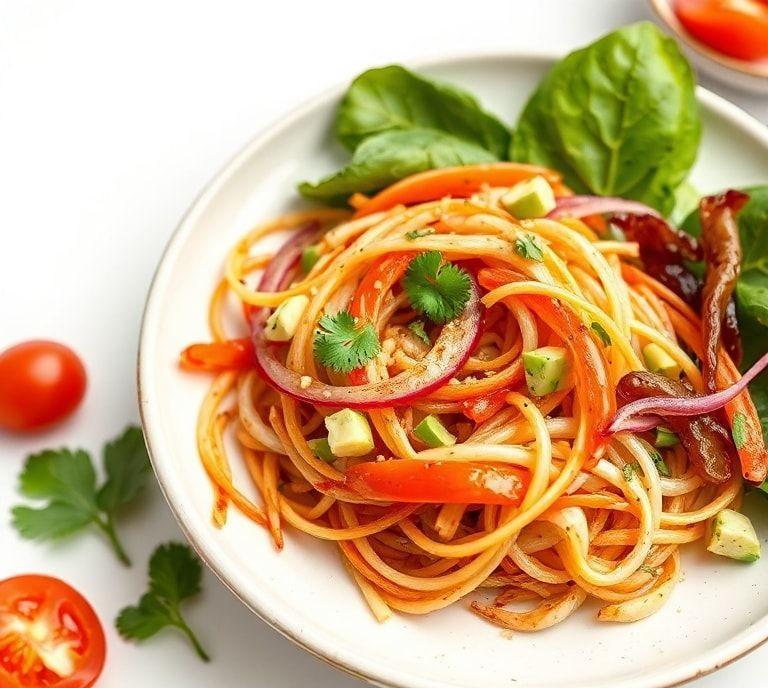
This recipe brings together the heart of Thai salad: a balance of sweet, sour, salty, and spicy flavors, all in a vegetarian package. It’s vibrant, healthy, and easy to put together. It’s perfect for a light lunch or as a refreshing side to your main course.
Ingredients Needed
Here’s what you’ll need to bring this salad to life:
- Mixed greens – I usually go for a combination of arugula and spinach, but feel free to mix it up. The more texture, the better.
- Shredded carrots – These give the salad a nice crunch, adding a touch of sweetness.
- Cucumber – I prefer Persian cucumbers because they’re crisp and less watery.
- Bell pepper – Red or yellow works best, for their sweetness and color.
- Edamame – These add protein and a nice chewiness.
- Cherry tomatoes – I love the juiciness of these small tomatoes, and they add a little burst of sweetness.
- Fresh cilantro and mint – These herbs bring that fresh, aromatic kick that Thai dishes are famous for.
- Peanuts – For crunch and saltiness. You can use roasted, salted peanuts or lightly toasted for a more refined flavor.
- Lime juice – For that tangy, zesty base that brings the salad to life.
- Soy sauce or tamari – A splash of salty umami.
- Maple syrup or coconut sugar – To round out the acidity with a bit of sweetness.
- Red chili or chili flakes – To dial up the heat. Adjust to your spice level.
Cooking Instructions
The beauty of this salad is that there’s minimal cooking involved. It’s mostly about prepping your ingredients and assembling them in a way that showcases the balance of flavors.
- Prepare the vegetables: Start by washing and drying your greens. Shred the carrots into thin strips, slice the cucumber into matchsticks, and slice the bell pepper thinly. I usually halve the cherry tomatoes to bring a burst of flavor with every bite.
- Blanch the edamame: If you’re using frozen edamame, simply blanch them in boiling water for 3-4 minutes until tender, then drain and set aside.
- Make the dressing: In a small bowl, whisk together lime juice, soy sauce, maple syrup, and a pinch of chili flakes. Taste and adjust: You might want a little more sweetness or a little more spice. The key is to have that perfect balance.
- Assemble the salad: In a large bowl, toss together the mixed greens, shredded carrots, cucumber, bell pepper, edamame, cherry tomatoes, and fresh herbs. Pour the dressing over the top and toss everything together gently.
- Add the peanuts: Finally, sprinkle the roasted peanuts over the salad for that satisfying crunch. If you like, you can lightly crush them before adding for a finer texture.
Ingredient Science Spotlight
Every ingredient in this Thai salad brings something special to the table, and understanding their roles makes the final result even more satisfying.
- Edamame: These little green gems are a powerhouse of protein, fiber, and micronutrients like folate and iron. Their creamy texture contrasts beautifully with the crunchy vegetables.
- Lime juice: The acidity from lime doesn’t just make things tangy-it actually helps balance the richness of the other ingredients, while its vitamin C content boosts your immune system.
- Peanuts: Beyond the satisfying crunch, peanuts are full of healthy fats, particularly monounsaturated fats, which are known to support heart health.
- Cilantro and mint: Both of these herbs are packed with antioxidants. Mint has digestive properties that help soothe the stomach, while cilantro can help detoxify the body by aiding in the removal of heavy metals.
Expert Tips
- Prep in advance: If you’re making this salad ahead of time, keep the dressing separate and add it right before serving. This way, your greens won’t wilt.
- Don’t overdo the chili: Thai food is known for its spice, but don’t feel compelled to go overboard. You can always add more heat, but it’s hard to take it out once it’s in.
- Balance the flavors: A good Thai dressing should be a balance of salty, sweet, sour, and spicy. Don’t be afraid to adjust the quantities of soy sauce, maple syrup, lime juice, and chili to suit your personal taste.
- Try adding tofu: If you want to bulk up the salad with some plant-based protein, adding grilled or crispy tofu is an excellent option. Simply marinate it in some soy sauce, lime juice, and garlic before cooking.
Recipe Variations
One of the things I love about this salad is how versatile it is. You can make a few simple swaps and still end up with a delicious dish:
- Noodles: Add some cooked rice noodles or glass noodles to turn this salad into a fuller meal. The noodles will soak up the dressing and make it even more satisfying.
- Other veggies: Swap out the bell pepper for thinly sliced cabbage or even thin strips of zucchini for a different crunch. You could also add roasted sweet potato for a heartier feel.
- Other proteins: If you’re not into edamame, try adding chickpeas, grilled tempeh, or even quinoa for some extra protein.
- Fruit twist: Pineapple or mango can add a lovely sweetness that contrasts well with the chili’s heat.
Final Words
A good salad doesn’t just fill you up; it makes you feel something. This Thai salad isn’t just about getting a few veggies in your system. It’s about that satisfying burst of fresh flavors, the excitement of the crunch, the tang of lime, and the heat from the chili. Each bite should make you pause, savoring how all the ingredients come together.
I think what’s so special about Thai salads is how they represent a perfect balance of life itself-nothing too overwhelming, but everything working together in harmony. And the best part? You don’t need to be a master chef to make it. Just a little time, a few ingredients, and a willingness to play with flavors.
FAQs
What Are The Main Ingredients In A Vegetarian Thai Salad?
A typical vegetarian Thai salad includes fresh vegetables like lettuce, cucumbers, carrots, bell peppers, and cabbage. It may also contain herbs such as cilantro, mint, and Thai basil. Commonly, the salad is topped with roasted peanuts, and sometimes tofu is added for protein. The dressing is usually made with a mix of lime juice, fish sauce substitute (or soy sauce), sugar, garlic, and chili for a tangy, sweet, and spicy flavor.
Can I Make A Vegetarian Thai Salad Without Using Soy Sauce?
Yes, you can make a vegetarian Thai salad without soy sauce. Instead of soy sauce, you can use tamari (which is gluten-free) or coconut aminos for a similar umami flavor. If you’re aiming for a saltier, richer taste, you might also use miso paste diluted with a little water. Be sure to adjust the seasoning to taste, as these alternatives vary in flavor intensity.
How Can I Make A Vegetarian Thai Salad Spicy?
To make your vegetarian Thai salad spicy, you can add fresh chili peppers such as Thai bird’s eye chilies or red chili flakes to the dressing. Adjust the amount depending on your preferred spice level. Alternatively, you can use chili paste or sriracha sauce for added heat and flavor complexity. For a milder version, you could use a small amount of chili and balance it with sugar or lime juice.