Picture this: it’s late afternoon, the sun is just beginning to dip behind the Tuscan hills, casting a warm golden glow over everything. You’re sitting on a cozy terrace, surrounded by the aroma of fresh basil, ripe tomatoes, and garlic wafting through the air. This is the essence of Tuscany-simple, flavorful, and utterly satisfying. Now, imagine bringing that experience to your kitchen with a pasta dish that’s just as comforting, yet light and vibrant-Tuscan Pasta Vegetarian Style.
The beauty of this recipe lies in its ability to capture the heart of Tuscan cooking, where the focus is on fresh, seasonal ingredients, and each bite tells a story of the region’s bountiful nature. It’s a perfect meal for those moments when you crave something rich yet fresh, hearty yet light. This dish brings together the best of Italian cuisine, with a vegetarian twist that still packs a punch in flavor.
It’s one of those recipes I love to make when I want something that feels indulgent but doesn’t leave me sluggish. The best part? It’s incredibly easy to whip up-no need to be a culinary genius to make something so satisfying. Let’s dive into how to recreate this little slice of Tuscany in your own kitchen.
Tuscan Pasta Vegetarian Recipe
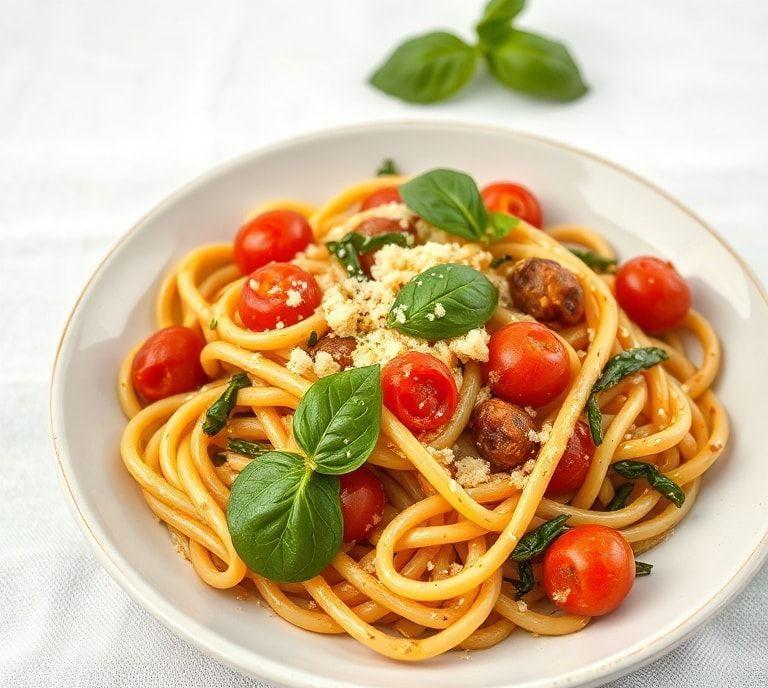
This recipe is all about simplicity and balance. The ingredients are few, but each one plays a crucial role in building the dish’s deep, earthy flavor. Think of it as the perfect blend of tomatoes, garlic, olive oil, and herbs-ingredients that you likely already have in your pantry or fridge. When you put them together, something magical happens.
The sauce is light yet robust, with the sun-dried tomatoes adding that deep, tangy richness, while the fresh basil and lemon bring a fresh, zesty note. It’s the kind of dish that’s hearty enough for a weeknight dinner, but refined enough for a weekend get-together. Trust me, this vegetarian version of Tuscan pasta is going to become a new go-to in your kitchen.
Ingredients Needed
Here’s what you’ll need for this flavor-packed dish:
- Pasta (preferably spaghetti or penne): About 400g (for 4 servings). You can use gluten-free pasta or whole wheat for a healthier twist.
- Olive oil: The foundation of this dish. Extra virgin is ideal for its bold flavor.
- Garlic: 4 cloves, thinly sliced. Garlic brings a subtle warmth and depth to the sauce.
- Sun-dried tomatoes: Roughly 6-8, chopped. These beauties are what give the dish its signature flavor-intensely savory with a slight tang.
- Cherry tomatoes: 1 pint, halved. Fresh cherry tomatoes add a burst of juiciness and balance out the richness of the sun-dried tomatoes.
- Fresh basil: A handful of leaves, roughly torn. It adds that herbaceous fragrance we all know and love.
- Lemon zest and juice: Zest of one lemon and juice from half. The zest gives an aromatic lift, while the juice adds a little tartness to the sauce.
- Parmesan cheese: Freshly grated, about 1/2 cup. You can skip this for a dairy-free version, or use a vegan substitute.
- Pine nuts: A small handful, toasted. These add crunch and a subtle nuttiness.
- Salt & Pepper: To taste. Don’t forget to season well; this is what ties the flavors together.
Cooking Instructions
- Boil the Pasta: Begin by bringing a large pot of salted water to a boil. Add the pasta and cook according to the package instructions, about 9-11 minutes for al dente. Once done, reserve a cup of pasta water and drain the rest.
- Sauté the Garlic and Tomatoes: While the pasta is cooking, heat a generous splash of olive oil in a large pan over medium heat. Add the garlic and sauté until fragrant-about 1 minute. Then toss in the sun-dried tomatoes and halved cherry tomatoes. Cook for another 3-4 minutes until the tomatoes soften and release their juices.
- Build the Sauce: Now, add the lemon zest, a squeeze of lemon juice, and a pinch of salt and pepper to the pan. Stir everything together, and let it cook for another minute, allowing the flavors to meld.
- Combine Pasta and Sauce: Add the cooked pasta directly into the pan with the tomato mixture. Toss everything together, adding a little reserved pasta water at a time to create a silky sauce that coats the pasta beautifully.
- Finish with Fresh Basil and Parmesan: Remove the pan from heat and stir in the fresh basil and half of the grated Parmesan. If you want more sauce, feel free to add more pasta water or olive oil. Taste for seasoning and adjust accordingly.
- Serve: Plate the pasta and sprinkle the toasted pine nuts and remaining Parmesan on top. Serve immediately with an extra drizzle of olive oil if you like.
Ingredient Science Spotlight
It’s easy to overlook the science behind each ingredient, but it plays a huge role in how the dish turns out. Take, for instance, the olive oil. The fat in olive oil not only helps to sauté the garlic and tomatoes evenly, but it also helps release and carry the fat-soluble flavors from the tomatoes and basil. This is why a good quality extra virgin olive oil makes all the difference-it’s packed with antioxidants and a rich, fruity flavor that’s just irreplaceable.
The sun-dried tomatoes add depth and umami to the dish, making it feel hearty without relying on meat. They are packed with concentrated flavor, thanks to the drying process, which removes much of the water and intensifies the natural sugars and acids. This adds a tangy yet savory element to the pasta, elevating it from just a tomato-based dish to something with layers of complexity.
Finally, the pine nuts are not just for crunch. Their fat content gives them a creamy texture when toasted, and their subtle, nutty flavor complements the acidic notes of the tomatoes, balancing the dish beautifully. They also add a little extra protein, making this vegetarian dish more filling.
Expert Tips
- Cook Pasta Al Dente: This might seem obvious, but it’s important to cook the pasta just enough to retain some bite. This way, it holds up better when tossed in the sauce and doesn’t get soggy. The best way to check is to taste it just before the timer goes off.
- Use Pasta Water: Don’t forget to save some pasta water before draining. It’s full of starch, which helps thicken the sauce and allows the pasta to better absorb the flavors.
- Toast Pine Nuts Lightly: Pine nuts can burn easily, so make sure to toast them on low heat and keep an eye on them. They should be golden brown and fragrant, not charred.
- Mix Up the Herbs: Basil is wonderful, but don’t be afraid to add some fresh oregano or thyme if you have them. These herbs bring an additional depth of flavor, especially if you’re aiming for that truly Tuscan taste.
- Go Light on the Parmesan: Since the sun-dried tomatoes bring plenty of richness, you don’t need to overdo the cheese. A light sprinkle is all you need for that perfect umami finish.
Recipe Variations
- Add Greens: If you want to sneak in some greens, spinach or arugula would be a great addition. Toss them in at the end to wilt them just slightly in the warm sauce.
- Make it Spicy: If you like a little heat, add red pepper flakes when you sauté the garlic. It adds a nice kick without overpowering the dish.
- Swap for Different Nuts: Don’t have pine nuts? Walnuts or slivered almonds work just as well. They’ll add a different texture and a slightly different nutty flavor, but still offer that satisfying crunch.
- Vegan Version: For a vegan-friendly alternative, skip the Parmesan and opt for a plant-based cheese or nutritional yeast for that cheesy flavor.
Final Words
As I sit here reflecting on this recipe, I can’t help but feel that it captures the heart of what makes Tuscan food so special-its simplicity and its ability to create a meal that feels like an experience. Each ingredient is selected with care, and when combined, it results in something greater than the sum of its parts. It’s nourishing, satisfying, and utterly delicious.
Whether you’re cooking for yourself after a long day, or you’re making dinner for loved ones, this Tuscan pasta offers a moment of warmth and joy. The flavors are bright and lively, yet comforting enough to feel like a big hug for your soul.
FAQs
What Ingredients Are Typically Used In A Tuscan Pasta Vegetarian Recipe?
A classic Tuscan pasta vegetarian recipe typically includes ingredients like pasta (such as penne, rigatoni, or spaghetti), sun-dried tomatoes, garlic, spinach or kale, olive oil, fresh basil, Parmesan cheese, and a variety of herbs like oregano and thyme. Some recipes may also include cannellini beans or mushrooms for added texture and flavor.
Can I Make A Tuscan Pasta Vegetarian Recipe Vegan?
Yes, you can easily make a Tuscan pasta vegetarian recipe vegan by substituting the cheese with a plant-based alternative such as vegan Parmesan or nutritional yeast. Additionally, ensure that any creamy elements are dairy-free by using coconut milk or cashew cream instead of traditional cream or butter.
How Can I Make Tuscan Pasta Vegetarian Recipe Spicier?
To add some heat to your Tuscan pasta vegetarian recipe, consider incorporating red pepper flakes or fresh chili peppers. You can also experiment with spicy Italian sausage substitutes or add a dash of hot sauce to the sauce mixture. Be sure to balance the spice with the richness of the olive oil and creamy elements to avoid overpowering the flavors.