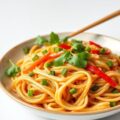
There’s something incredibly comforting about a warm bowl of soup, especially one with soft, chewy noodles swirling in it, surrounded by rich, savory broth. Udon noodles, which are thick, round, and deliciously satisfying, are the perfect vehicle for all the flavors that make up a hearty soup. Whether it’s a cold, rainy day or you’re just craving something soothing, a vegetarian udon noodle soup offers all the cozy vibes you need.
I first stumbled across this soup when I was living in a small apartment, craving something warm and filling, but I didn’t want anything too heavy. A friend suggested udon, and once I tried it, I was hooked. The noodle’s texture was unlike anything I’d had before – firm but tender – and the broth, well, it wrapped around everything in the most comforting way. It didn’t take long for me to start experimenting with making it at home, and over the years, I’ve learned some tricks and variations to elevate it.
This vegetarian udon noodle soup recipe is a perfect balance of simplicity and richness, packed with vibrant vegetables and a flavorful broth. Plus, it’s entirely plant-based, so whether you’re vegetarian, vegan, or just looking for something lighter, this is sure to satisfy.
Udon Noodles Soup Vegetarian Recipe

This is the type of recipe that you can adjust to your preferences, and that’s what I love about it. It’s a canvas for flavors – from mushrooms to greens, and from soy sauce to miso – the base of the soup can evolve depending on what you have in your kitchen or what you’re in the mood for.
Ingredients Needed
For this udon noodle soup, the ingredients are simple yet full of flavor. Here’s what you’ll need to get started:
- Udon noodles (fresh or dried, but fresh is my go-to for texture)
- Vegetable broth (a rich, full-bodied vegetable broth works best)
- Soy sauce (for that savory umami flavor)
- Miso paste (optional, but it gives the broth depth and a comforting saltiness)
- Tofu (firm or extra-firm works best, cut into cubes)
- Mushrooms (shiitake, oyster, or cremini mushrooms add a lovely earthy taste)
- Green onions (finely sliced, for garnish)
- Garlic (minced, because garlic makes everything better)
- Ginger (fresh, grated – it’s a game changer)
- Spinach or bok choy (these leafy greens brighten up the soup and add texture)
- Carrots (julienned or sliced, for sweetness and color)
- Sesame oil (just a drizzle, for added flavor)
- Chili flakes (optional, for a hint of heat)
Note: You can mix and match vegetables, adding things like bell peppers, baby corn, or cabbage, depending on what you have or your personal taste.
Cooking Instructions
Let me walk you through how to bring all these ingredients together:
- Prep the ingredients: Start by slicing your mushrooms, garlic, ginger, carrots, and green onions. Cut the tofu into bite-sized cubes. If you’re using bok choy or spinach, wash and chop those as well.
- Cook the udon noodles: In a separate pot, bring water to a boil and cook your udon noodles according to the package instructions. Fresh udon usually takes just a few minutes, but if you’re using dried, it may take a bit longer. Drain and set them aside.
- Make the broth: In a large pot, heat a tablespoon of sesame oil over medium heat. Add the garlic and ginger, sautéing them for a minute or two until fragrant. Next, add your vegetable broth, soy sauce, and miso paste (if using). Bring it to a gentle simmer. The miso will dissolve into the broth, giving it that silky, umami richness.
- Add the vegetables: Once the broth is simmering, toss in the mushrooms, carrots, and greens (spinach or bok choy). Let them cook for 5-7 minutes until tender but still vibrant.
- Add the tofu: Drop your tofu cubes into the broth and let them warm up for a couple of minutes. The tofu will soak up some of the broth flavors and become a comforting addition to the soup.
- Assemble the soup: Add the cooked udon noodles directly into the broth, stirring gently. Allow everything to warm together for another couple of minutes. Taste the broth and adjust with more soy sauce or miso if needed.
- Serve and garnish: Ladle the soup into bowls, making sure each bowl has a nice portion of noodles, vegetables, and tofu. Garnish with green onions, a sprinkle of chili flakes if you want a little spice, and maybe a drizzle of sesame oil for a finishing touch.
Ingredient Science Spotlight
Here’s something you might not think about when making udon noodle soup, but the ingredients you choose and how you prepare them really make a difference in the outcome.
- Udon noodles: The chewy texture of udon is one of its defining characteristics. Udon is made from wheat flour, water, and salt, and it’s thick and soft, which makes it perfect for soaking up the rich broth. Unlike thinner noodles, like soba or rice noodles, udon gives a satisfying bite that’s filling in a way that other noodles just can’t match.
- Miso paste: Miso is made from fermented soybeans, and it’s packed with umami – that savory fifth taste. Adding miso to the broth isn’t just about saltiness; it’s about creating depth. Miso introduces a slight sweetness and earthiness to the soup while boosting the other flavors in the broth.
- Tofu: The beauty of tofu in a soup like this is its ability to absorb the surrounding flavors. Since it has a neutral taste on its own, it serves as a wonderful canvas for the broth. Plus, it provides a soft texture that contrasts nicely with the chewy noodles.
- Ginger and garlic: Both of these ingredients are staples in many Asian dishes, and they act as natural flavor enhancers. Garlic adds a pungent, savory note, while ginger provides a warm, slightly peppery kick that cuts through the richness of the broth.
- Vegetable broth: Not all broths are created equal. A good vegetable broth should have a balance of sweetness and umami, creating a foundation that supports all the other ingredients without overpowering them.
Expert Tips
- Use fresh noodles when possible: If you can find fresh udon noodles, do it! They’re more tender and absorb the broth much better than dried noodles. If you have to use dried noodles, make sure not to overcook them.
- Don’t skip the miso paste: Miso might seem like an optional ingredient, but it really transforms the broth into something rich and complex. If you’re avoiding miso for dietary reasons, you can try adding a little bit of nutritional yeast for a similar umami flavor.
- Customize the toppings: The toppings are a great way to make the soup your own. Try adding nori (seaweed), pickled ginger, or a soft-boiled egg (if you’re not strictly vegan) for added richness. A dash of toasted sesame seeds can add a lovely crunch and flavor.
- Make the broth ahead of time: If you’re looking to save time during the week, make the broth in advance and store it in the fridge. It only gets better as it sits, allowing the flavors to meld together.
Recipe Variations
The beauty of udon noodle soup is how versatile it is. While this vegetarian version is a great starting point, feel free to play around with it.
- Spicy Udon Soup: If you’re a fan of heat, add some chili paste or sriracha to the broth. You can also throw in some fresh red chilies for an extra kick.
- Mushroom Udon Soup: Double down on the umami by adding a mix of wild mushrooms, like shiitake, maitake, or enoki. Their earthy flavors will elevate the broth.
- Curry Udon: For a unique twist, add a tablespoon of curry powder or paste to the broth. The fragrant spices will turn the soup into something completely new and exciting.
- Noodle-Free Udon Soup: If you’re not into noodles or want to cut back on carbs, try making a noodle-free version. Instead, add more vegetables like zucchini noodles, cauliflower, or even spiralized sweet potato.
Final Words
This vegetarian udon noodle soup is one of those recipes that’s as adaptable as it is comforting. Whether you’re enjoying it on a chilly evening or you just need something simple yet flavorful, it hits all the right notes. The chewy noodles, the tender vegetables, the savory broth – it’s all about the balance of flavors, and with this recipe, you can easily hit that sweet spot.
FAQs
What Ingredients Are Typically Used In A Vegetarian Udon Noodle Soup?
A vegetarian udon noodle soup usually includes thick udon noodles, vegetable broth or dashi made from kombu (kelp) and shiitake mushrooms, soy sauce, mirin, and a variety of vegetables such as bok choy, carrots, mushrooms, spinach, and green onions. Optional toppings can include tofu, nori (seaweed), sesame seeds, and chili flakes for added flavor.
How Can I Make A Flavorful Broth Without Using Meat Or Fish?
To create a rich vegetarian broth, start with kombu (dried kelp) and dried shiitake mushrooms soaked in water to extract their umami flavor. You can also sauté aromatics like garlic, ginger, and onions before adding the soaked kombu and mushrooms. Soy sauce, miso paste, or tamari can be added for depth and saltiness. Simmer the broth gently for 20-30 minutes, then strain before adding udon noodles and vegetables.
Can I Make Udon Noodle Soup Vegetarian And Gluten-free?
Yes, but you need to substitute traditional wheat-based udon noodles with gluten-free alternatives such as rice noodles or gluten-free udon noodles made from buckwheat or other gluten-free flours. Additionally, ensure that soy sauce or tamari used is labeled gluten-free. The rest of the soup ingredients, including vegetables and broth components like kombu and shiitake mushrooms, are naturally gluten-free.