The kitchen is where some of our most comforting memories are made, and for me, custard has always held a special place in that heartwarming tradition. I remember my grandmother, who had this incredible knack for turning the simplest of ingredients into magic. Custard was one of those dishes she would whip up on a quiet Sunday afternoon, filling the house with the kind of smell that just made you feel safe and content. It was creamy, sweet, and perfect on its own, but when served with a slice of warm pie or a sprinkle of nutmeg, it felt like you were sitting down for something truly special.
If you’re like me and find yourself craving that velvety goodness, you might be delighted to know that you don’t need eggs to make an amazing custard. That’s where this vegetarian custard recipe comes in. I’ve spent years refining it-finding the right balance of flavors and textures-until it was just right. The result is a rich, smooth custard that’s completely plant-based but just as indulgent as the classic version.
So, whether you’re vegan, vegetarian, or just looking for a lighter alternative, this recipe will be your new go-to for satisfying that sweet tooth. Let’s dive in and take a closer look at how to create the perfect vegetarian custard.
Vegetarian Custard Recipe
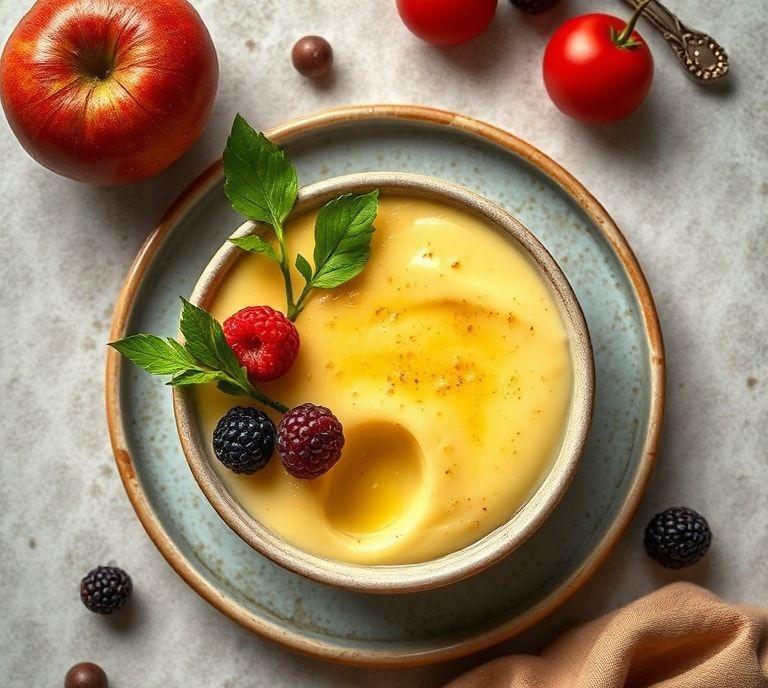
Creating a vegetarian custard doesn’t mean sacrificing any of the creaminess or sweetness you expect from this classic dessert. This recipe is simple, and most importantly, it works-every single time. No fancy equipment, just a good old saucepan and a wooden spoon.
What I love most about this custard is how easy it is to personalize, whether you want to add a dash of vanilla, a sprinkle of cinnamon, or even a splash of your favorite liqueur. But first, let’s start with the basics. Here’s the recipe that will have you feeling like a kitchen pro in no time.
Ingredients Needed
Now, you don’t need a long shopping list for this one. Here are the ingredients you’ll need to bring that custard to life:
-
Almond Milk (or any plant-based milk) – 2 cups
You can use whatever plant milk you like-almond, soy, or oat all work great. I personally love almond milk for the mild flavor it brings, but it’s all about what you enjoy.
-
Sugar – 1/2 cup
Granulated sugar is the most traditional choice, but if you prefer a healthier option, coconut sugar or maple syrup can add a lovely caramelized note to the custard.
-
Cornstarch – 3 tablespoons
This will thicken the custard and give it that smooth, pudding-like texture.
-
Vanilla Extract – 1 teaspoon
For that warm, comforting essence that everyone loves in a custard. You can even use vanilla bean paste if you’re feeling fancy.
-
Salt – 1/4 teaspoon
Just a pinch! Salt will balance out the sweetness and really bring out the flavors.
-
Turmeric – 1/4 teaspoon (optional)
Not just for color! A tiny bit of turmeric will give your custard a beautiful golden hue, plus it’s loaded with antioxidants.
Cooking Instructions
Now, let’s get cooking! This step is as easy as it gets-just make sure you’re patient, because this custard likes to cook slowly and gently.
- Combine the dry ingredients: In a small bowl, whisk together the cornstarch, sugar, and salt. Set aside.
- Heat the milk: In a medium saucepan, add the almond milk and bring it to a gentle simmer over medium heat. Stir occasionally to prevent the milk from burning or sticking to the bottom.
- Thicken the custard: Once the milk is warm, slowly add the dry mixture to the saucepan, whisking continuously. This is where the magic happens. Keep whisking until the custard thickens, which should take about 5-7 minutes. It will go from a thin liquid to a smooth, thick custard.
- Add vanilla: When the custard is thickened to your liking, remove it from the heat and stir in the vanilla extract and turmeric (if using).
- Cool and serve: Let the custard cool for a few minutes before transferring it to bowls. It will continue to thicken as it cools. If you prefer it cold, just pop it in the fridge for an hour or two, and enjoy!
Ingredient Science Spotlight
Have you ever wondered why cornstarch thickens so well in liquids? The secret lies in how cornstarch molecules absorb water. When cornstarch is added to a liquid and heated, the starch granules begin to swell and absorb the liquid. As the temperature rises, the starch molecules start to unravel and form a gel-like consistency, which is why your custard thickens. It’s this very property that allows cornstarch to work its magic in creating that smooth, pudding-like texture we all love in custard.
And why almond milk, you ask? Well, almond milk (and other plant-based milks) is lower in fat than cow’s milk, so it might not create the same richness as traditional custard, but it’s still creamy enough to give you that velvety texture. Plus, it has a lighter flavor, letting the sweetness and vanilla shine through. If you prefer a richer custard, try using full-fat coconut milk, which adds a tropical twist.
Expert Tips
- Don’t rush the thickening process: Low and slow is the way to go. If you crank up the heat, you risk the custard becoming lumpy or burning. Stick to medium heat, and be patient as it thickens.
- Stir constantly: Stirring the custard as it cooks is essential for preventing lumps. A good old-fashioned whisk works best, especially when you’re first adding the cornstarch and sugar mixture.
- Strain the custard: If you want a super-smooth custard, strain it through a fine mesh sieve to remove any bits that might have clumped. It’s an extra step, but worth it for that perfect texture.
- Don’t skip the vanilla: The vanilla extract is the secret ingredient here. It brings all the flavors together and elevates the custard from ’good’ to “wow”.
- Let it rest: Custard tends to thicken even more as it cools, so don’t worry if it’s still a bit runny right off the stove. Let it sit for a while, and it’ll firm up nicely.
Recipe Variations
One of the things I love most about custard is how versatile it is. Here are a few variations you can try to mix things up:
- Chocolate Custard: For a chocolate twist, simply melt some dairy-free chocolate into the custard right before you remove it from the heat. It’s a decadent treat that’s perfect for chocoholics.
- Citrus Custard: Add a little lemon or orange zest to the mixture for a refreshing citrusy burst. You can even infuse the milk with a cinnamon stick or star anise for added complexity.
- Coconut Custard: Swap out the almond milk for coconut milk and top with toasted coconut flakes for a tropical flavor profile.
- Spiced Custard: Add a pinch of cinnamon, nutmeg, or cardamom to bring in some warm spices. This is especially comforting in the colder months!
Final Words
Making custard from scratch is one of those things that feels like an achievement. It’s so simple, yet so rewarding. And when it’s vegetarian, it feels like you’re doing something special for your body, too. I love knowing that the creamy indulgence I’m enjoying isn’t just delicious, but made with wholesome, plant-based ingredients.
If you’ve never made custard before, I encourage you to give it a try. The method is straightforward, and the results are incredibly satisfying. Plus, it’s a perfect dessert to keep in the fridge for a sweet pick-me-up during the week.
FAQs
What Ingredients Are Needed For A Vegetarian Custard Recipe?
A basic vegetarian custard recipe typically requires the following ingredients: milk (or a dairy-free alternative such as almond or oat milk), sugar, cornstarch or arrowroot powder for thickening, vanilla extract for flavor, and a pinch of salt. If you prefer a richer custard, you can also include egg yolks or use an egg substitute like aquafaba or silken tofu for a plant-based option.
Can I Make A Vegan Version Of Vegetarian Custard?
Yes, a vegan version of vegetarian custard can easily be made by replacing dairy milk with plant-based milk such as almond, soy, or coconut milk. Additionally, instead of using egg yolks, you can opt for a vegan egg substitute like cornstarch, arrowroot powder, or silken tofu to achieve the creamy texture and thickness needed for custard.
How Can I Thicken My Vegetarian Custard If It Is Too Runny?
If your vegetarian custard is too runny, you can thicken it by gently heating it with more cornstarch or arrowroot powder. Dissolve an extra tablespoon of cornstarch in a little cold milk or water, then gradually whisk it into the custard while heating it on low. Continue to stir until it reaches the desired consistency. Alternatively, you can let it cool in the refrigerator, which can also help it firm up.